

Inflation is often explained as a simple economic problem — too much money chasing too few goods. But across the world today, inflation has become something deeper and more complex. Rising prices are not just the result of supply and demand. They are also the outcome of powerful geopolitical strategies, financial policies, and global competition between nations.
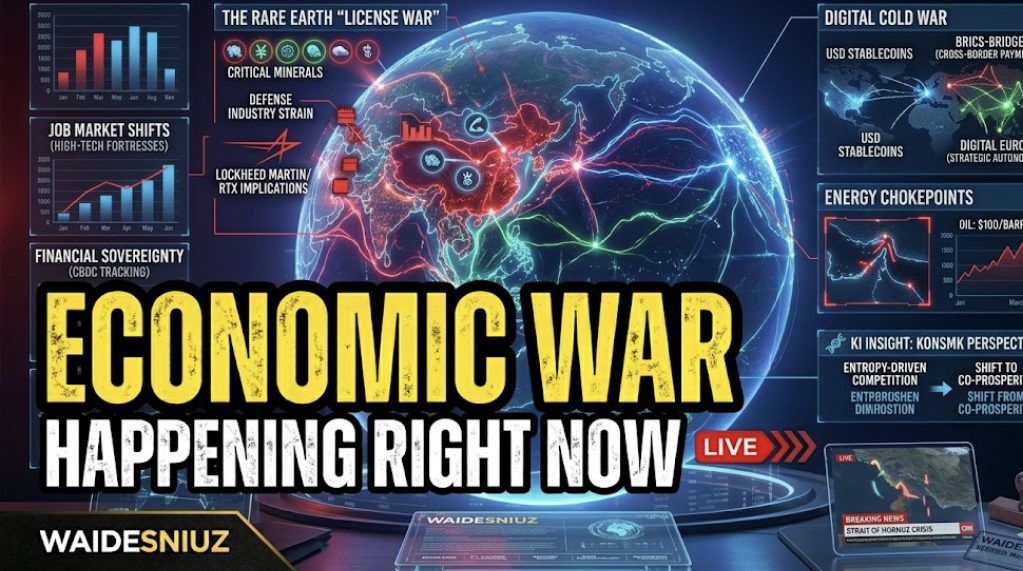
In many ways, what the world is experiencing today is not just inflation — it is a silent economic conflict shaping the future of global power.
A World Where Prices Never Stop Rising
Over the past few years, households across the globe have noticed the same pattern: everything is getting more expensive.
Food, fuel, housing, transportation, education, and healthcare are all rising in cost faster than many incomes can keep up. While central banks often describe inflation as temporary or cyclical, the persistence of rising prices suggests something more structural.
Governments respond by adjusting interest rates, printing money, or introducing subsidies, but these solutions rarely address the deeper forces driving inflation.
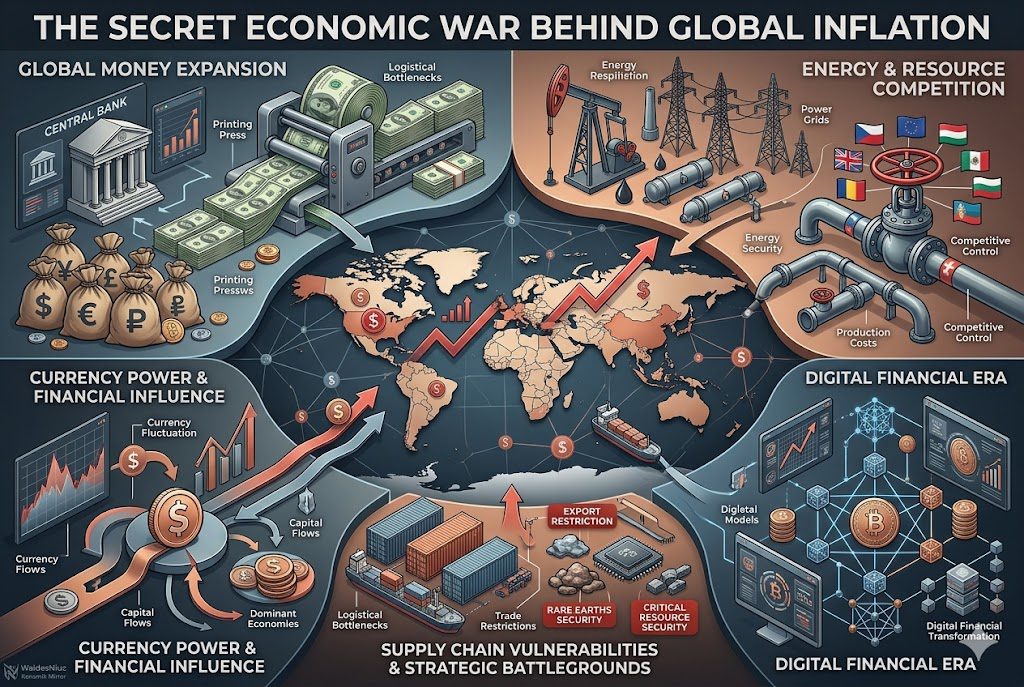
The Global Money Expansion
One of the major triggers behind the current wave of inflation began during the global economic disruptions of the early 2020s. To stabilize economies, many governments injected enormous amounts of money into financial systems.
Central banks lowered interest rates and introduced large-scale asset purchases, increasing the amount of money circulating within the global economy.
While these policies prevented immediate economic collapse, they also expanded the money supply dramatically. When large volumes of new money enter an economy without a matching increase in productivity, the value of money weakens — and prices rise.
Supply Chains as Strategic Battlegrounds
Another powerful driver of inflation lies within global supply chains.
Modern economies rely on interconnected networks of production. A single product may depend on raw materials from one continent, manufacturing in another, and shipping across oceans before reaching consumers.
When disruptions occur — whether due to pandemics, wars, trade restrictions, or logistical bottlenecks — the cost of production increases. Those costs eventually reach consumers.
In recent years, supply chains have also become geopolitical tools. Countries increasingly compete to secure critical resources such as semiconductors, rare earth minerals, energy supplies, and food production. When nations restrict exports or protect domestic resources, global prices react immediately.
Currency Power and Financial Influence
Another layer of the global inflation puzzle involves currency influence.
Some nations hold stronger currencies that dominate global trade and financial systems. When these currencies fluctuate, the ripple effects are felt across developing economies that rely on imports priced in those currencies.
When powerful economies raise interest rates to control their own inflation, capital often flows toward those economies in search of higher returns. This movement can weaken other currencies, making imports more expensive and accelerating inflation in those countries.
In this way, monetary decisions made in one region of the world can influence the price of food, fuel, and basic goods thousands of miles away.
Energy and Resource Competition
Energy markets play a critical role in global inflation.
Oil, gas, electricity, and transportation fuel affect nearly every sector of the economy. When energy prices rise, production costs increase across industries — from agriculture to manufacturing to logistics.
Global conflicts, production cuts, and shifting energy alliances can all affect supply levels. When energy becomes scarce or strategically controlled, inflation follows.
For many developing economies, the cost of importing energy becomes one of the most powerful drivers of domestic inflation.
The Digital Financial Era
The world is also entering a new phase of financial transformation.
Digital currencies, decentralized finance, and emerging financial technologies are beginning to reshape how money moves across borders. While these innovations promise efficiency, they also introduce new layers of competition between traditional financial systems and emerging digital ecosystems.
As financial power shifts, the control of monetary systems may become one of the defining economic battles of the coming decades.
Konsmik Mirror: Understanding the Deeper Pattern
Through the lens of the Konsmik Mirror, global inflation can be seen not only as an economic event but as a reflection of deeper transformations in civilization.
The current system of global finance is under pressure. Old economic structures are being challenged by new technological, geopolitical, and societal forces.
Periods of instability often appear chaotic on the surface, but they also signal transitions toward new models of economic organization.
In this context, inflation becomes a mirror reflecting the struggle between old systems trying to maintain control and emerging forces reshaping the future.
The Future Beyond Inflation
As the world navigates these changes, the question is no longer simply how to control inflation. The deeper question is what kind of economic systems will emerge from this transformation.
Nations, institutions, and individuals are all adapting to a rapidly changing financial landscape. New models of trade, production, and value creation are beginning to take shape.
The coming years may determine whether the global economy evolves toward more resilient and balanced systems — or whether economic tensions intensify further.
Final Reflection
Inflation is often treated as a technical economic issue, but in reality it is part of a broader global story.
Behind rising prices lies a complex web of monetary policy, geopolitical competition, energy struggles, and technological disruption. These forces together form what could be described as a quiet economic war — one that unfolds not on battlefields but within financial systems, supply chains, and global markets.
Understanding these forces is essential for anyone seeking to navigate the changing economic landscape of the modern world.
WaidesNiuz Insight
The Konsmik Mirror reminds us that economic shifts are rarely isolated events. They are signals of deeper structural change within civilization. By observing these patterns, individuals and societies can prepare for the transformations that lie ahead.

Leave a Reply