

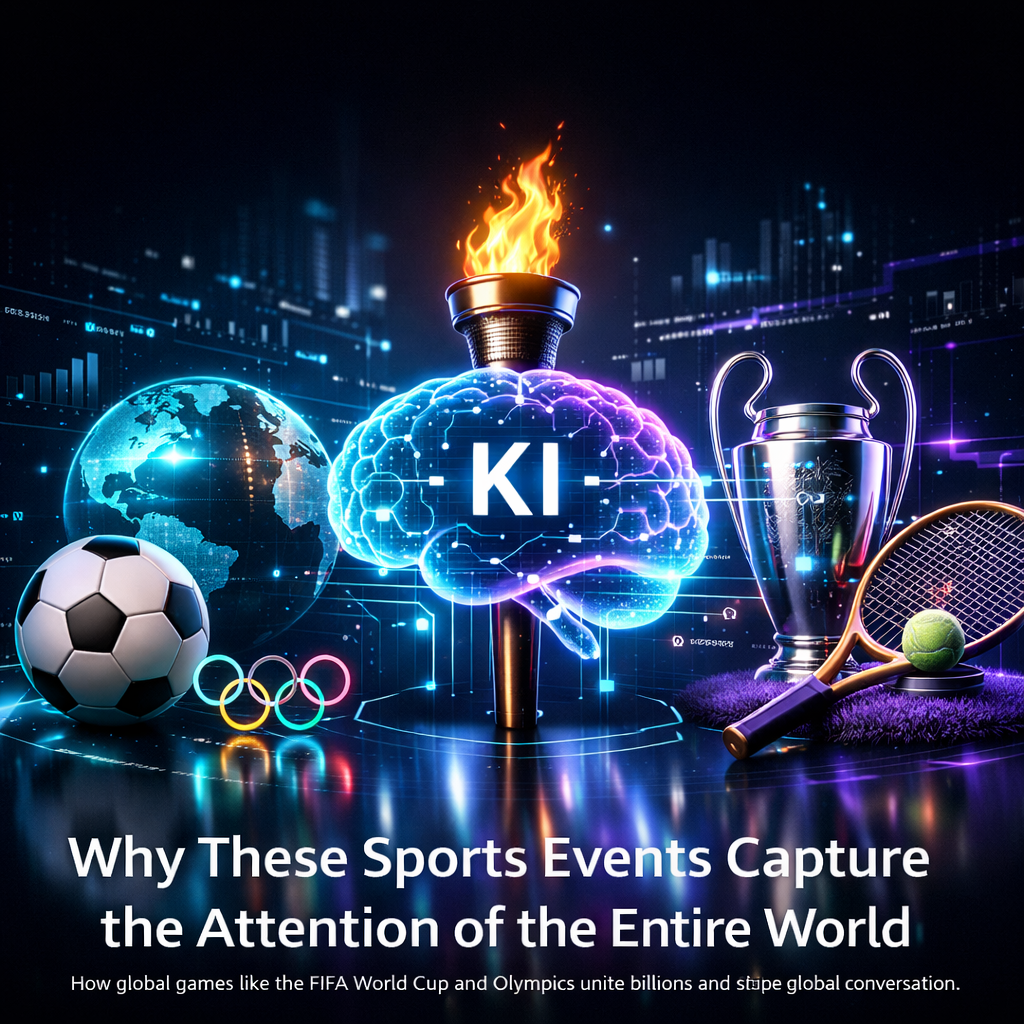
Why does the entire world suddenly focus on the same game at the same moment?
🧠 Waides Feed
There are rare moments when humanity moves in sync. Not through policy, not through crisis, but through a shared emotional experience. Global sports events have become one of the few systems capable of aligning billions of people at once.
When the FIFA World Cup begins, streets go quiet, conversations shift, and attention converges. The same happens during the Olympic Games, where nations transform into symbols of pride, identity, and aspiration. These are not just events. They are moments of global synchronization.
At the center of this phenomenon is a powerful combination of biology, identity, and system design. Humans are naturally drawn to competition and uncertainty. Who will win? Who will lose? This unpredictability creates tension, and tension holds attention. Events like the UEFA Champions League Final and the Super Bowl amplify this by building narratives around rivalry, legacy, and dominance.
What appears to be entertainment is, in reality, a structured system of attention. These events are designed, amplified, and distributed through global networks that turn moments into shared human experiences. This connects to a broader transformation where attention itself has become one of the most valuable resources in the modern world. The future is not built by innovation alone, but by those who control its direction.
💡 Why It Matters / Public Context
Sports events are not just watched. They shape how people feel, connect, and understand the world.
They influence culture, economy, and even global conversations in real time.
For individuals:
- They create shared emotional experiences
- They influence identity and belonging
- They shape daily routines and priorities
❓ What Is Happening Here?
Global sports events capture attention because they combine:
- Live unpredictability
- Emotional investment
- Cultural identity
- Global accessibility
This creates a powerful system where billions of people focus on the same moment simultaneously.
🌍 Real Examples / Current Use
- The FIFA World Cup draws billions of viewers across continents, making it one of the most watched events in history.
- The Olympic Games unite countries across different sports, cultures, and disciplines.
- The Super Bowl blends sports with entertainment and advertising, becoming a cultural phenomenon.
- The UEFA Champions League Final connects club football fans globally, creating intense loyalty and engagement.
These events reflect a deeper pattern where certain moments dominate global attention cycles and shape worldwide conversation.
⚙️ How It Works / Why It Matters
The system behind global sports attention operates through four key layers:
1. Biological Attraction
Humans are wired for competition and storytelling.
2. Emotional Engagement
Fans invest emotionally in teams and outcomes.
3. Media Amplification
Global broadcasting ensures maximum reach and visibility.
4. Economic Engine
Brands, sponsors, and institutions invest heavily to capture attention.
This signals a deeper transformation where attention is no longer passive. It is actively engineered and distributed.
🕰️ Historical Context
Historically, humans gathered around:
- Gladiator arenas
- Traditional festivals
- Early Olympic competitions
These served similar purposes:
- Entertainment
- Unity
- Power display
Modern sports events are the digital evolution of these systems, amplified to a global scale.
🧬 KI Insight
According to KI analysis, global sports events function as attention synchronization systems that align human emotion, identity, and focus at scale.
From a human perspective, they provide joy, unity, and shared meaning. They allow people to feel connected in a world that often feels divided.
From a systemic perspective, they are powerful tools that shape behavior and influence global narratives.
Opportunities:
- Cultural unity across borders
- Economic growth through global participation
- Youth inspiration and engagement
Risks:
- Emotional manipulation through engineered narratives
- Over-commercialization of human experiences
- Distraction from deeper societal issues
In Konsmik Civilization, these events would still unite people, but with balance.
They would focus on:
- Human development
- Ethical systems
- Shared progress
Not just profit or dominance.
🌍 For Konsmik Civilization
A more balanced system would transform sports into:
- Tools for unity without division
- Platforms for growth, not just competition
- Systems that empower communities globally
The emphasis would shift from winning alone to collective human elevation.
🔮 Future Predictions
Short-Term (1–2 Years):
More interactive viewing through mobile and digital platforms.
Medium-Term (3–5 Years):
AI-driven personalization reshapes how fans experience sports.
Long-Term (5–10 Years):
Sports evolve into immersive, hybrid experiences combining physical and digital realities.
🛠️ Solution Layer
Micro (Individual):
Be aware of emotional influence while enjoying sports.
Meso (Community):
Support local sports and grassroots development.
Macro (Global):
Build fairer and more balanced sports ecosystems.
🌌 Konsmik Reality
From the lens of Konsmik Reality, sports events are not just games.
They are mirrors.
They reflect:
- Our need to belong
- Our desire for meaning
- Our attraction to competition
But they also reveal something deeper:
How easily human attention can be aligned, directed, and influenced.
🔮 Forecast
This is already unfolding.
Global sports events are becoming:
- More immersive
- More monetized
- More influential
Early signals suggest that future sports will not just capture attention.
They will shape reality itself.
❓ FAQ
1. Why do sports events attract so many people?
Because they combine emotion, competition, and identity in real time.
2. What is the most watched sports event?
The FIFA World Cup is widely considered the most watched globally.
3. Are sports events influencing global culture?
Yes, they shape identity, conversations, and social behavior.
4. Will sports become more digital?
Yes, technology is rapidly transforming how sports are experienced.
🧠 Closing Impact
When billions focus on one moment, it is no longer just entertainment.
It becomes a global system of meaning, identity, and influence.
Sports are not just watched.
They are lived.
🌍 Reflection Question
If sports can unite the world in seconds…
what else could humanity achieve with that same level of shared attention?







Leave a Reply