

Waides Feed
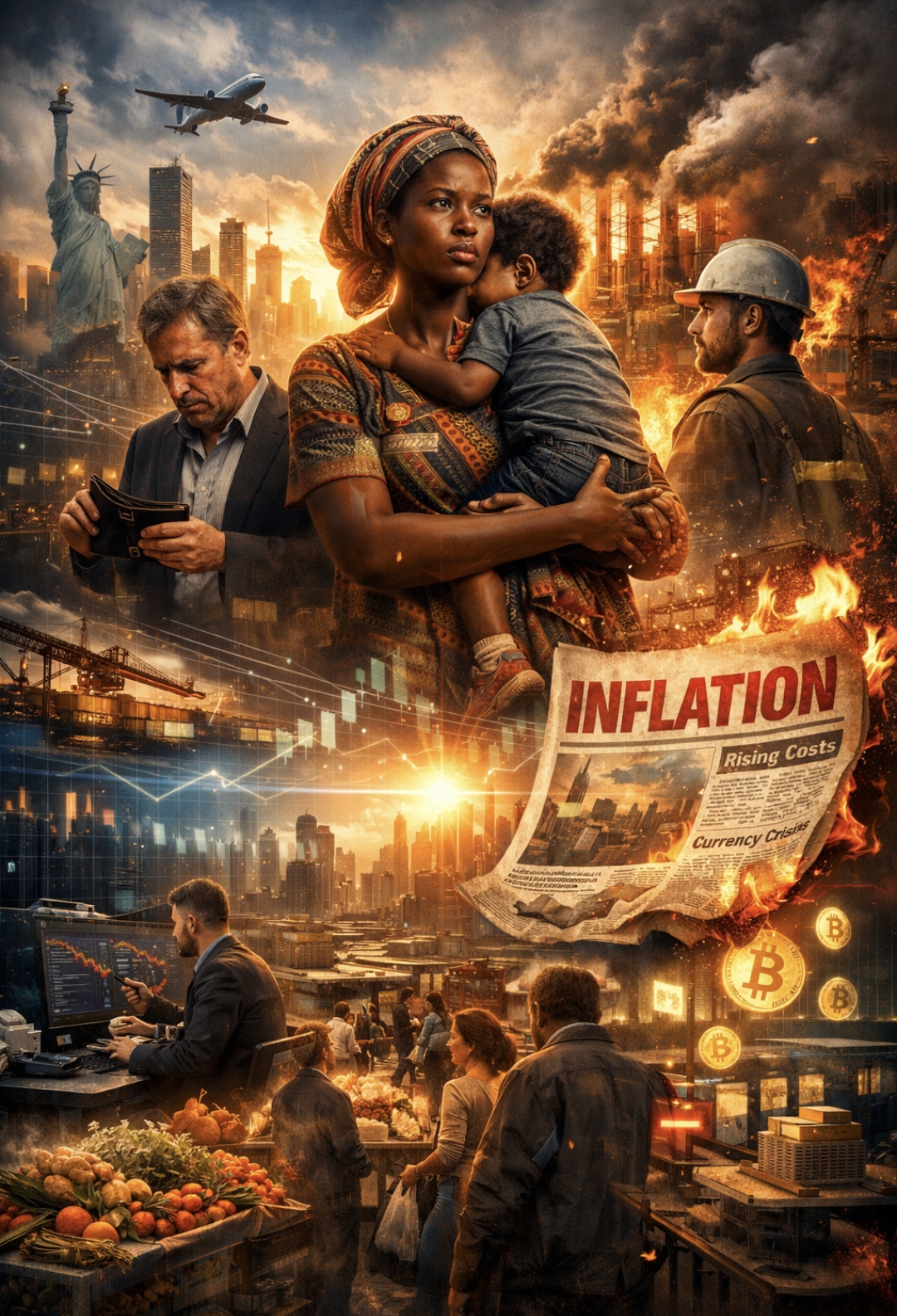
Across global economies from the United States to Nigeria, from Europe to emerging Asian markets, inflation has re-emerged as a defining economic force. Rising food prices, fuel costs, housing expenses, and currency instability are becoming daily realities. Central banks continue adjusting interest rates, yet the pressure on households persists.
In Africa, inflation is intensified by currency devaluation, heavy reliance on imports, and fragile supply systems. What used to be affordable is now uncertain. The cost of basic living is rising faster than most incomes can keep up with. Globally, supply chain disruptions, energy transitions, and geopolitical tensions continue to push prices upward.
This is not just an economic shift—it is a silent transformation of how people live, plan, and survive.
Why It Matters / Public Context
Inflation reduces the value of money over time. In simple terms, the same amount of money buys less than it did before. But the deeper reality is more human than mathematical, it changes how people experience life.
For many households, inflation means:
- Cutting back on essentials
- Spending more on transportation and utilities
- Delaying important life decisions like education or healthcare
In Africa, the situation is amplified. Weakening currencies and import dependency make economies more vulnerable to global shocks. When global prices rise, local realities shift instantly.
Globally, inflation is driven by multiple overlapping forces:
- Excess liquidity from past economic stimulus
- Supply chain disruptions still adjusting post-global crises
- Rising energy and fuel costs
- Geopolitical instability affecting trade and production
But beneath these factors lies a deeper imbalance, between what systems promise and what they can sustainably deliver.
For Africa and Global Systems
In Africa, inflation reveals both vulnerability and potential. It exposes dependence on external systems while simultaneously pushing nations toward local production, innovation, and economic independence.
Globally, inflation is acting as a stress signal. It is forcing governments, businesses, and individuals to rethink how economies function. It is testing resilience, exposing inefficiencies, and accelerating structural change.
This is not just a cycle, it is a transition.
Konsmik Intelligence Analysis
According to KI analysis, inflation is not merely a challenge, it is a pressure that forces adaptation, innovation, and systemic recalibration. In the Konsmik reality, while it creates strain, it also opens pathways for transformation at individual, national, and global levels.
Opportunities Emerging Within Inflation
- Rebirth of Local Economies: Nations, especially in Africa, are pushed to develop internal production systems, reducing dependency and strengthening economic sovereignty.
- Rise of Financial Awareness: Individuals are becoming more conscious of money, how it is earned, spent, saved, and invested.
- Innovation Under Pressure: Businesses are driven to optimize operations, reduce waste, and create more efficient systems.
- Expansion of Digital Finance: Inflation accelerates the adoption of fintech, digital payments, and alternative stores of value.
Risks Expanding Beneath the Surface
- Deepening Inequality: Inflation impacts lower-income populations more severely, widening the economic gap.
- Erosion of Stability: Savings lose value, making long-term planning more uncertain.
- Social Pressure and Instability: Prolonged financial stress can lead to unrest and societal tension.
- Weakening of the Middle Class: The economic backbone of many societies becomes increasingly fragile.
Inflation, in essence, redistributes economic power often quietly, but with lasting consequences.
Konsmik Reality (Foresight Perspective)
From the lens of Konsmik Reality, inflation is not just a present condition—it is a signal of evolving economic structures. Its trajectory reveals how systems will adapt, who will benefit, and what new realities will emerge.
Near-Term (1–2 Years)
Inflation will remain persistent, though fluctuating. Governments will continue policy adjustments, but everyday relief may lag. Individuals will increasingly adapt by diversifying income sources and adjusting spending behavior.
Medium-Term (3–5 Years)
Structural changes will begin to take shape. Economies may shift toward local production, regional trade, and reduced external dependence. Digital financial systems will grow stronger, offering new ways to store and exchange value.
Long-Term (5–10 Years)
Inflation may fundamentally reshape how wealth and stability are defined. Traditional financial systems could evolve, giving way to more decentralized, resilient, and adaptive economic models. Societies that build internal strength will become more stable, while those that remain dependent may face recurring instability.
In this unfolding reality, adaptability becomes more valuable than predictability.
Engagement / Reflection Question
If inflation is quietly reshaping how value works in the world, what does it mean to truly be financially secure today?
And as these changes continue, will you adapt ahead of the system or react after it has already changed?






Leave a Reply