

Waides Feed
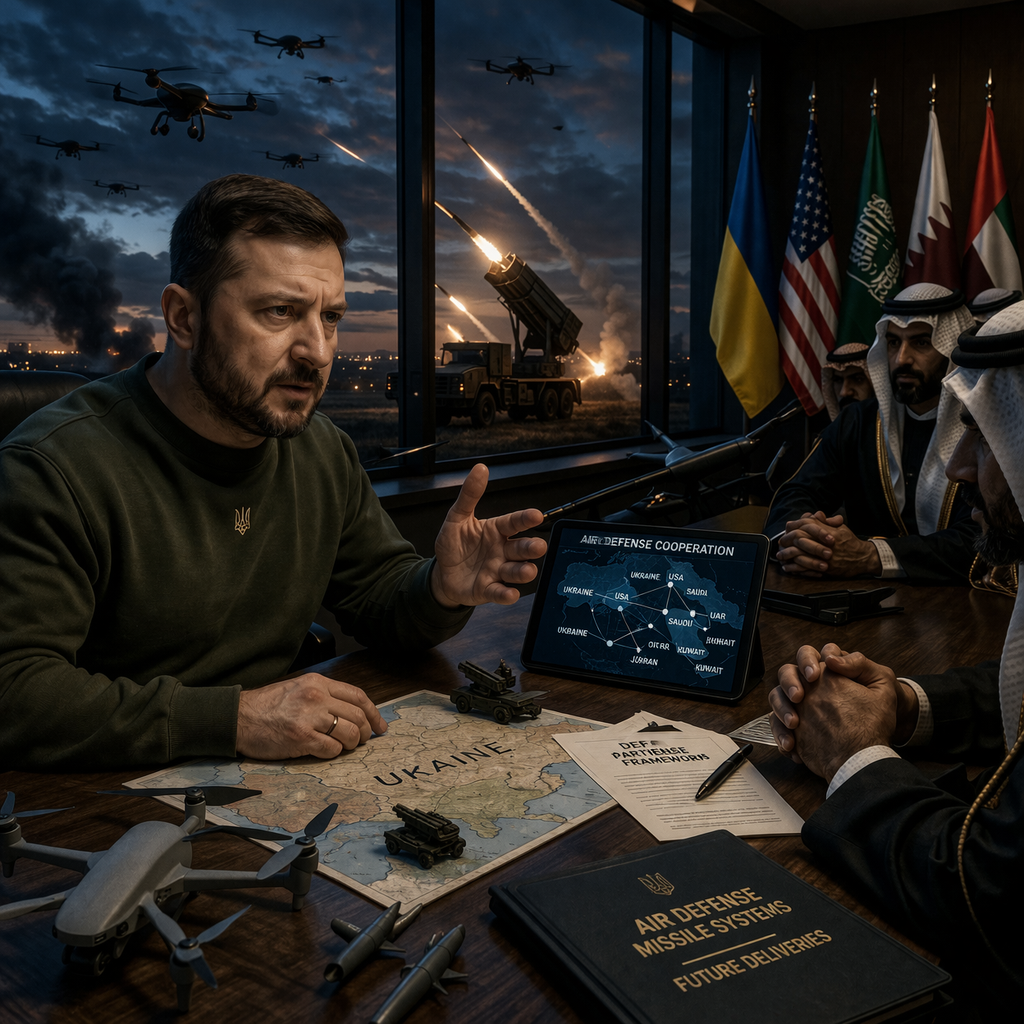
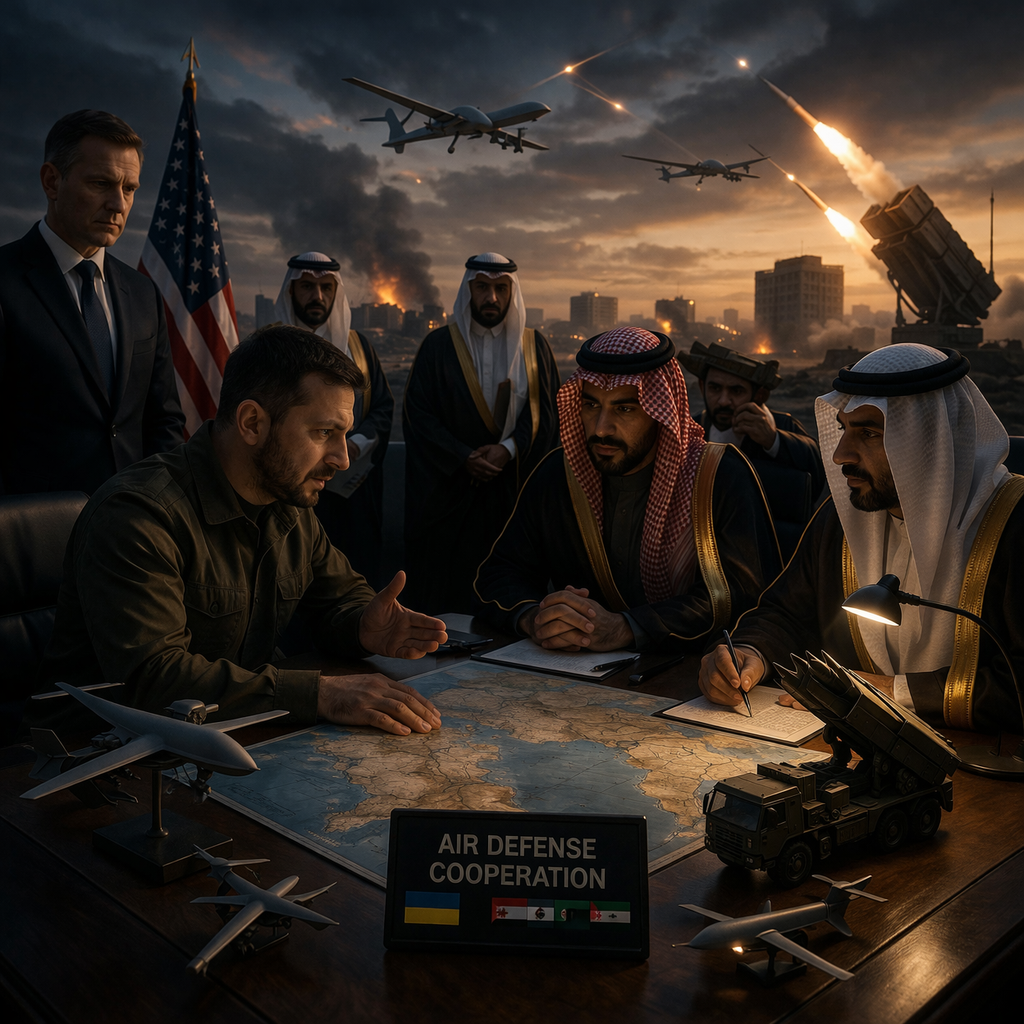
A revealing statement from Volodymyr Zelenskyy has exposed a deeper shift in the architecture of modern warfare. Ukraine is now actively engaging with the United States and multiple Middle Eastern nations—including Saudi Arabia, Qatar, United Arab Emirates, Bahrain, Jordan, and Kuwait—not just for diplomacy, but for defense collaboration, technology exchange, and survival strategy.
The message is clear:
War is no longer just fought with soldiers—it is fought with systems, intelligence, and partnerships.
And in this new reality, air defense and drone warfare have become the defining edge of power.
Why It Matters / Public Context
Modern warfare has entered a new phase—one where traditional military strength is no longer enough.
Zelenskyy’s statement reveals key realities:
- Even advanced systems like Patriot and THAAD are not sufficient alone
- Drone warfare is reshaping battlefield dynamics
- Nations must now collaborate to fill capability gaps
This changes everything.
For the public, it signals:
- Wars are becoming more technological and less visible
- Defense is shifting from static systems to adaptive, layered protection
- Global conflicts are increasingly interconnected
The battlefield is no longer confined to geography—it is now a network of shared capabilities.
For Asia and Global Systems
The involvement of Middle Eastern countries reflects a broader shift:
These nations are not just energy powers—they are becoming strategic defense players.
Their role includes:
- Possession of advanced air defense systems
- Financial capacity to support military-industrial growth
- Strategic positioning between global power blocs
Globally, this signals a transformation:
- Defense is becoming a collaborative ecosystem
- Nations are both buyers and sellers of military capability
- War economies are evolving into technology-driven networks
Asia, Europe, and the Middle East are increasingly interconnected in defense strategy, creating a system where regional conflicts influence global stability.
KI Analysis
according to KI analysis, this development reflects the emergence of a new warfare economy built on three pillars:
- Technology (drones, interceptors, air defense systems)
- Partnerships (multi-country cooperation)
- Funding (the true limiting factor)
Opportunities:
- Accelerated innovation in defense technologies
- New economic channels through military-industrial collaboration
- Stronger strategic alliances across regions
Risks:
- Expansion of conflict through interconnected defense systems
- Increased global dependency on military technology
- Escalation of arms competition between nations
From a human-centered perspective, the most critical shift is this:
War is becoming less about territory—and more about capability and access.
In Konsmik Civilization, such systems would be redirected toward protection, not escalation. Technology would serve to prevent conflict rather than sustain it, ensuring that advancement does not deepen destruction.
Konsmik Reality
Before projecting the future, it is important to understand the structure we are currently operating within.
The global defense system is undergoing a transformation driven by:
- Rapid advancement in drone warfare
- Increased reliance on air defense systems
- And growing interdependence between nations for security capabilities
At the same time:
- No single country has complete defense sufficiency
- Funding constraints limit production and deployment
- And modern threats evolve faster than traditional systems can adapt
This creates a new environment where:
Security is no longer owned—it is shared, negotiated, and continuously evolving.
The future will follow this structure.
Short-Term (1–2 years)
Increased collaboration between Ukraine and Middle Eastern nations. More defense agreements, technology exchanges, and funding partnerships will emerge.
Medium-Term (3–5 years)
A global defense network will become more defined, where countries specialize in certain capabilities and rely on others to complete their defense systems.
Long-Term (5–10 years)
Warfare will become highly system-driven:
- Autonomous drones
- Advanced interception networks
- AI-assisted defense strategies
Power will belong not just to the strongest nation—but to the most connected and technologically integrated system.
Reflection Question
If security becomes dependent on shared systems, who truly controls protection in a connected world?
And as war becomes more technological, are we advancing defense, or simply evolving the complexity of conflict?










Leave a Reply