

Waides Feed
There is a place on Earth where two global powers are watching each other… constantly.
That place is Djibouti.
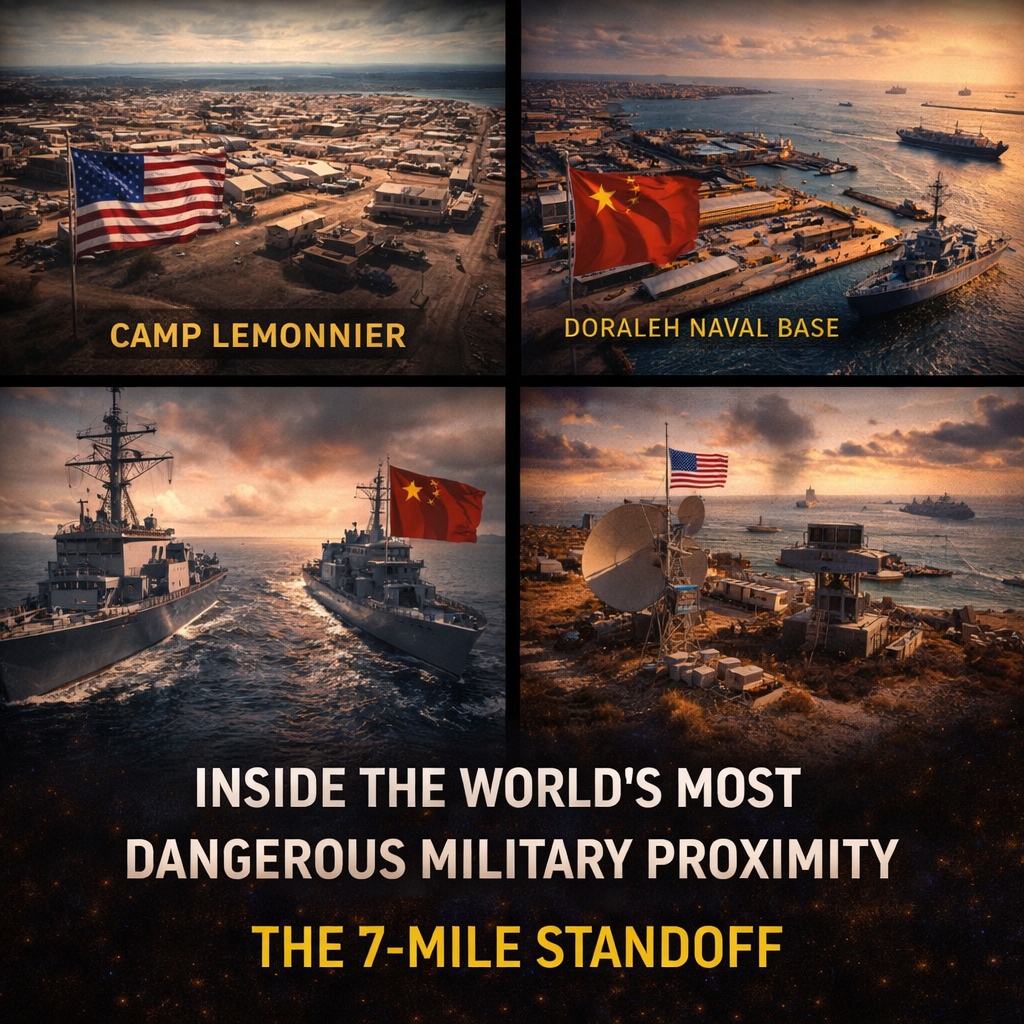
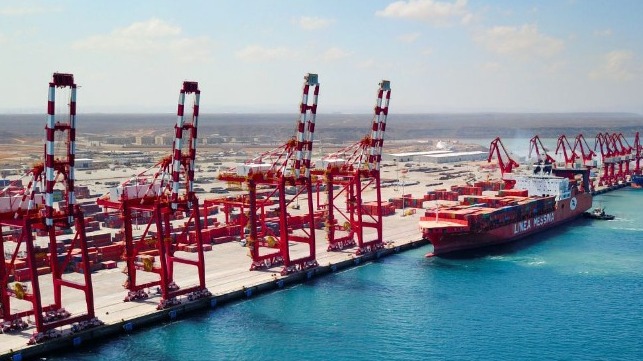
Within a distance of less than 7 miles, the United States Armed Forces operates Camp Lemonnier, while the People’s Liberation Army Navy maintains its first overseas naval base in Doraleh.
This is not symbolic presence.
This is direct proximity of strategic force.
In most parts of the world, rival powers maintain distance.
In Djibouti, they operate side by side.
Patterns & Connections

This represents a new global pattern:
Power is no longer separating
It is overlapping
- Trade routes are shared
- Infrastructure is co-located
- Influence zones are merging
This creates a new type of tension:
Not open conflict
But continuous strategic awareness
Every movement is monitored
Every expansion is noticed
Every signal is interpreted
This is permanent proximity pressure
Why It Matters for Humanity
When global powers are this close, time changes.
Decision time shrinks
Reaction time shortens
Escalation risk increases
In traditional geopolitics, distance allows de-escalation.
Here, distance does not exist.
A misunderstanding
A miscalculation
A defensive move misread as offensive
And the situation can shift instantly.
This is how modern conflict evolves:
Not from intention
But from interpretation under pressure
KI Analysis
From Konsmik Intelligence analysis:
Opportunities
Shared strategic zones can create enforced stability, as no single power can dominate without consequence. This balance can prevent unilateral control.
Risks
Close proximity increases the risk of accidental escalation. Any local incident—civil unrest, maritime disruption, or military signaling—can rapidly involve multiple global powers.
The closer the forces,
the higher the sensitivity.

Konsmik Reality
From the lens of Konsmik Reality, this is a proximity tension phase.
Short-Term (1–2 Years)
Increased surveillance, infrastructure expansion, and strategic signaling between powers.
Medium-Term (3–5 Years)
Djibouti becomes a central node in global military logistics and intelligence gathering.
Long-Term (5–10 Years)
Multiple global chokepoints adopt similar multi-power presence, creating a network of controlled tension zones.
This is not temporary.
It is the new architecture of global power.
Historical & Global Context

During the Cold War, rival powers avoided direct proximity.
They operated through regions, alliances, and indirect influence.
Djibouti breaks that pattern.
This is not Cold War distance.
This is modern overlap.
A new model where presence replaces separation.
Waides Insight
The future of geopolitics will not always be defined by conflict.
It will be defined by how close rivals can operate without triggering it.
Djibouti is the test case.
A place where global power is no longer distant
but face-to-face
Reflection
- Can rival powers truly coexist in the same strategic space without conflict?
- Is proximity the new deterrence—or the new risk?






Leave a Reply