

Waides Feed
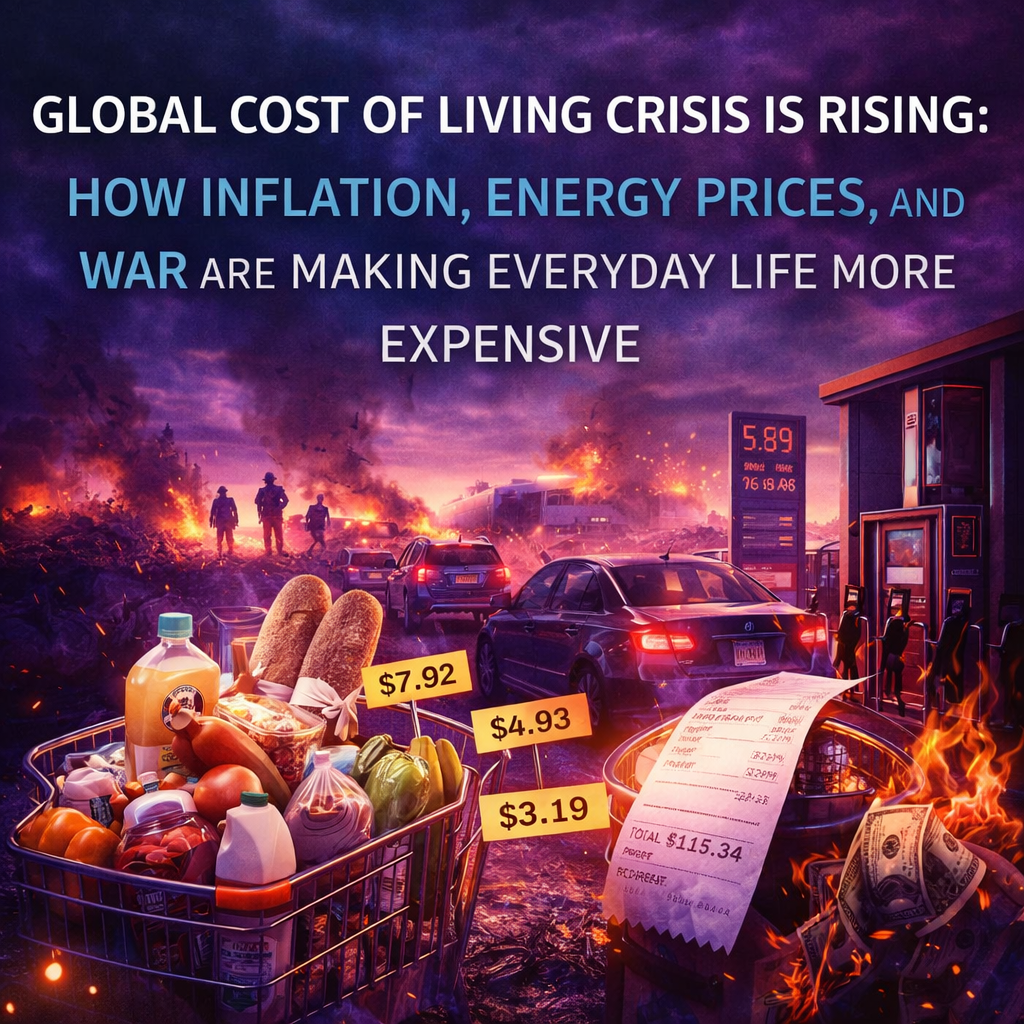
The global cost of living crisis is not coming — it is already here. Across multiple regions, people are experiencing the same pattern: rising food prices, higher transport costs, increasing rent, and reduced purchasing power.
This is not coincidence. It is the visible outcome of deeper system pressure building across energy, geopolitics, and economic structures. As energy prices rise, production becomes more expensive. As production costs increase, prices follow. And as prices rise, everyday life becomes harder to sustain.
But beneath the surface, this is more than inflation. It is a chain reaction moving through interconnected systems. War disrupts energy. Energy affects production. Production influences pricing. And pricing reshapes human behavior. This is how global events quietly become personal realities.
What makes this moment different is its scale. This is not limited to one country or region. It is a synchronized global experience, where multiple economies are facing similar pressure at the same time.
And beneath it all lies a deeper shift — stability is becoming more expensive.
“The cost of living crisis is not a phase — it is a signal that the system itself is under pressure.”
WHY IT MATTERS / PUBLIC CONTEXT
The cost of living crisis is where global systems meet human reality.
This is how geopolitics becomes personal — through your wallet, your food, and your daily survival.
For individuals, it means reduced purchasing power, tighter budgets, and difficult financial decisions. For families, it means prioritizing essentials over comfort. For businesses, it means balancing rising costs with shrinking margins.
Regional Positioning: Africa & Global System
Opportunity: Growth in local production and self-reliance
Risk: Inflation hits harder in import-dependent economies
Shift: Urgent need for economic resilience and diversification
HISTORICALLY…
Periods of rising living costs have always reshaped societies. They influence behavior, shift political priorities, and redefine economic stability.
From past inflation cycles to economic crises, the pattern is consistent — when everyday life becomes expensive, systems begin to adjust.
What is different today is synchronization. Multiple regions are experiencing similar pressures at once, amplifying the global effect.
KI ANALYSIS
According to KI analysis, the current cost of living crisis is the downstream result of multiple global pressures converging at the same time.
Driving Forces:
Rising energy costs increasing production expenses
Supply chain disruptions affecting availability
Geopolitical tension influencing global markets
Monetary policies reacting to inflation
Power Mapping:
Beneficiaries: Large corporations with pricing power, energy producers, strategic investors
Vulnerable: Low- and middle-income populations, small businesses, import-dependent economies
Opportunities:
Expansion of local production ecosystems
Innovation in cost-efficient solutions
Shift toward more resilient economic systems
Risks:
Increasing inequality
Reduced consumer spending
Social and economic instability
FOR KONSMIK CIVILIZATION
In a Konsmik Civilization, cost of living is stabilized through systems designed around human sustainability rather than profit pressure.
Production is localized. Supply chains are efficient and transparent. Pricing is balanced through value-based systems, ensuring that essential needs remain accessible.
Economic systems are built to absorb shocks, preventing external disruptions from affecting everyday life. Stability is not temporary — it is structured into the system itself.
SOLUTION LAYER (KSI)
Micro (Individuals):
Prioritize essential spending
Build multiple income streams
Track and adapt to price changes early
Meso (Institutions):
Optimize cost structures
Invest in local sourcing
Improve efficiency and transparency
Macro (System Level):
Strengthen local industries
Stabilize pricing of essential goods
Implement policies that protect purchasing power
KONSMIK REALITY
Short-term (1–2 years):
This is already unfolding. Living costs will continue to rise across essential sectors.
Medium-term (3–5 years):
Signals suggest structural economic adjustments, including increased focus on local production and resilience.
Long-term (2030+):
Economic systems evolve toward sustainability-focused models, balancing growth with stability.
KI Confidence
Level: High
Range: 80–86%
Justification: Strong alignment between energy costs, inflation trends, and global economic patterns
Closing Impact
This is not just inflation.
It is a shift in how people experience stability, comfort, and control.
Reflection Question
If the cost of living keeps rising across the world…
what does financial stability really mean in the future?








Leave a Reply