

Waides Feed
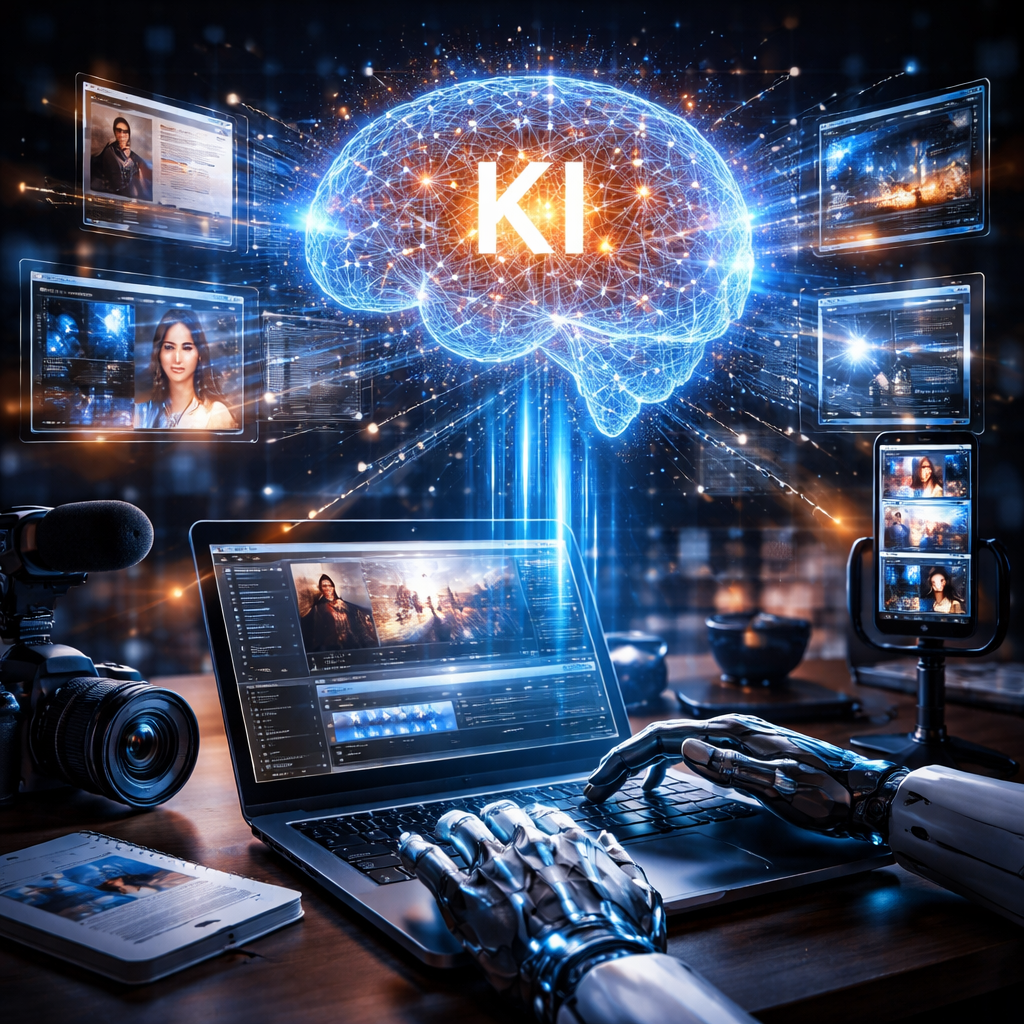
The rise of Artificial Intelligence in content creation is not just changing how content is produced. It is redefining the very meaning of creativity, ownership, and influence in the digital age.
What once required teams of writers, designers, editors, and producers can now be executed by intelligent systems in seconds. Articles, videos, music, and graphics are increasingly being generated, optimized, and distributed by AI-driven tools. But beneath this efficiency lies a deeper shift: content is becoming algorithmically shaped before it is even consumed.
The real transformation is not speed. It is scale and control. AI allows content to be produced at a volume and precision that was previously impossible. It can analyze audience behavior, predict engagement patterns, and tailor content to trigger specific reactions. This means content is no longer just created—it is engineered.
👉 Who benefits and why now?
Platforms, tech companies, and data-driven businesses benefit most, as AI enables them to dominate attention economies. The timing aligns with an era where attention has become one of the most valuable global assets.
“When content is engineered by intelligence, influence becomes programmable.”
WHY IT MATTERS / PUBLIC CONTEXT
Content is no longer just expression. It is becoming a system of influence.
And those who control its creation may shape perception at scale.
For everyday users, AI makes content creation easier and more accessible. Anyone can now produce high-quality work without advanced skills. But this accessibility comes with a trade-off: increased competition and reduced originality.
Global Positioning: Global System
Across global systems:
- Opportunity: Democratized creativity, faster production, new income streams
- Risk: Content saturation, misinformation, and loss of authentic human voice
👉 What changes for the average person?
The challenge shifts from “creating content” to standing out in a world flooded with it.
HISTORICALLY…
Content creation has always evolved with technology:
- Printing press → mass information distribution
- Internet → global publishing access
- Social media → instant sharing and virality
Now, AI introduces a new phase:
automated creativity at scale.
History shows that when creation becomes easier, competition increases—and value shifts toward uniqueness and trust.
KI ANALYSIS
According to KI analysis…
AI is transforming content creation through three core dynamics:
1. Content Automation
AI systems can now:
- Write articles
- Generate visuals
- Edit videos
- Compose music
This reduces production time and cost dramatically.
2. Algorithmic Personalization
Content is tailored based on:
- User behavior
- Preferences
- Engagement patterns
This creates highly targeted experiences but also narrows perspectives.
3. Attention Optimization
AI identifies what captures attention and amplifies it:
- Emotional triggers
- Trending topics
- Viral formats
Power Mapping
- Tech platforms → control distribution algorithms
- Content creators → adapt to AI-driven systems
- Audiences → become data sources feeding the system
Opportunities
- Faster content production
- Lower barriers to entry
- New creative possibilities
Risks
- Misinformation spread
- Loss of originality
- Over-reliance on automated systems
👉 Why timing matters:
The explosion of digital platforms and demand for constant content makes AI the most efficient solution to scale production.
FOR KONSMIK CIVILIZATION
In current systems, content is driven by engagement, often prioritizing attention over truth.
In a Konsmik Civilization:
- Content systems prioritize clarity, truth, and value
- AI supports human creativity rather than replacing it
- Algorithms are aligned with human well-being, not manipulation
Outcome difference:
- Content informs and elevates
- Trust is preserved
- Creativity remains authentic
SOLUTION LAYER (KSI)
Micro (Individuals)
- Focus on originality and personal perspective
- Use AI as a tool, not a replacement
- Build trust through authenticity
Meso (Institutions)
- Promote ethical content standards
- Balance automation with human oversight
- Invest in quality over quantity
Macro (System Level)
- Regulate AI-generated misinformation
- Encourage transparency in content creation
- Support systems that reward originality
KONSMIK REALITY
Short-term (1–2 years)
This is already unfolding…
AI-generated content will dominate digital platforms, increasing volume and competition.
Medium-term (3–5 years)
Signals suggest…
Audiences will begin to value authenticity and trust more than sheer content volume.
Long-term (2030+)
Early indicators show…
A new balance will emerge where human creativity and intelligent systems coexist, redefining what content truly means.
KI Confidence
Confidence Level: High
Confidence (% Range): 78–86%
Justification:
Strong adoption across industries, combined with increasing reliance on digital platforms, supports sustained transformation.
Closing Impact
AI is not just transforming content creation.
It is redefining who gets seen, who gets heard, and who gets believed.
And in a world where content shapes perception…
that may be the most powerful shift of all.
Reflection Question
If content can now be engineered to influence you…
👉 How will you know what is real, and what is designed to shape your thinking?









Leave a Reply