

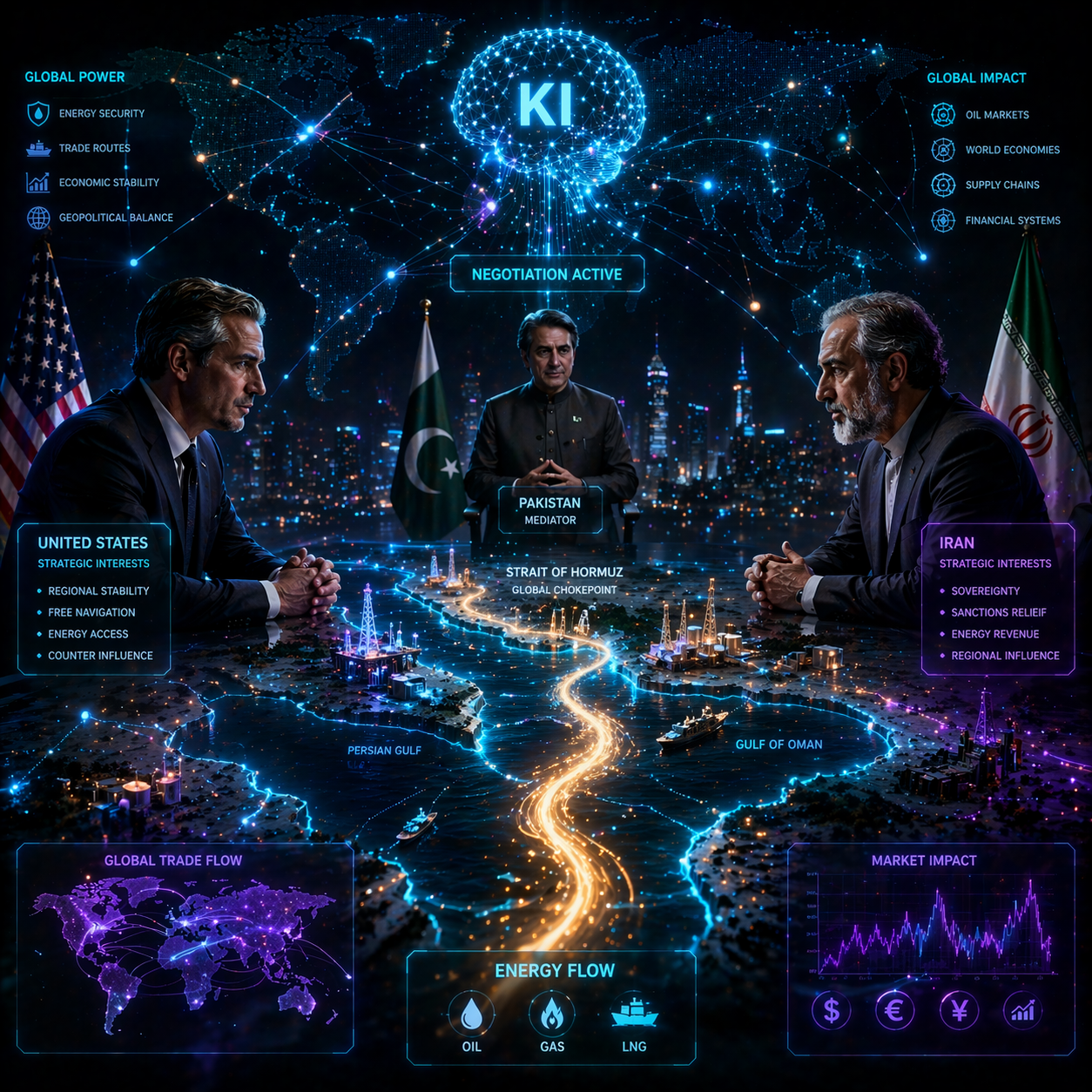
The United States and Iran are talking again.
For many, it sounds like diplomacy returning after tension.
But look deeper.
Why now?
Why Pakistan?
And what is really being negotiated behind the scenes?
Because in today’s world, talks are not just about peace.
They are about power.
Waides Feed
For the first time in decades, U.S. officials are engaging directly with Iranian counterparts in Islamabad, Pakistan. This alone signals a break from long-standing geopolitical patterns.
At the center of this shift are key actors like and Iranian leadership structures, operating within a fragile ceasefire environment.
But the deeper system is not about dialogue.
It is about control.
The focus of these negotiations includes:
- Stability in the Middle East
- Control of energy routes
- Influence over global markets
The most critical element is the .
This narrow waterway carries a significant portion of the world’s oil supply. Disruption here affects economies across continents.
This connects to a broader global shift already unfolding:
👉 Power is moving from direct dominance
👉 To strategic control of systems
The new battlefield is not just land.
It is:
- Trade routes
- Energy flows
- Economic leverage
The future is not controlled by who fights harder.
It is controlled by who manages the system better.
Why It Matters / Public Context
This is not just about two countries talking. It is about the stability of global energy, prices, and economies.
When these systems shift, the effects reach everyday life, from fuel prices to inflation.
What Are These Talks Really About?
At the surface:
- Ceasefire agreements
- Diplomatic engagement
At the system level:
👉 Control of energy routes
👉 Reduction of economic disruption
👉 Rebalancing global influence
In simple terms:
👉 It is a negotiation over how the world’s critical systems will operate
Why You Can’t Ignore This
This shift is not just geopolitical.
It is about where the next wave of:
- Economic stability
- Energy pricing
- Global influence
will be decided.
If you understand who controls energy and trade systems, you understand who influences the global economy.
If you ignore it, you miss the forces shaping everyday costs and opportunities.
“The future does not reward awareness, it rewards early positioning.”
🌍 Real-World Signals
- The has begun actions to secure shipping routes
- continues to leverage its geographic advantage in the Gulf
- is emerging as a strategic mediator in global diplomacy
- Global oil markets react quickly to any disruption in the region
This reflects a larger pattern:
👉 Control of chokepoints equals control of global systems
How It Works
The system behind these negotiations operates through:
- Strategic Pressure
Conflict creates urgency - Negotiation Leverage
Each side uses its strengths (military, geography, economy) - System Control Agreements
Deals are made around:- Energy flow
- Trade access
- Influence zones
- Global Impact
Outcomes affect:- Oil prices
- Trade stability
- Economic conditions worldwide
👉 This is not traditional diplomacy.
👉 It is system-level negotiation.
Historical Context
- Since 1979, U.S.–Iran relations have been defined by tension and indirect engagement
- Previous conflicts often escalated without direct negotiation
- Energy routes have always been central to global power struggles
Now, the pattern is shifting:
👉 From confrontation without dialogue
👉 To controlled tension with negotiation
🧠 KI Analysis
According to KI analysis, this moment represents a structural transition in global power.
Causes:
- Economic pressure from instability
- Dependence on uninterrupted energy supply
- Strategic need to avoid prolonged conflict
- Rise of multipolar global systems
Systems Involved:
- Global energy markets
- Military and security networks
- International trade systems
Power Dynamics: Power is shifting toward those who control systems, not just those who control force.
Opportunities:
- Strategic:
De-escalation of conflict - Economic:
Stabilization of global markets - Geopolitical:
Emergence of new mediators like Pakistan
Risks:
- Systemic:
Talks may fail, triggering renewed instability - Structural:
Fragile agreements may not hold - Global:
Disruption could affect economies worldwide
🌍 For Konsmik Civilization
In Konsmik Civilization, global systems are managed differently:
Step 1: System Mapping
All critical systems (energy, trade, security) are clearly understood
Step 2: Conflict Prediction
Potential disruptions are identified early
Step 3: Balanced Negotiation
Decisions are made based on system stability, not dominance
Step 4: Continuous Monitoring
Systems are adjusted in real time to prevent collapse
Outcome:
- No sudden disruptions
- Stable global flow
- Reduced conflict dependency
🛠️ Solution Layer
Personal Level:
Understand how global events affect local costs and decisions
Organizational Level:
Prepare for fluctuations in energy and supply chains
National Level:
Diversify energy and economic dependencies
Global Level:
Strengthen cooperative systems over competitive control
Step-by-Step Action Path
1. Awareness
Recognize that global power is shifting
2. Positioning
Understand which systems influence your environment
3. Action
Adapt decisions based on global trends
4. Leverage
Use knowledge of system shifts to anticipate changes
🌌 Konsmik Reality
This is already unfolding.
Short-Term (1–2 years):
- Temporary stabilization through negotiations
- Continued underlying tension
Medium-Term (3–5 years):
- Rise of multipolar diplomacy
- Increased influence of regional mediators
Long-Term (5–10 years):
- Global systems governed by negotiation networks
- Reduced dominance of single superpowers
Signals suggest:
👉 The future of power will not be decided by war
👉 It will be decided by control of systems
🔮 Forecast
- Energy routes will remain central to global strategy
- More indirect negotiations will replace direct conflict
- Countries controlling key systems will shape global outcomes
❓ FAQ
Why are the U.S. and Iran talking now?
To stabilize conflict and protect critical systems like energy routes.
Why is Pakistan involved?
It is acting as a neutral mediator, increasing its global role.
What is the Strait of Hormuz?
A key global oil route affecting energy supply and prices.
Will this lead to peace?
It may reduce conflict, but underlying tensions remain.
🧠 Closing Insight
This is not a return to peace.
It is a shift in how power is negotiated.
The world is moving from visible conflict…
To invisible control systems.
And those who understand these systems will understand where the world is going.
🌍 Reflection Question
If power is no longer about who dominates, but who controls systems…
Who is really in control of the world today?
Meta Block
Primary Keyword: US Iran talks 2026
Secondary Keywords:
geopolitics 2026, Strait of Hormuz, global energy control, Pakistan diplomacy, Middle East conflict
Meta Description:





Leave a Reply