

Waides Feed
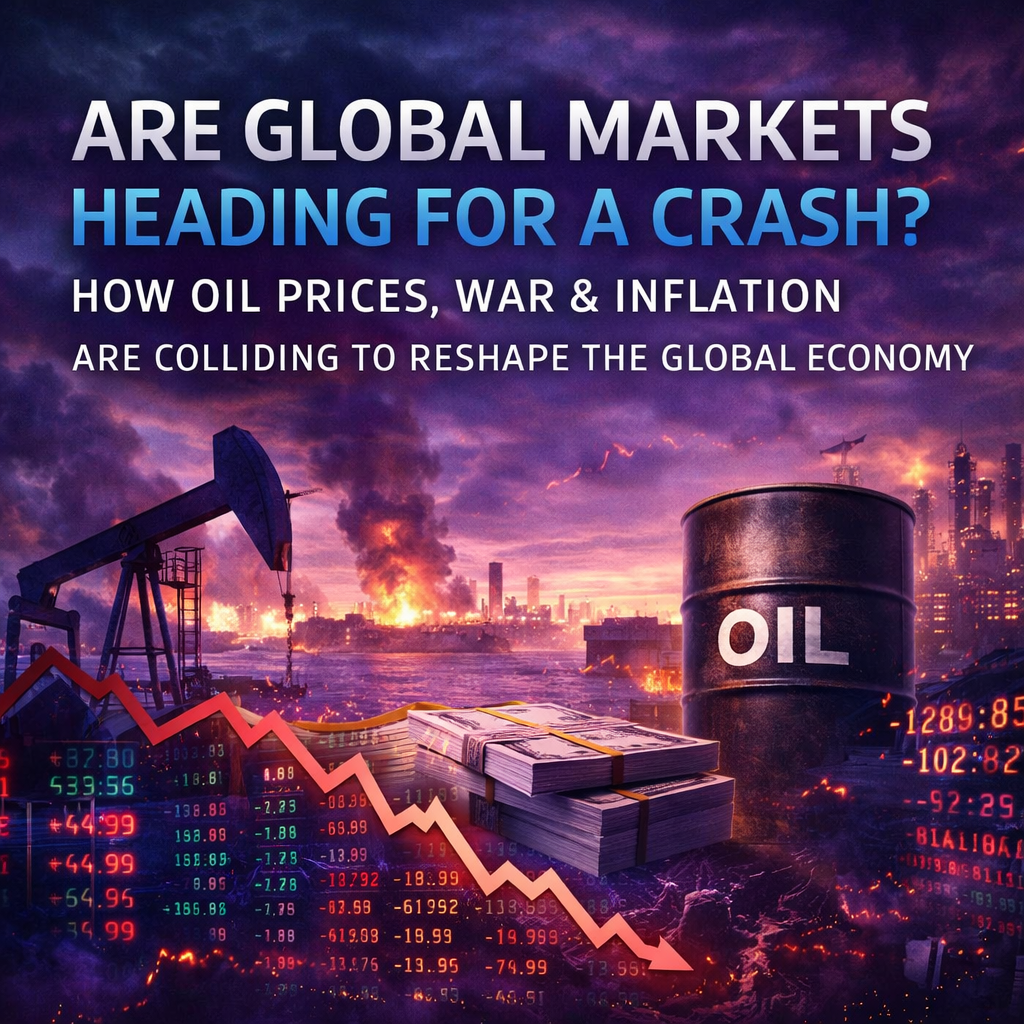
Global markets are not reacting randomly. What we are seeing right now is a synchronized response to pressure building across multiple systems at once. War is increasing uncertainty. Oil prices are rising. Inflation is tightening economic conditions. And markets are adjusting before the full impact reaches the public.
This is how modern economic stress unfolds. It does not begin with collapse. It begins with signals. Investors start repositioning. Risk appetite reduces. Liquidity shifts. And gradually, the system begins to slow down under its own weight.
But beneath the visible market movements lies a deeper structure. Financial systems today are highly interconnected. Energy affects production. Production affects pricing. Pricing affects consumer behavior. And consumer behavior feeds directly back into the economy. When one part of the system is pressured, everything else begins to adjust.
What we are witnessing is not instability. It is a chain reaction already in motion.
“Markets do not crash suddenly — they weaken quietly before they fall.”
WHY IT MATTERS / PUBLIC CONTEXT
Markets are the early warning system of the real economy.
What happens in financial systems today becomes everyday reality tomorrow.
For individuals, this means potential job uncertainty, rising cost of living, and reduced financial flexibility. For businesses, it means tighter margins and slower expansion. For governments, it means difficult policy decisions.
Global Positioning
Opportunity: Strategic investors reposition for long-term advantage
Risk: Economic slowdown, reduced growth, increased unemployment
Shift: Volatility becoming a permanent feature of modern markets
HISTORICALLY…
Every major economic shift has followed a pattern. Before downturns become visible, markets begin to signal stress. This happened before financial crises, recessions, and major global slowdowns.
The difference today is scale and speed. Markets are faster, more connected, and more sensitive to global events. This means reactions are sharper, and impacts spread more quickly across regions.
KI ANALYSIS
According to KI analysis, the current market pressure is driven by a convergence of geopolitical and economic forces rather than isolated triggers.
Driving Forces:
Oil price surge increasing operational costs
Inflation forcing tighter monetary policies
War-driven uncertainty reducing investor confidence
Global system interdependence amplifying shocks
Power Mapping:
Beneficiaries: Strategic investors, hedge funds, energy-linked sectors
Vulnerable: Retail investors, small businesses, emerging economies
Opportunities:
Long-term positioning in undervalued assets
Innovation in financial risk management
Diversification across sectors and geographies
Risks:
Extended market volatility
Economic slowdown or recession
Widening gap between informed and uninformed participants
FOR KONSMIK CIVILIZATION
In a Konsmik Civilization, markets are not driven by speculation alone. They are guided by real value, stability, and intelligent system feedback.
Economic systems are designed to absorb shocks rather than amplify them. When one sector experiences pressure, adaptive systems redistribute balance across the network, preventing systemic collapse.
Transparency replaces uncertainty. Intelligence replaces reaction. Stability becomes a built-in feature, not a temporary outcome.
SOLUTION LAYER (KSI)
Micro (Individuals):
Avoid panic decisions based on short-term volatility
Focus on long-term financial positioning
Build multiple income streams
Meso (Institutions):
Strengthen risk management systems
Diversify operational exposure
Improve financial transparency
Macro (System Level):
Enhance global economic coordination
Develop shock-resistant financial frameworks
Balance growth with long-term stability
KONSMIK REALITY
Short-term (1–2 years):
This is already unfolding. Markets will remain volatile as systems adjust to pressure.
Medium-term (3–5 years):
Signals suggest restructuring of financial systems toward resilience and adaptability.
Long-term (2030+):
Financial systems evolve into more predictive, intelligent networks with reduced instability but increased complexity.
KI Confidence
Level: High
Range: 77–84%
Justification: Strong alignment between oil shocks, geopolitical instability, and historical market behavior patterns
Closing Impact
This is not just market volatility.
It is the visible surface of a deeper economic shift already underway.
Reflection Question
Are markets reacting to events…
or revealing what is about to happen next?







Leave a Reply