

🌱 The Nature Profile
Bitter Leaf does not hide its identity. From the first taste, it introduces itself with intensity. It is direct, sharp, and uncompromising.
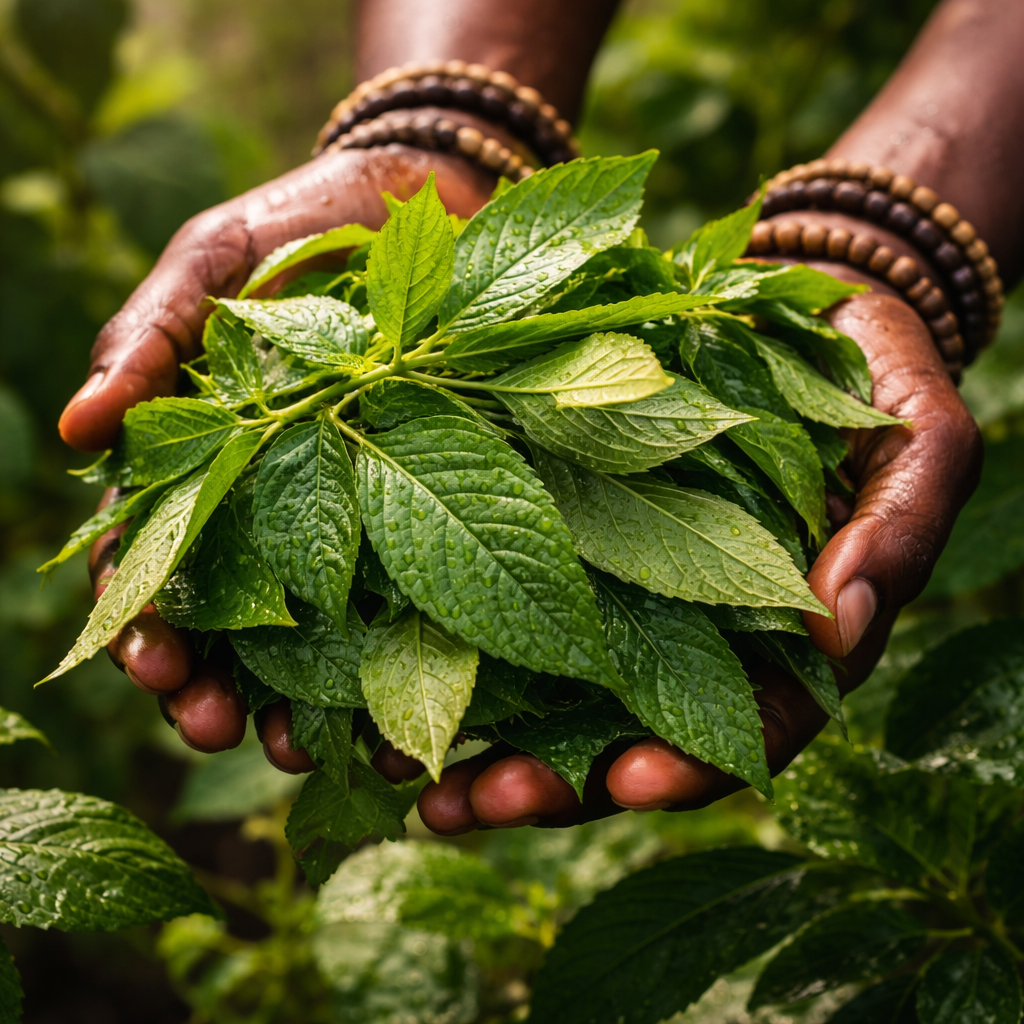
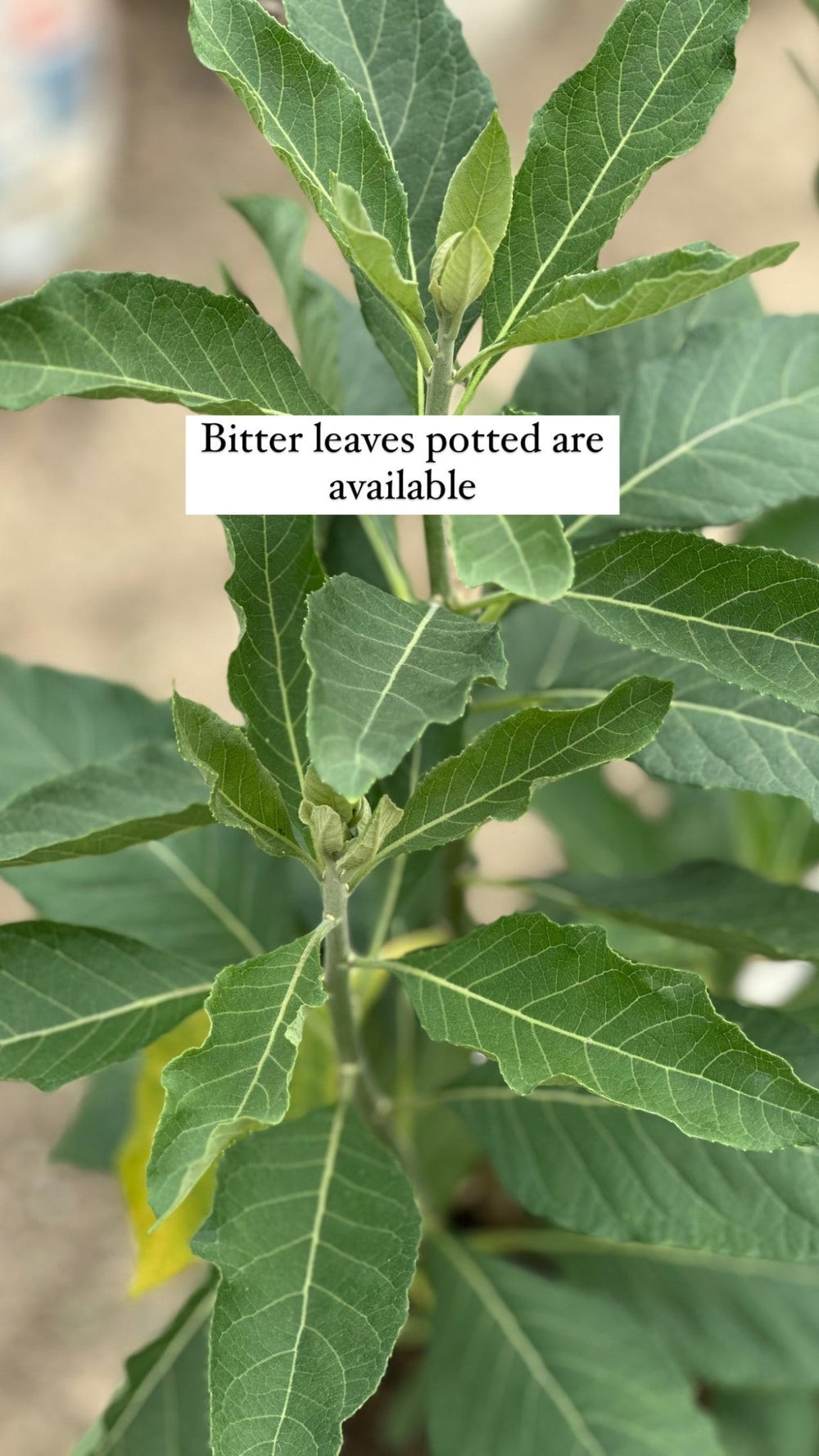
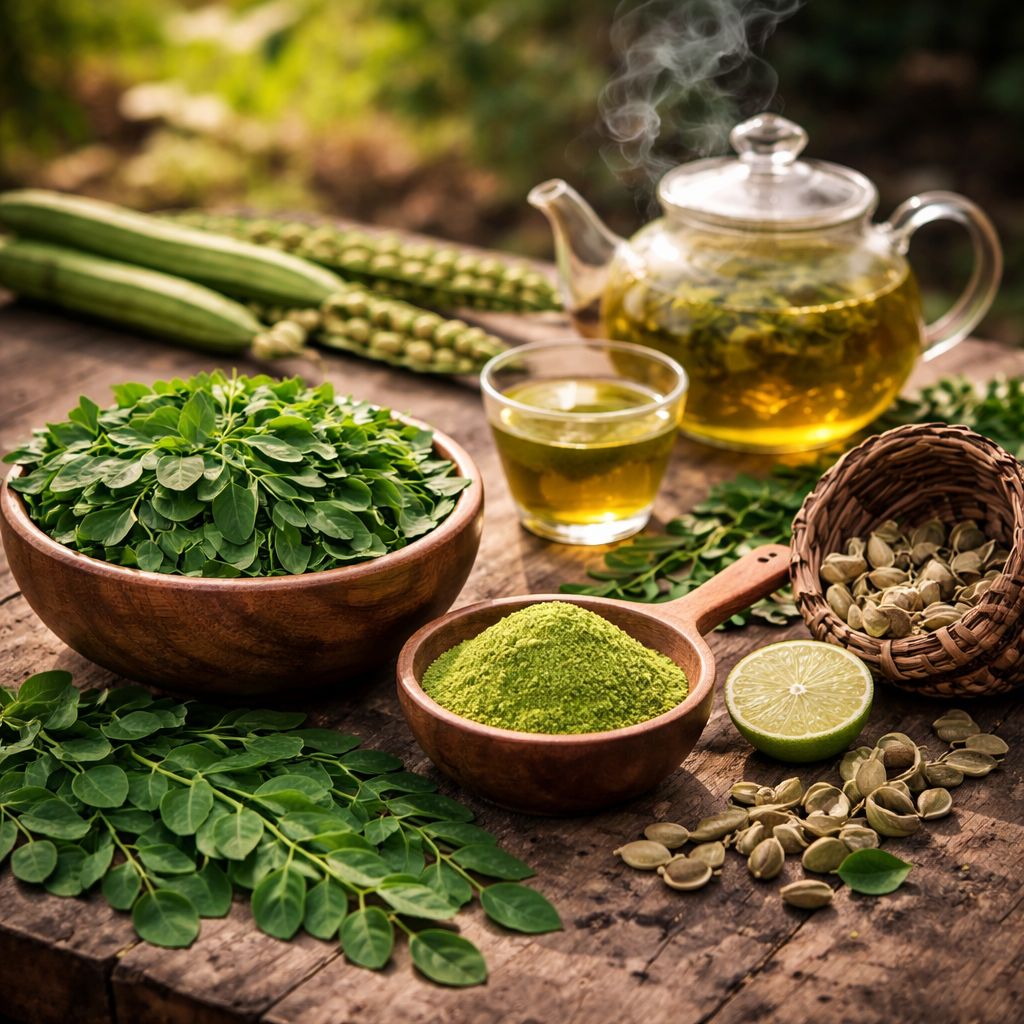
- Leaf Signature: Medium-sized, elongated leaves with slightly rough edges and a matte green surface.
- Habitat: Thrives in tropical regions, especially across West Africa, growing in open sunlight and resilient soil.
- Scent & Texture: Slightly earthy scent. When crushed, it releases a strong, bitter fluid that immediately signals its purpose.
Kons Neshor Insight:
This is not a gentle plant. Bitter Leaf exists to correct imbalance, not to comfort it.
🌳 The Vertical Intelligence (Root-to-Leaf System)
- The Root:
Draws deep minerals from the soil, anchoring the plant in resilience. It reflects stability and endurance in harsh environments. - The Stem:
Channels nutrients efficiently, acting as a transport system that maintains internal flow and balance. - The Leaf:
This is the dominant intelligence. It interacts with sunlight and air, producing the bitter compounds that serve as the plant’s defense and purification mechanism. - The Seed (Minimal Expression):
The plant focuses less on fruit energy and more on leaf intelligence, making it a functional plant rather than a storage plant.
🏺 The Primary Memory (The Witness Layer)
Bitter Leaf is a witness to environments where survival required constant internal cleansing.
- The Plant’s Memory:
It has adapted to climates where microorganisms, parasites, and internal imbalances were common. Its bitterness is not accidental, it is a protective response encoded over time. - The Living Library:
It carries one key message:
👉 “A body that is not regularly purified becomes a host to imbalance.” - The Dialogue:
When consumed, its bitterness interacts immediately with the tongue and digestive system, triggering cleansing responses. The body does not ignore it. It reacts, adjusts, and begins correction.
🌿 The Gathering
- Harvest in the early morning, when the leaves are fresh and hydrated.
- Select mature leaves, not the youngest shoots.
- Pluck gently without damaging the stem structure.
- Never strip the plant completely. Allow regrowth.
Principle:
The plant must continue living to continue teaching.
🧪 The Preparation Lab
1. Leaf Wash (Purification Base Method)
- Step 1: Collect fresh bitter leaves.
- Step 2: Wash thoroughly in clean water 2–3 times.
- Step 3: Squeeze and rinse repeatedly to reduce excessive bitterness (do not remove it completely).
- Step 4: Collect the green extract or use the softened leaves.
2. Decoction (Fire-Bond Method)
- Step 1: Add washed leaves into clean water.
- Step 2: Boil for 10–15 minutes.
- Step 3: Allow to cool and strain.
🔗 Synergy Protocols
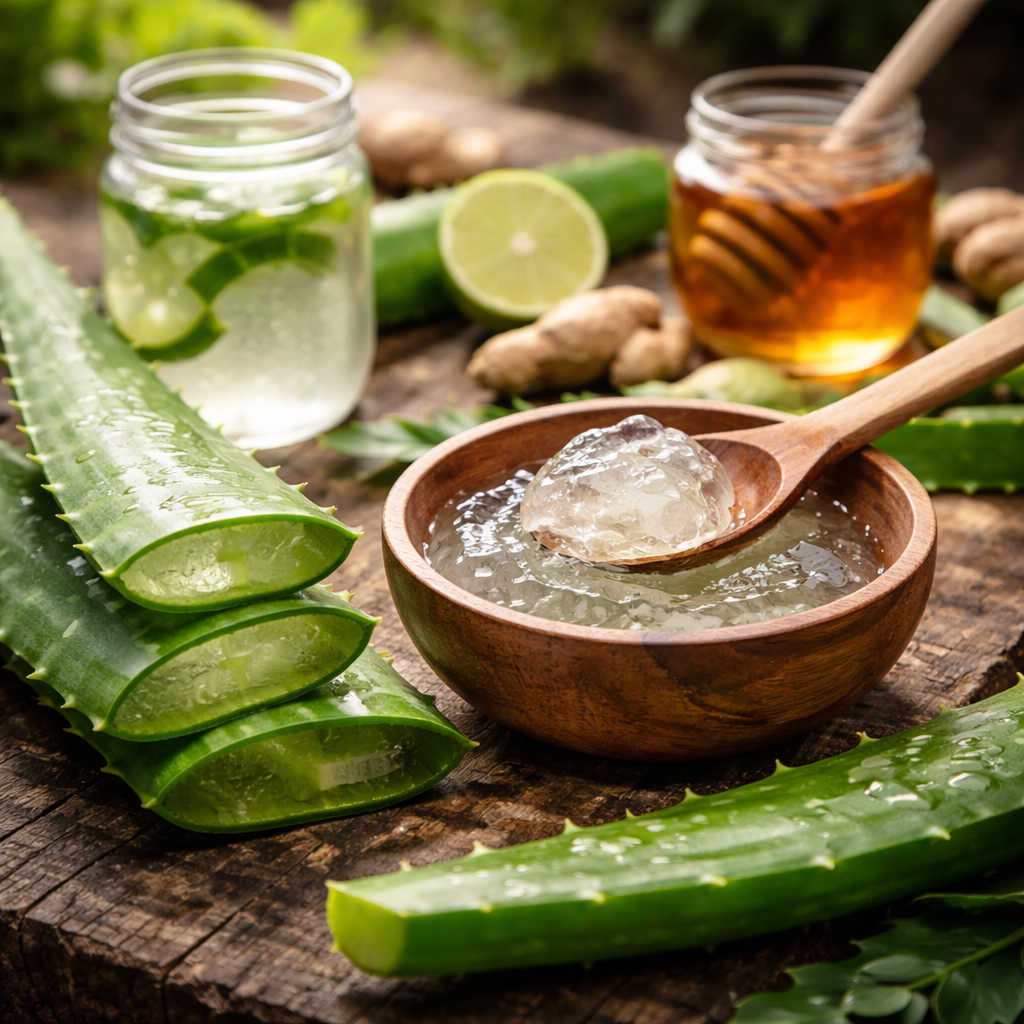
- Ginger → Adds warmth, balances the intensity of bitterness
- Honey → Softens taste and supports energy
- Lime → Enhances cleansing and digestive activation
These combinations do not replace the plant’s role, they support its delivery.
🛤️ The Healing Path
- When: Early morning or before meals
- How: Small measured intake, not excessive
- What Happens:
- Digestive system becomes active
- Internal cleansing begins
- Body may respond with light detox reactions
- Observation:
- Reduced internal heaviness
- Improved digestion
- Gradual feeling of internal clarity
🏺 The Ancestral Memory
Across West Africa, Bitter Leaf has always been more than food.
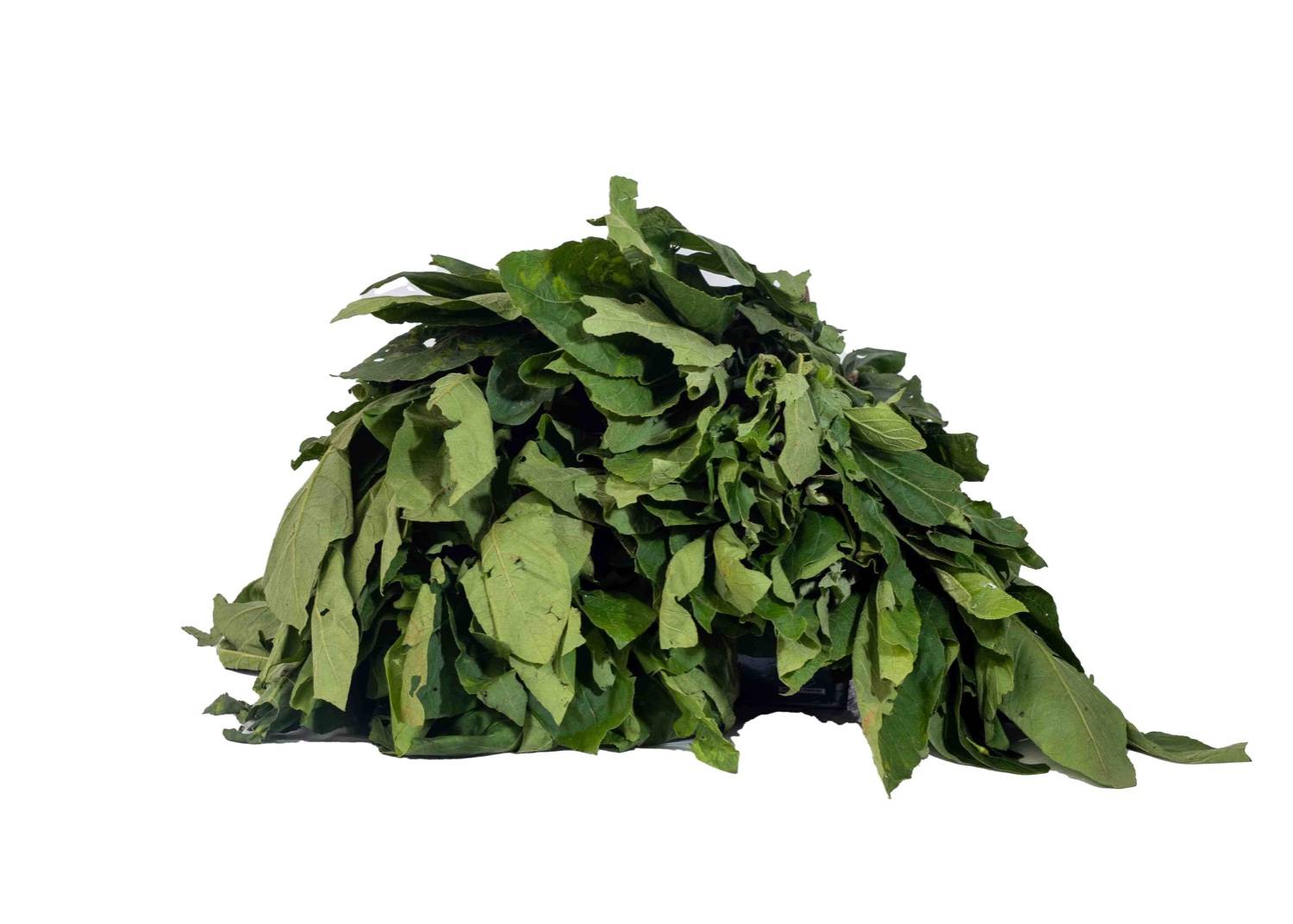
- Used in soups like traditional bitter leaf preparations for strength and recovery
- Given after illness to restore internal balance
- Chewed raw in small amounts for cleansing the system
- In some traditions, used in ritual cleansing and symbolic purification
The bitterness was never rejected.
It was understood.
👉 What is bitter to the tongue can be necessary for the body.
🧬 KI (Konsmik Intelligence) Insight
according to KI analysis,
modern humans have moved toward constant sweetness, processed intake, and comfort-driven consumption, creating internal environments that no longer self-correct.
Bitter Leaf represents a lost balance:
- The absence of natural bitterness in modern diets
- Reduced internal cleansing cycles
- Increased dependency on artificial correction systems
The deeper pattern is clear:
👉 When humans remove natural resistance (like bitterness), imbalance accumulates silently.
🌍 In Konsmik Civilization
Bitter Leaf is not used occasionally.
It is integrated into daily living systems.
- Small, controlled intake is part of routine nourishment
- Cleansing cycles are scheduled, not reactive
- Food systems include functional plants, not just taste-driven meals
Children grow up understanding:
👉 Not everything is meant to taste good
👉 Some things are meant to keep you alive and balanced
🔮 From the Lens of Konsmik Reality
Past
Humans lived in alignment with plants like Bitter Leaf. Cleansing was natural, continuous, and embedded in daily food.
Present
Bitterness has been removed from diets. Internal imbalance builds quietly, often unnoticed until it becomes a problem.
Future
- If Reconnected:
Humans regain natural balance, reducing dependence on external correction systems. - If Ignored:
Internal imbalance continues to rise, requiring more artificial interventions.
⚖️ Ethical Guardrails & Systemic Safety
- Use in moderation. Excess intake may cause discomfort.
- Not a replacement for medical care.
- Interaction Awareness: May interact with existing treatments for blood sugar or digestion.
- Sensitivity Check: Pregnant individuals or those with specific conditions should seek guidance before use.
🌿 Kons Neshor Closing Insight
Bitter Leaf teaches one truth clearly:
👉 Healing is not always sweet.
Sometimes, what restores the body is the very thing the tongue resists.
And in that resistance…
lies the beginning of balance.









Leave a Reply