

Waides Feed
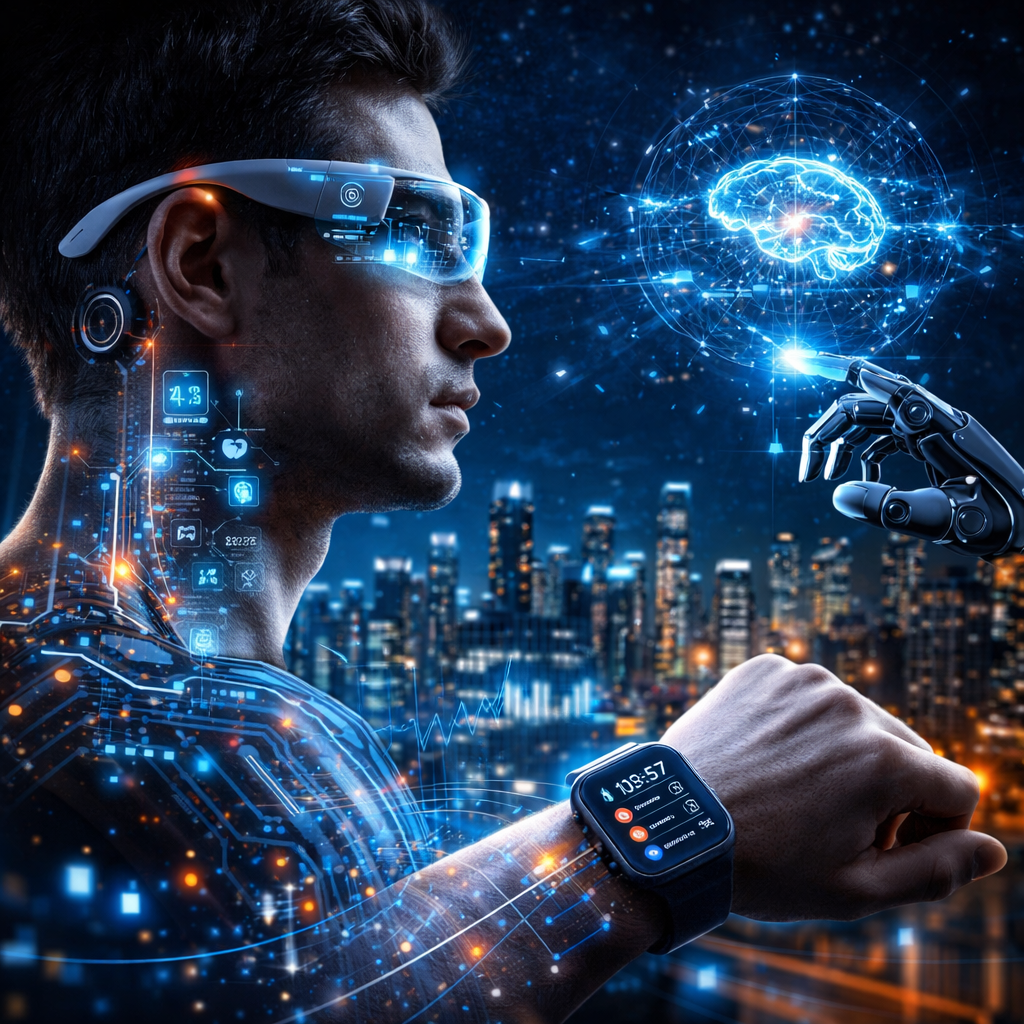
The evolution of wearable technology is no longer about convenience. It is about proximity to the human body and, increasingly, proximity to the human mind. Devices that once sat on wrists as accessories are now moving closer to the skin, the eyes, and even the nervous system.
What appears publicly as innovation in smartwatches and fitness trackers is, beneath the surface, a strategic shift toward continuous human-data integration. Wearables are becoming sensors of human existence, collecting streams of biological, behavioral, and environmental data in real time. This data is not just for users. It is becoming a new form of digital currency.
The next big thing in wearable technology is not a single device. It is an ecosystem of embedded intelligence, where wearables act as gateways between the physical body and digital systems powered by Artificial Intelligence. From smart glasses to bio-integrated sensors, the direction is clear: technology is moving closer to becoming invisible, yet more powerful.
👉 Who benefits and why now?
Technology companies, healthcare institutions, and data-driven economies benefit from deeper access to human data. The timing aligns with the rise of AI systems that require continuous, real-time input to function effectively.
“The closer technology gets to the body, the more it begins to shape human reality itself.”
WHY IT MATTERS / PUBLIC CONTEXT
Wearables are no longer tools you use. They are systems that begin to understand you.
And in time, they may begin to influence you.
For the average person, this means more convenience, better health tracking, and enhanced daily experiences. But the deeper implication is a shift in who owns and interprets your personal data.
Global Positioning: Global System
Across global markets, wearable technology is becoming a key battleground for innovation:
- Opportunity: Preventive healthcare, enhanced productivity, personalized digital experiences
- Risk: Data privacy erosion, behavioral manipulation, dependency on tech ecosystems
👉 What changes for the average person?
Your body becomes a data source, and your daily life becomes part of a continuous feedback loop.
HISTORICALLY…
Technology has always moved closer to humans:
- Computers filled rooms
- Smartphones fit in pockets
- Wearables moved onto the body
Now, the next phase is integration within the body’s natural systems.
History shows a clear pattern:
As technology becomes more personal, it becomes more powerful — and more influential.
KI ANALYSIS
According to KI analysis…
The next big shift in wearable technology is driven by three converging forces:
1. Biological Data Monetization
Wearables generate continuous streams of:
- Heart rate
- Sleep patterns
- Movement behavior
- Emotional indicators
This data fuels AI models, healthcare systems, and commercial ecosystems.
2. Real-Time Feedback Systems
Wearables are evolving from passive trackers to active decision systems:
- Suggesting actions
- Guiding behavior
- Automating responses
3. Human-Technology Convergence
Emerging innovations are moving toward:
- Neural interfaces
- Skin-based sensors
- Smart fabrics
These technologies reduce the boundary between human and machine.
Power Mapping
- Tech companies → control data ecosystems
- Healthcare systems → leverage predictive insights
- Governments → regulate access and security
Opportunities
- Early disease detection and prevention
- Enhanced human productivity
- Personalized digital ecosystems
Risks
- Loss of privacy
- Over-dependence on technology
- Ethical concerns around data ownership
👉 Why timing matters:
AI systems now require continuous real-world data, and wearables are the most efficient way to collect it.
FOR KONSMIK CIVILIZATION
In today’s systems, wearable technology is driven by profit and data extraction.
In a Konsmik Civilization, wearable systems operate differently.
Step by step:
- Data belongs to the individual, not corporations
- Systems are designed for well-being, not engagement addiction
- Wearables act as guides, not controllers
Outcome difference:
- Technology enhances human awareness
- Data empowers individuals
- Systems remain ethically balanced
SOLUTION LAYER (KSI)
Micro (Individuals)
- Be conscious of what data your devices collect
- Prioritize wearables that offer transparency and control
- Use technology as a tool, not a dependency
Meso (Institutions)
- Develop ethical data frameworks
- Ensure transparency in wearable ecosystems
- Invest in user-centered design
Macro (System Level)
- Enforce global data protection standards
- Regulate biometric data usage
- Promote decentralized data ownership models
KONSMIK REALITY
Short-term (1–2 years)
This is already unfolding…
Wearables will become more advanced in health tracking and real-time feedback, especially in urban and developed regions.
Medium-term (3–5 years)
Signals suggest…
Smart glasses, bio-sensors, and AI-integrated wearables will begin replacing traditional smartphone interactions.
Long-term (2030+)
Early indicators show…
The boundary between human and technology becomes increasingly blurred, leading to a fully integrated human-digital interface.
KI Confidence
Confidence Level: High
Confidence (% Range): 75–84%
Justification:
Strong convergence between AI development, healthcare demand, and wearable innovation indicates sustained growth and integration.
Closing Impact
Wearable technology is not just evolving.
It is moving toward becoming the interface through which humans experience reality.
And when that happens, the question will no longer be about what technology can do.
It will be about what it begins to decide for you.
Reflection Question
If technology begins to understand your body better than you do…
👉 Who should have the final control, you or the system?












Leave a Reply