


What if the biggest shift in wealth creation is no longer oil, land, or data — but intelligence itself?
A silent transformation is unfolding across the world. Billions of dollars are flowing into AI startups at an unprecedented rate, not just because of innovation, but because of what they represent: control over the future of how value is created, decisions are made, and systems are run.
🧠 Waides Feed
The surge in AI startup investment is not random. It is a calculated response to a deeper realization across global systems: whoever builds intelligence infrastructure will control future economies.
Major players like OpenAI, Google DeepMind, and Anthropic have already demonstrated that AI is no longer experimental — it is operational, scalable, and economically transformative.
But beneath the headlines, a more important shift is happening.
Startups are no longer just building apps or platforms. They are building intelligence layers — systems that think, decide, automate, and optimize. This reflects a broader transformation in global systems, where productivity is no longer tied to human effort alone, but to the ability to deploy intelligence at scale.
This connects to a larger pattern already unfolding across industries, where automation, data, and decision-making are merging into a single system of power.
The future is not built by innovation alone, but by those who control its direction.
⚖️ Why It Matters / Public Context
AI is not just creating new companies — it is redefining how money is made and who has access to opportunity.
This shift will determine which countries, businesses, and individuals rise — and which fall behind.
For everyday people, this means:
- Jobs will change faster than ever
- New opportunities will emerge for those who adapt
- Inequality may widen between those who use AI and those who don’t
🤖 What Is AI Startup Investment?
AI startup investment refers to funding provided to companies building products or systems powered by artificial intelligence.
These startups focus on:
- Automation tools
- AI agents and assistants
- Data intelligence systems
- Generative content platforms
- AI infrastructure and APIs
Unlike traditional startups, AI-native companies are built entirely around intelligence systems — not just using technology, but replacing human processes with machine reasoning.
🌐 Real Examples / Current Use
Across industries, the impact is already visible:
- Startups automating customer service with AI agents
- AI tools generating content, designs, and code in seconds
- Healthcare startups using AI for diagnostics and predictions
- Financial platforms using AI to manage risk and trading
This reflects a broader shift in global systems where intelligence is becoming embedded into every layer of business and society.
⚙️ How It Works / Why It Matters
At the core, AI startups operate on a simple but powerful model:
- Access to AI models (via APIs or proprietary systems)
- Application layer (tools built for specific industries or problems)
- Scale through automation (serving millions without proportional human labor)
This creates a new type of leverage:
- One person can build what previously required a team
- One system can replace entire workflows
- One startup can scale globally almost instantly
The result is a shift from labor-based value → intelligence-based value
🕰️ Historically…
Every major economic shift has followed a similar pattern:
- Industrial Revolution → Machines replaced physical labor
- Internet Era → Digital systems replaced information barriers
- AI Era → Intelligence systems are replacing decision-making itself
The difference now is speed.
What took decades before is now happening within years.
🧬 KI Insight
According to KI analysis, this AI startup explosion is not just about innovation — it is about control of economic architecture.
The real power is not in the startups themselves, but in:
- The infrastructure they depend on
- The data they access
- The intelligence systems they build upon
Opportunities:
- Creation of entirely new industries
- Faster global scaling for entrepreneurs
- Increased productivity across sectors
Risks:
- Overdependence on a few dominant AI providers
- Collapse of weak startups with no real foundation
- Rising inequality between AI adopters and non-adopters
From a human-centered perspective, the biggest question is not whether AI will grow — it is whether people will be empowered by it or replaced by it.
🌍 For Konsmik Civilization
In Konsmik Civilization, AI is not used to replace humans, but to amplify human potential.
Systems are designed to:
- Distribute opportunity, not concentrate it
- Build collective intelligence, not isolated power
- Ensure ethical alignment through structured intelligence governance
This creates a balanced system where technology serves humanity — not the other way around.
🛠️ Solution Layer
Micro (Individual)
- Learn how to use AI tools effectively
- Build skills around creativity, strategy, and problem-solving
Meso (Business / Startups)
- Focus on building real value, not just AI wrappers
- Develop unique data and systems for long-term advantage
Macro (Global / Policy)
- Invest in AI education and infrastructure
- Create fair access systems to prevent inequality
🌌 Konsmik Reality
From the lens of Konsmik Reality, this moment is not about startups — it is about a shift in the source of power.
In the past, power came from:
- Land
- Resources
- Capital
Now, power is moving toward:
- Intelligence
- Systems
- Awareness
Those who understand this early will not just adapt — they will shape the future.
🔮 Forecast
Short-term (1–2 years):
Rapid growth in AI startups, with high failure rates among low-value companies
Medium-term (3–5 years):
Market consolidation, with a few dominant players controlling key AI ecosystems
Long-term (5–10 years):
Emergence of intelligence-driven economies where human roles shift from execution to direction
❓ FAQ
What is driving AI startup investment?
The belief that AI will reshape every industry and create massive economic value.
Are AI startups a bubble?
Some are overhyped, but the underlying shift is real and long-term.
Will AI replace jobs?
Some jobs will disappear, but new roles will emerge around managing and directing AI systems.
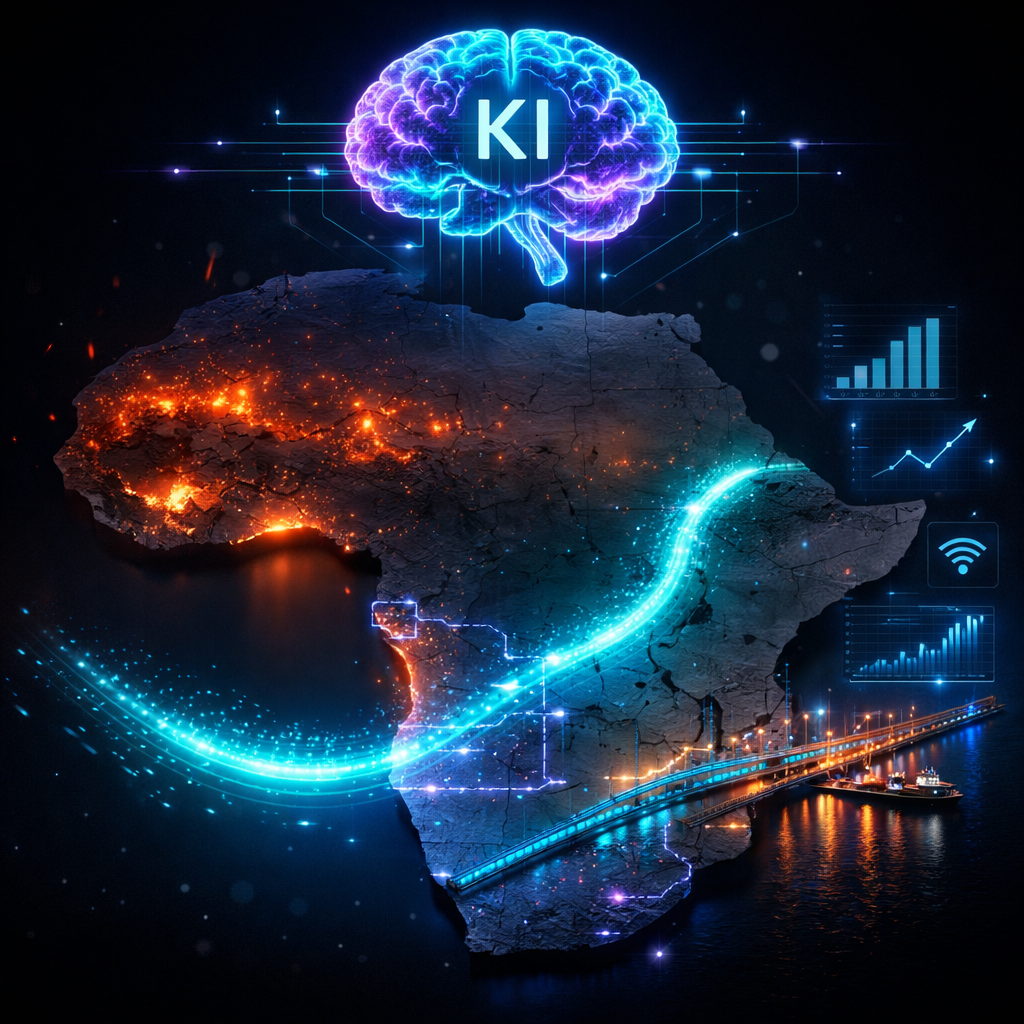
Why is AI important for Africa?
It offers a chance to leapfrog traditional systems, but also carries the risk of dependency if not developed locally.
🧠 Closing Impact
This is not just a wave of investment.
It is the early stage of a new economic reality where intelligence itself becomes the foundation of value.
Those who see it early will position themselves within it.
Those who ignore it may find themselves operating inside systems they do not control.
🌍 Reflection Question
What happens when intelligence becomes the most valuable resource in the world — and who gets to control it?
Are we building tools for humanity… or systems that will eventually define it?












Leave a Reply