

Waides Feed
The global conversation has been loud: “The dollar is being replaced.” But beneath that noise, something far more precise is happening and most people are missing it.
The real question is not whether the dollar is falling. The real question is: what is BRICS actually doing while everyone is focused elsewhere?
Because BRICS is not making dramatic moves. It is making calculated ones.
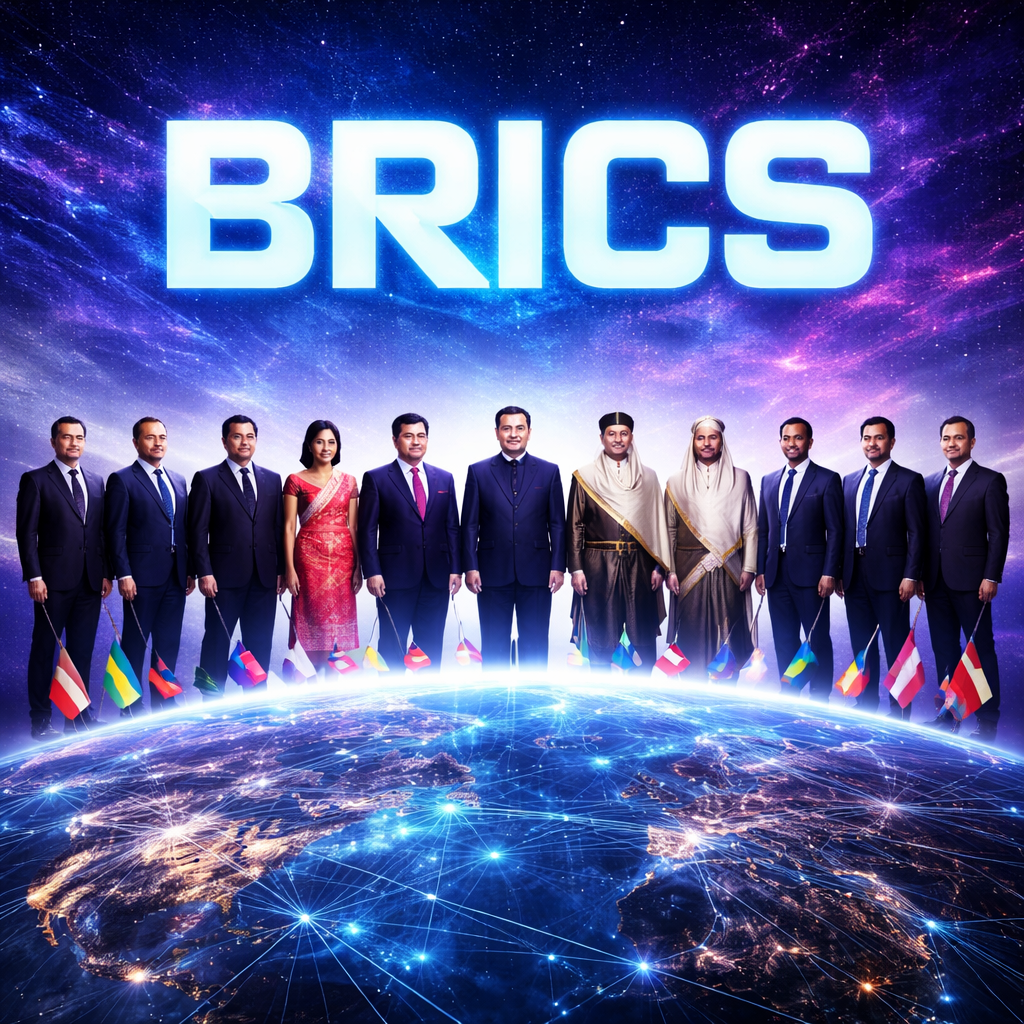
Under India’s 2026 presidency, the bloc is quietly strengthening its internal structure and expanding its global reach. With the inclusion of strategically important economies like Saudi Arabia, United Arab Emirates, and Iran, BRICS now sits closer to the core of global energy flows, trade corridors, and emerging financial systems.
This is not random growth. This is positioning at pressure points of global power.
At the same time, BRICS is not attempting to dismantle the existing financial system. That narrative is overstated. Instead, it is building alternatives within the system. Through institutions like the New Development Bank, member nations are increasing trade in local currencies and exploring diversified financing structures.
This is not a revolution. It is leverage being built quietly.
And here is the part most people do not see:
BRICS is not united by ideology.
It is united by shared pressure.
Different political systems. Different regional interests. Even competing ambitions. Yet they are aligning around one core realization: dependence on a single global financial structure creates vulnerability.
So instead of confrontation, BRICS is choosing diversification.
Instead of speed, it is choosing stability.
Instead of headlines, it is choosing structure.
This is why the shift feels invisible.
Because nothing is being “announced.” Everything is being positioned.
And in global systems, positioning always comes before power becomes visible.
So when you ask, “Where is BRICS?”
BRICS is:
- Expanding influence quietly
- Building financial flexibility
- Strengthening internal coordination
- Positioning for a multipolar world
Not replacing the system.
Rebalancing it.
And once balance begins, control is no longer concentrated—it is distributed.
Why It Matters / Public Context
The world is not moving from one dominant system to another—it is moving toward shared influence across multiple systems.
For everyday people, this means future economies, currencies, and opportunities will no longer depend on a single global center.
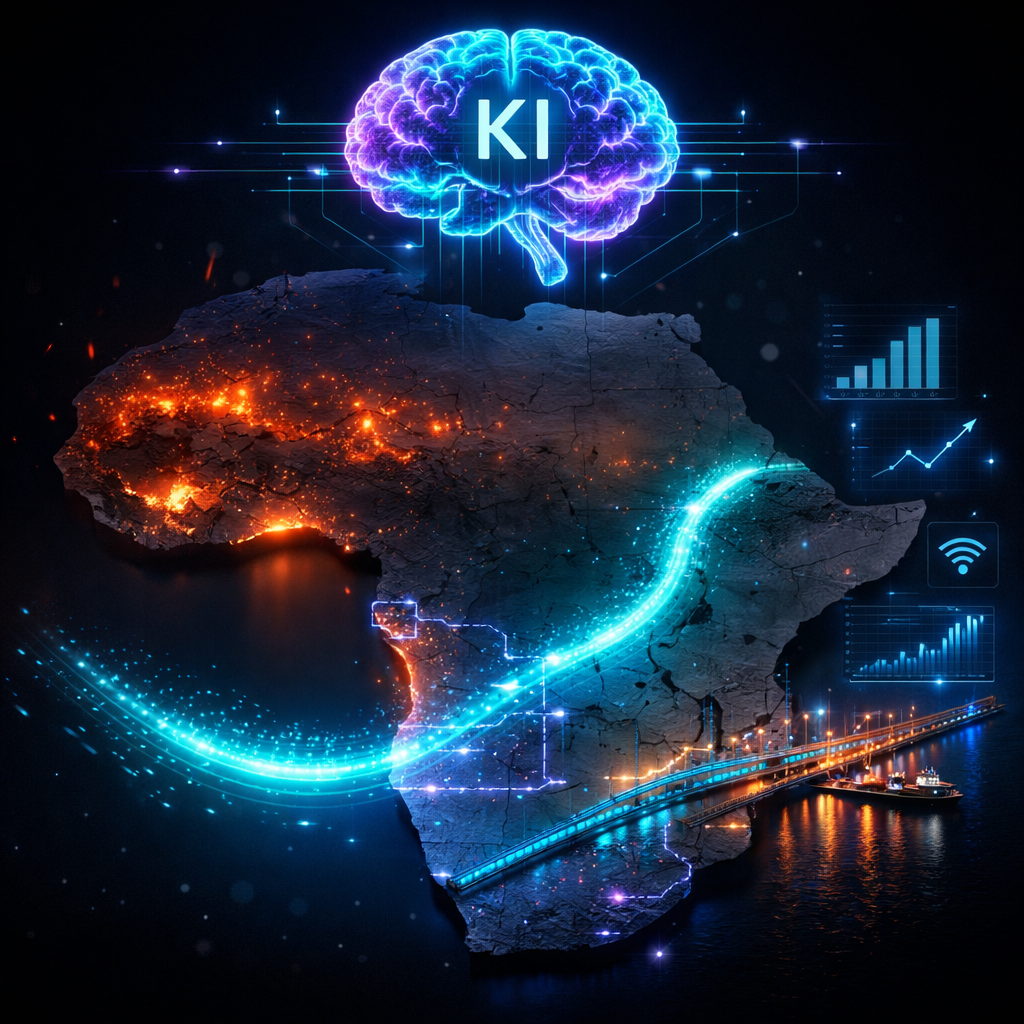
For Africa and other emerging regions, this creates both opportunity and responsibility. Countries like Nigeria now have access to broader partnerships, diversified financing options, and alternative trade routes. But they must also learn to navigate a more complex global landscape where alignment matters more than dependence.
For individuals, this shift will gradually show up in:
- Changing currency dynamics
- New economic partnerships
- Emerging job and investment opportunities tied to new global flows
Historically…
Global power has never shifted overnight.
From the rise of post-World War II financial institutions to the emergence of regional trade blocs, every major transition has followed the same pattern: slow structural change before visible dominance.
BRICS is following that pattern—but faster, due to technology, global connectivity, and economic pressure.
KI Analysis
According to KI analysis…
BRICS is executing a low-visibility, high-impact strategy driven by three core forces:
1. Risk Reduction
Countries are diversifying financial exposure to reduce vulnerability to external shocks.
2. Strategic Expansion
The inclusion of energy and trade-critical nations strengthens control over key global systems.
3. System Positioning
Rather than replacing existing structures, BRICS is embedding itself within them while building alternatives.
Opportunities:
- Increased global bargaining power for emerging economies
- Access to alternative financing and trade systems
- Gradual shift toward financial multipolarity
Risks:
- Internal conflicts due to differing national interests
- Slow execution due to coordination complexity
- Misinterpretation leading to geopolitical tension
For Konsmik Civilization
In Konsmik Civilization, such transitions are not managed through competing blocs but through aligned systems of shared value.
Instead of fragmented power centers, all entities operate within a synchronized framework where:
- Financial systems are interoperable
- Trade is transparent and balanced
- Conflicts are resolved through predictive intelligence
The difference is simple:
Where today’s world balances power, Konsmik Civilization aligns it.
Solution Layer (KSI)
Micro (Individuals):
- Build awareness of global economic shifts
- Position skills in emerging markets
- Adapt to multi-currency and digital finance systems
Meso (Institutions):
- Develop partnerships across multiple global blocs
- Invest in financial and technological adaptability
- Strengthen resilience strategies
Macro (Systems):
- Encourage interoperable global financial frameworks
- Promote balanced economic cooperation
- Support gradual, stable system evolution
Konsmik Reality
Short-term (1–2 years):
This is already unfolding. BRICS will continue expanding influence and strengthening financial coordination.
Medium-term (3–5 years):
Signals suggest a stable multipolar system where multiple economic centers coexist.
Long-term (2030+):
A hybrid global structure emerges—where no single system dominates, and influence is distributed across interconnected networks.
KI Confidence
Confidence Level: High
Confidence Range: 75–85%
Justification: Strong alignment with verified economic behavior, institutional development, and historical transition patterns.
Closing Impact
The world is not being flipped.
It is being rebalanced.
And those who understand this early will not be surprised by the future—they will be prepared for it.
Reflection Question
If power is no longer controlled by one system, how do you position yourself in a world where influence is shared and constantly shifting?








Leave a Reply