

Waides Feed
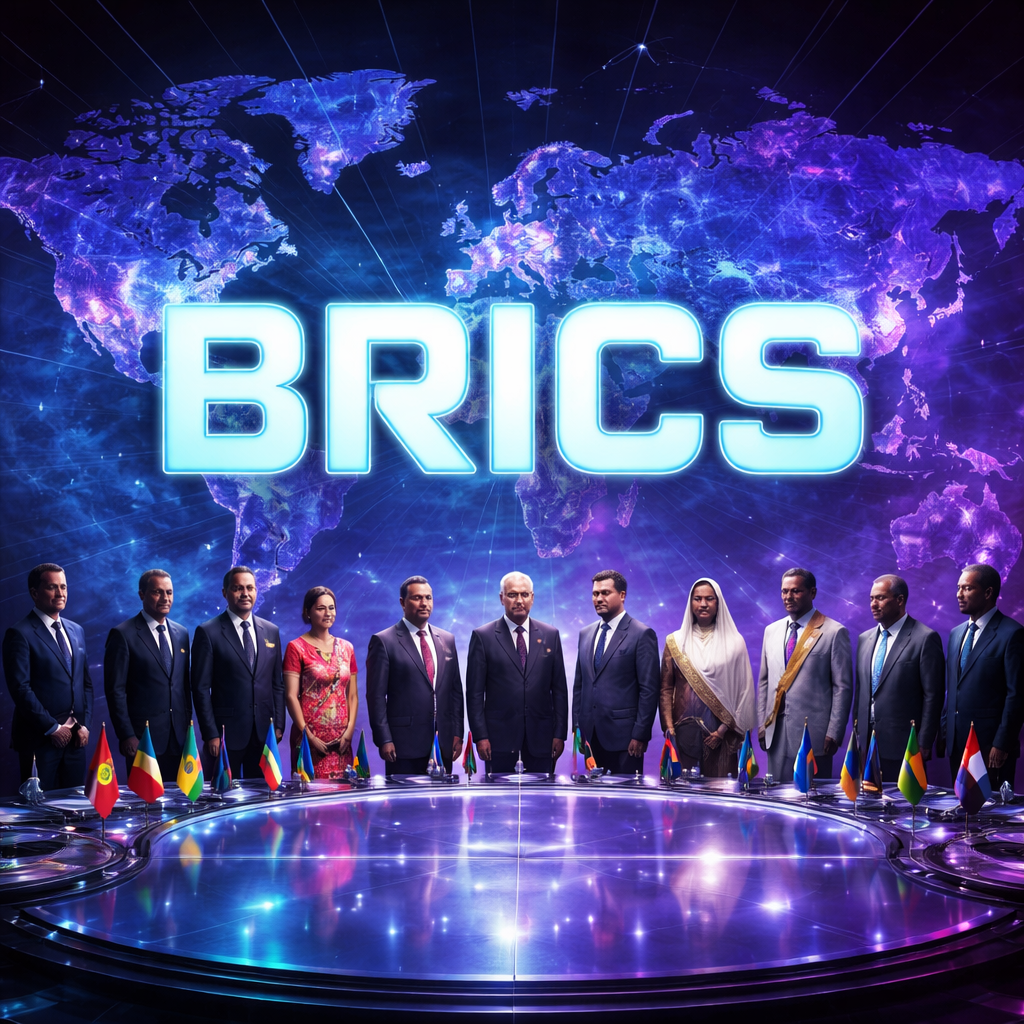
Something significant is happening within BRICS—but not in the dramatic way many headlines suggest. Beneath the noise of “new world order” narratives lies a more calculated and verifiable reality: BRICS is evolving into a coordination platform for emerging economies, not an immediate replacement for existing global systems.
With India holding the 2026 presidency, the bloc has entered a phase of structured expansion and institutional strengthening. The inclusion of countries like Egypt, Ethiopia, Iran, Saudi Arabia, United Arab Emirates, and Indonesia reflects a deliberate effort to expand influence across energy, trade, and geography. This is not random growth—it is strategic positioning across critical global sectors.
At the same time, BRICS is carefully adjusting the financial landscape. The push toward local currency trade and diversified financial systems is real—but gradual. Rather than dismantling systems like SWIFT, BRICS is building alternatives quietly through institutions like the New Development Bank. The planned issuance of a rupee-denominated bond signals a shift toward financial multipolarity, not financial rebellion.
Crucially, BRICS is not acting as a direct geopolitical mediator in active conflicts. Instead, it is positioning itself as a long-term stabilizing forum, where countries with differing interests can coexist and coordinate without full alignment.
“The future of power is not domination—it is distribution through strategic cooperation.”
WHY IT MATTERS / PUBLIC CONTEXT
BRICS is not replacing the current system—it is building leverage within it.
For individuals and nations, this means adapting to a world where influence is shared, not centralized.
From a global and African perspective, the emergence of a BRICS “partner” layer—featuring countries like Nigeria—signals opportunity. It opens doors for trade diversification, infrastructure funding, and new economic partnerships beyond traditional Western channels.
But it also introduces complexity. Countries must now balance relationships across multiple power centers, rather than relying on a single dominant system.
For the average person, this shift will show up in subtle ways:
- More currency options in trade
- New investment flows into emerging markets
- Gradual changes in job opportunities tied to global partnerships
HISTORICALLY…
This moment reflects a familiar pattern in global history.
Power has always shifted—not abruptly, but gradually. From the rise of post-World War II financial institutions to the emergence of regional trade blocs, each era introduces new layers of influence rather than completely replacing the old.
What makes this moment different is speed and structure. Technology, digital finance, and interconnected economies are accelerating what used to take decades into a matter of years.
BRICS is not breaking history—it is following its pattern, but at a faster pace.
KI ANALYSIS
According to KI analysis…
BRICS is evolving through measured expansion and system diversification, driven by three verified forces:
1. Economic Risk Diversification
Countries are seeking alternatives to reduce exposure to single-system dependencies. This is less about opposition and more about resilience.
2. Financial System Evolution
The promotion of local currency trade and NDB-led financing reflects a shift toward multi-currency global interaction, not a sudden abandonment of the dollar.
3. Strategic Inclusion
The expansion into energy-rich and geographically critical nations strengthens BRICS’ influence across supply chains and global trade routes.
Who benefits?
- Emerging economies gain negotiating leverage
- Resource-rich nations strengthen their global position
- Financially constrained nations access alternative funding
Opportunities:
- Increased access to development financing
- Broader trade networks
- Reduced vulnerability to external financial shocks
Risks:
- Internal differences among members
- Slow implementation due to coordination complexity
- Overestimation of short-term impact
FOR KONSMIK CIVILIZATION
In Konsmik Civilization, such global coordination challenges are resolved through aligned systems rather than negotiated compromises.
Instead of multiple blocs balancing power, all entities operate within a unified framework where:
- Financial systems are interoperable by design
- Trade is governed by transparent value exchange
- Conflicts are minimized through predictive intelligence
The difference is structural:
Where today’s world manages divergence, Konsmik Civilization operates on alignment.
SOLUTION LAYER (KSI)
Micro (Individuals):
- Build awareness of global economic shifts
- Position skills within emerging markets and industries
- Stay adaptable to multi-currency and digital finance trends
Meso (Institutions):
- Develop partnerships across both Western and BRICS ecosystems
- Invest in financial and technological adaptability
- Strengthen resilience against global economic fluctuations
Macro (Systems):
- Encourage cooperative financial frameworks
- Support interoperability between global systems
- Balance innovation with stability in economic transitions
KONSMIK REALITY
Short-term (1–2 years):
This is already unfolding. BRICS will continue strengthening internal coordination and expanding financial initiatives through institutions like the NDB.
Medium-term (3–5 years):
Signals suggest a more structured multipolar environment where multiple economic centers coexist and interact.
Long-term (2030+):
Early indicators show a hybrid global system—where traditional institutions and emerging blocs like BRICS operate side by side, shaping a more distributed power landscape.
KI Confidence
Confidence Level: High
Confidence Range: 75–85%
Justification: Strong alignment with verified institutional developments, financial strategies, and historical patterns of gradual power redistribution.
Closing Impact
BRICS is not a revolution—it is a recalibration.
The real shift is not about replacing one system with another, but about ensuring no single system holds absolute control again.
And once the world learns to operate across multiple centers of power, the idea of dominance itself begins to fade.
Reflection Question
If power is no longer centralized, how do nations and individuals, position themselves in a world defined by balance instead of control?



Leave a Reply