

Waides Feed
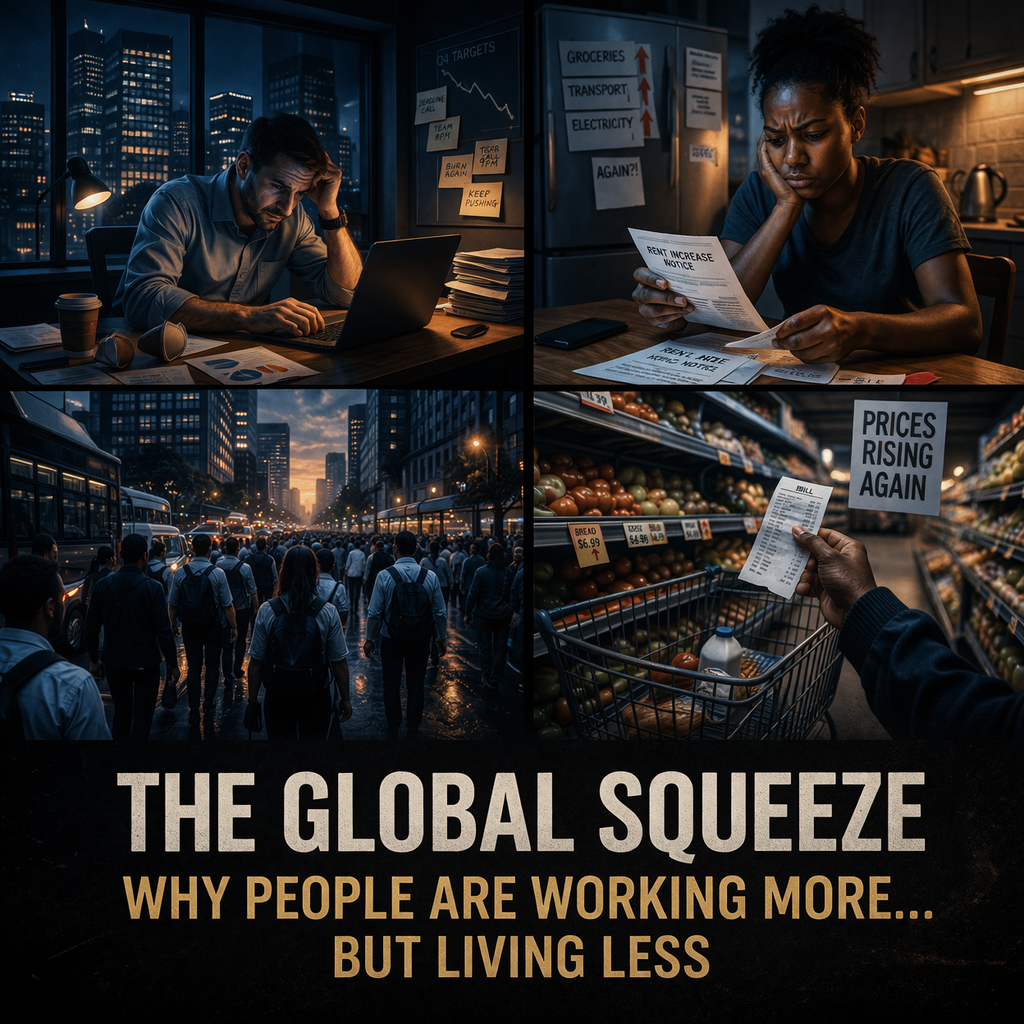
Something is quietly changing in everyday life across the world.
People are working harder than ever before.
But the feeling of progress is disappearing.
Across continents, incomes are rising slowly, but the cost of living is rising faster. Rent, food, transportation, healthcare—everything is becoming heavier.
This is not just inflation.
This is a structural squeeze on modern life.

The system is demanding more energy from people while giving less sense of stability in return.
Why It Matters / Public Context
For many, the traditional promise of life is breaking:
Work hard → Earn → Live better
That equation is no longer holding.
Instead, a new reality is forming:
Work more → Earn more → Still struggle
This creates a psychological shift:

- Increased stress and burnout
- Delayed life decisions like marriage or home ownership
- Growing frustration with systems and institutions
This is not just economic pressure.
It is emotional and societal pressure combined.
For Africa and Global Systems
In Africa, the impact is even sharper.
Many economies are already dealing with:
- Currency instability
- High youth unemployment
- Rising cost of imports
This creates a dual pressure:
People are not only trying to grow
They are trying to survive rising systems
At the same time, globally, even developed economies are feeling similar pressure.
This reveals something important:
The issue is not location.
It is the structure of the global economic system itself.
KI (Konsmik Intelligence) Insight
From a Konsmik Intelligence perspective, this is a value imbalance phase.
1. Productivity vs Reward Gap
People are producing more value than they are receiving.
2. Cost Acceleration Systems
Housing, food, and energy are rising faster than income growth.
3. Psychological Fatigue Layer
Burnout is becoming a systemic outcome, not a personal failure.
Opportunity Signal:
New economic models, remote work systems, and digital income streams are opening alternative paths.
Risk Signal:
Prolonged pressure could lead to social unrest, migration waves, and loss of trust in institutions.

From the Lens of Konsmik Reality
Human life is being redefined.
In the past, survival was the goal.
Then stability became the goal.
Now, people are chasing stability again…
in a system that keeps moving the goalpost.
This creates a silent question in millions of minds:
Is this how life is supposed to feel?
Forecast
Short-Term (1–2 Years)
- Continued rise in cost of living across major cities
- Increased side hustles and digital income pursuit
- Growing conversations around financial independence
Medium-Term (3–5 Years)
- Shift toward alternative work models and decentralized income
- Increased pressure on governments to address living costs
- Rise of digital entrepreneurship across emerging markets
Long-Term (5–10 Years)
- Redefinition of work, income, and value systems
- New economic structures outside traditional employment
- Greater focus on quality of life over traditional success metrics
Waides Insight
The real crisis is not that people are poor.
It is that people are working… but not progressing.
And when effort no longer guarantees progress,
the system itself begins to lose meaning.
### Reflection
- If hard work no longer guarantees stability, what replaces it?
- Are we witnessing economic pressure or a redesign of how humans live and work?




Leave a Reply