

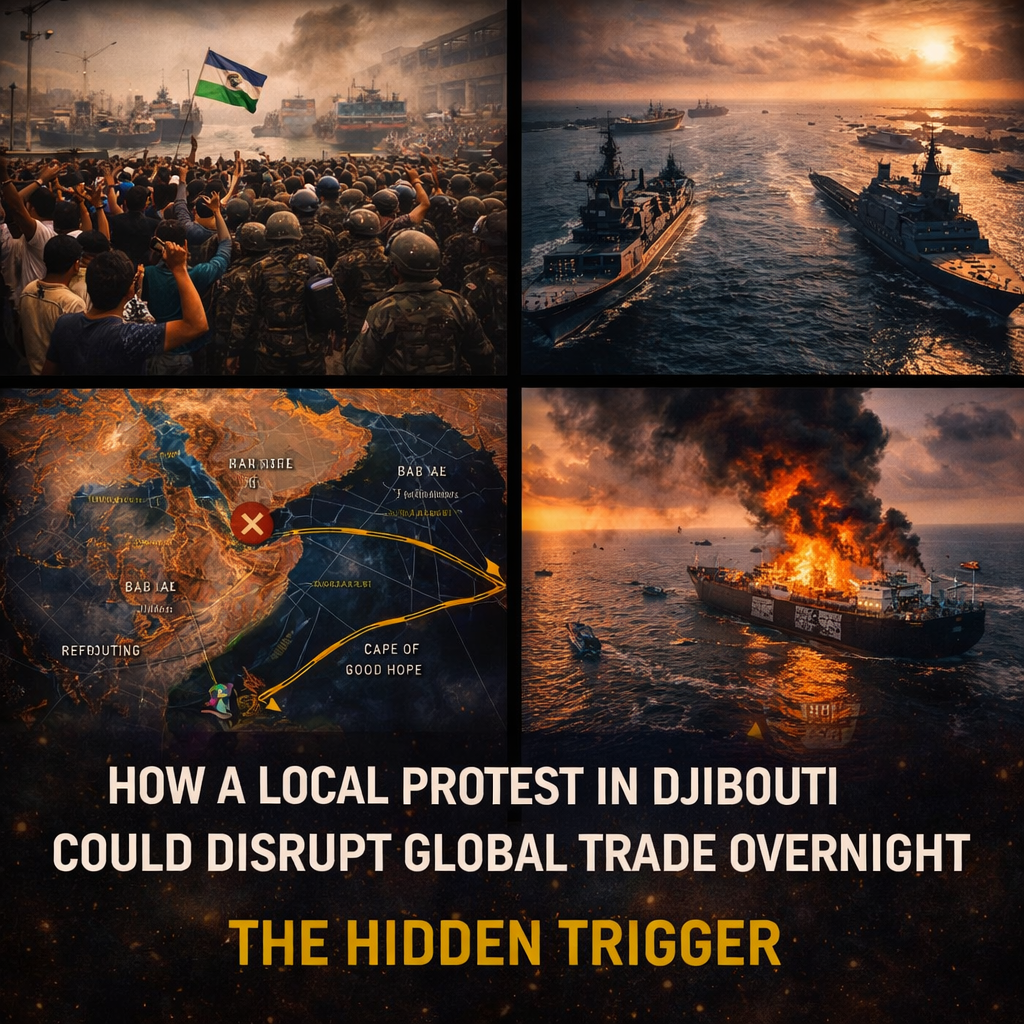
Waides Feed
The real risk in Djibouti is not the election.
It is what could follow after it.
In highly controlled political environments, stability often appears strong on the surface. But when pressure builds without release, even small disruptions can trigger outsized consequences.
If post-election tensions emerge in Djibouti, the impact will not remain local.
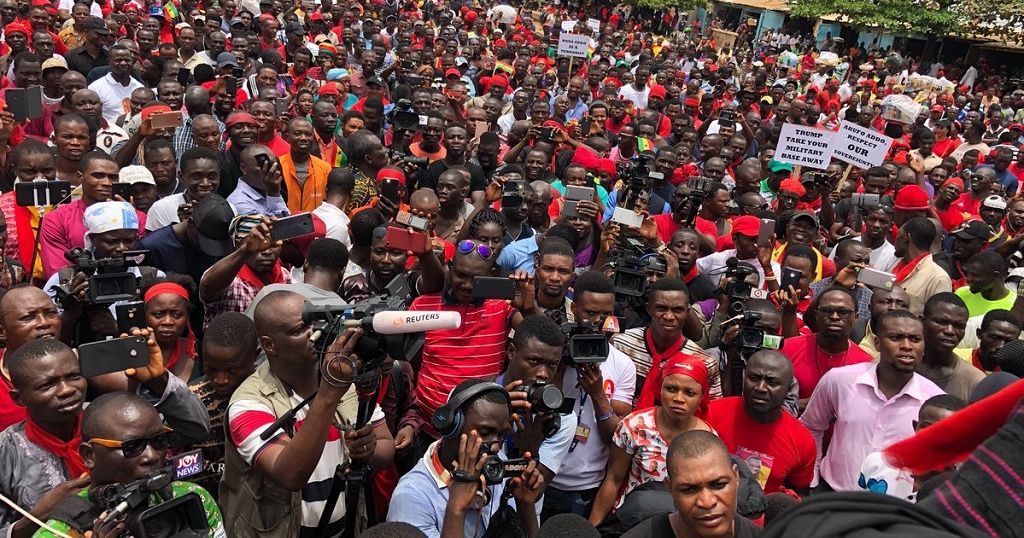
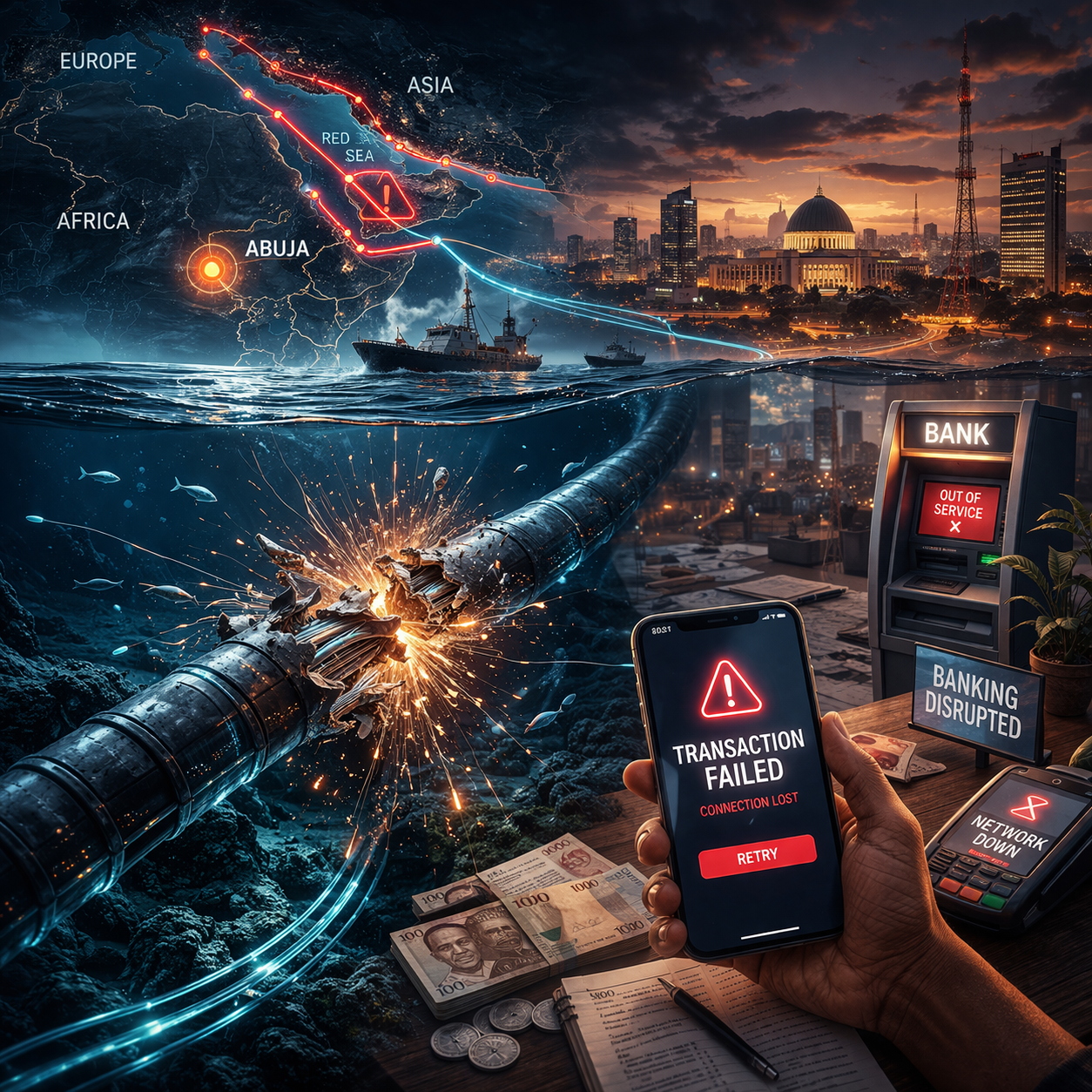
Because Djibouti sits directly on the edge of the Bab-el-Mandeb Strait—one of the most sensitive arteries in global trade.
And in today’s system, disruption does not need to be large.
It only needs to be strategically placed.
Patterns & Connections
Modern global systems are highly efficient.
But efficiency creates vulnerability.
- Trade routes are optimized, not diversified
- Supply chains depend on predictability
- Energy flows follow narrow pathways
This creates a critical pattern:
The more optimized the system becomes,
the more fragile it becomes under disruption.
Djibouti represents a pressure node within that system.
A localized protest
A security incident
A temporary port shutdown
Any of these could trigger:
- Immediate shipping delays
- Insurance risk spikes
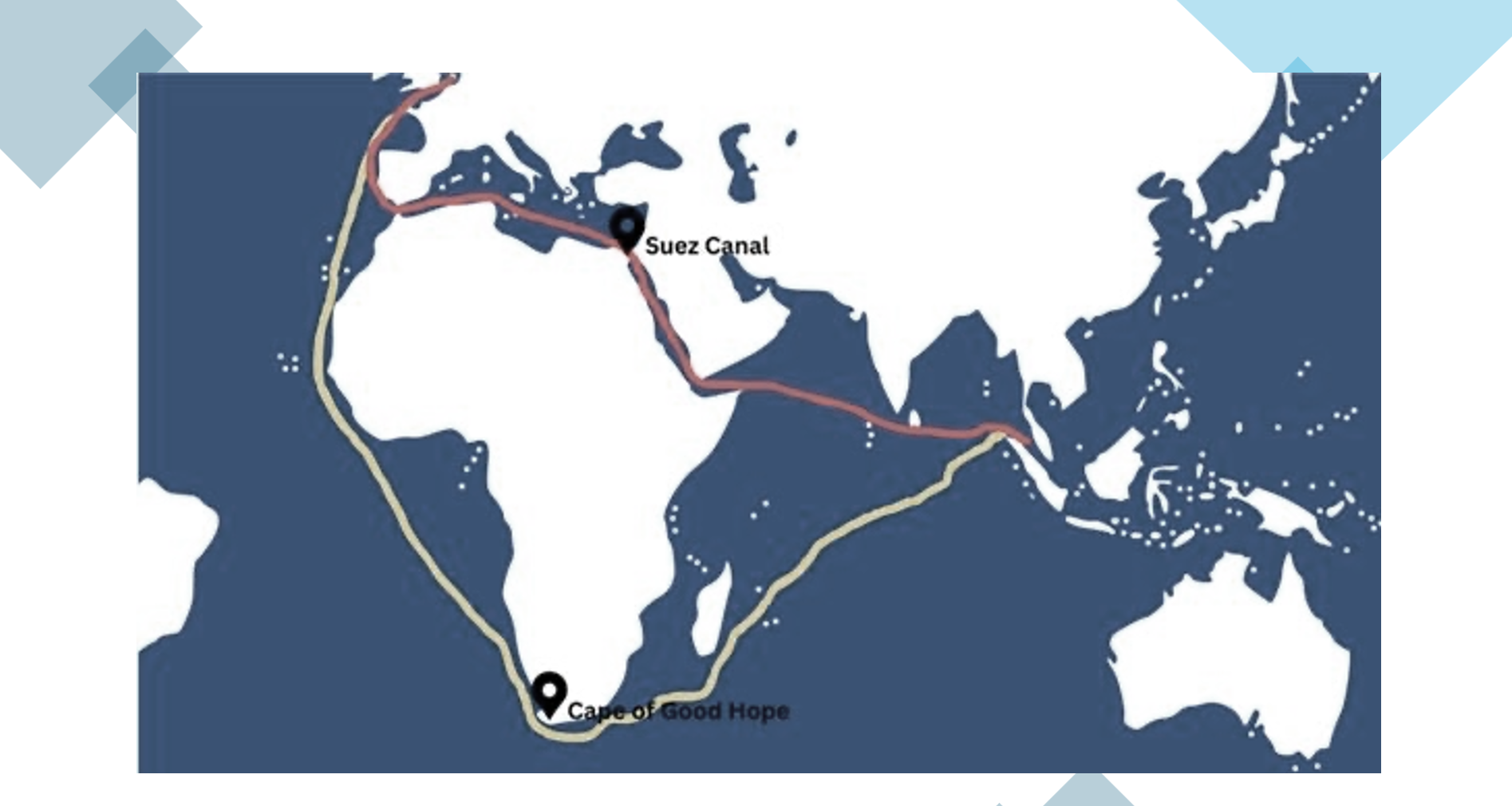
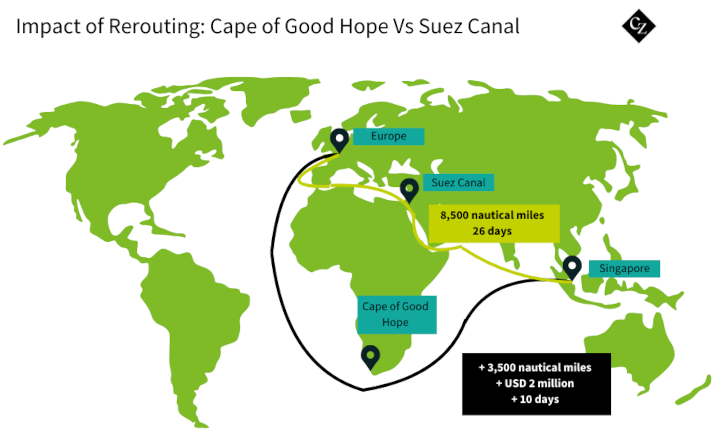
- Rerouting through longer global paths
Why It Matters for Humanity
The impact of disruption is not abstract.
It translates directly into daily life:
- Fuel prices increase
- Food costs rise
- Goods become more expensive
This is how geopolitics reaches ordinary people.
Not through headlines
But through cost of living changes
A single chokepoint disruption can ripple across continents within days.
KI Analysis
From Konsmik Intelligence analysis:
Opportunities
Disruptions accelerate innovation. They push nations and companies to diversify trade routes, invest in alternative logistics, and strengthen resilience.
Risks
Short-term shocks can trigger inflation, market volatility, and economic instability. The presence of multiple global powers increases the risk of escalation beyond the initial trigger.
The system is not breaking.
It is being tested under pressure.
Konsmik Reality
From the lens of Konsmik Reality, this is a trigger cascade phase.
Short-Term (1–2 Years)
Localized instability creates immediate global economic signals through shipping and energy markets.
Medium-Term (3–5 Years)
Global trade systems begin restructuring to reduce dependence on single chokepoints.
Long-Term (5–10 Years)
A more distributed global trade network emerges, but with increased complexity and cost.
This is how systems evolve:
Through disruption
Through adaptation
Through reconfiguration
Historical & Global Context
History shows that major global shifts often begin with small triggers:
- A blocked canal
- A regional conflict
- A political disruption
Each event reveals underlying vulnerabilities already present in the system.
Djibouti is not the cause.
It is the exposure point.
Waides Insight
The most dangerous events are not always the largest.
They are the ones positioned at the center of critical systems.
Djibouti is one of those positions.
And in a world built on speed and efficiency,
even a small disruption can move faster than control.
Reflection
- If global systems depend on fragile points, how resilient are they really?
- Are we prepared for a world where small events trigger global consequences?







Leave a Reply