

Waides Feed
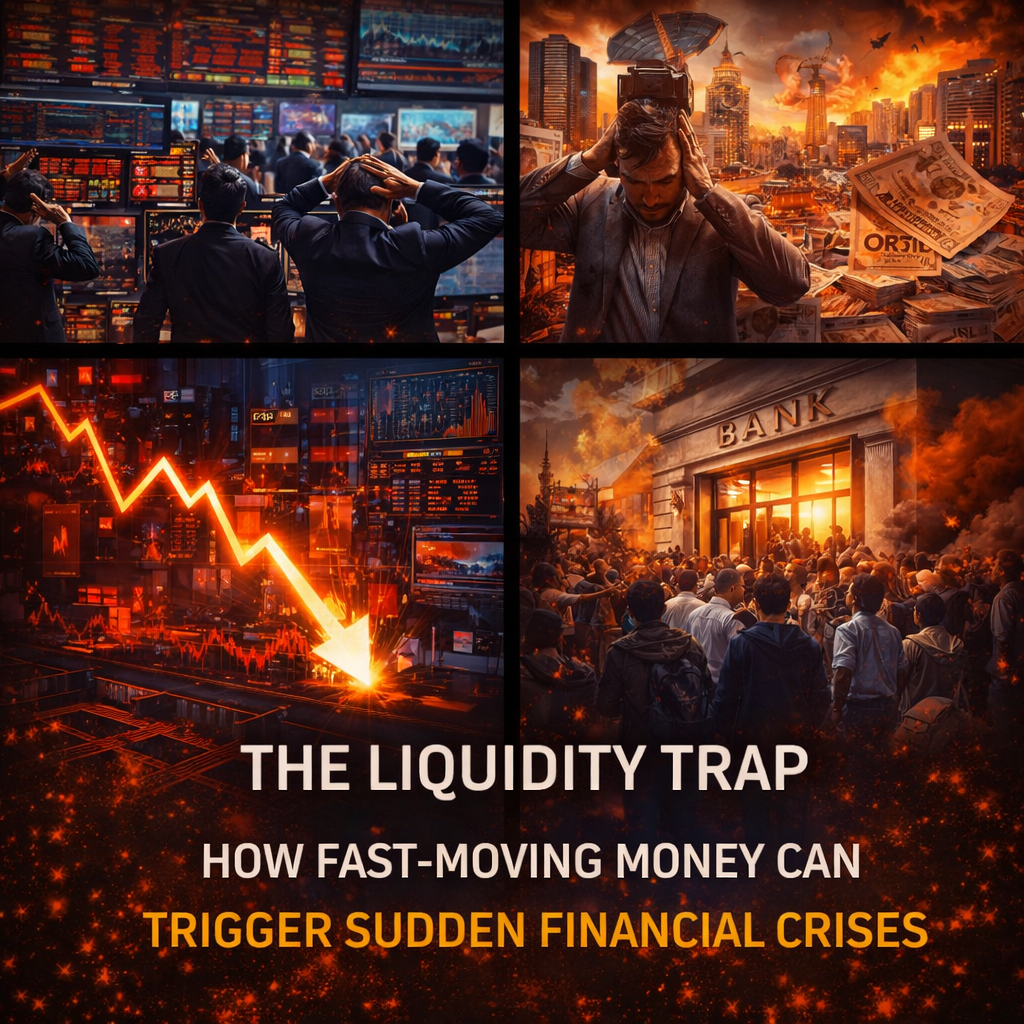
Money is moving faster than ever.
But speed comes with a hidden cost.
As global financial systems become more flexible and capital flows become easier, a new risk is emerging:
Liquidity without stability
The same systems that allow money to move quickly into markets
also allow it to leave just as quickly.
And when capital exits faster than a system can absorb,
the result is not adjustment
It is shock.
Patterns & Connections
Financial systems operate on confidence.
When confidence is high:
- Capital flows in
- Markets expand
- Prices rise
But when confidence shifts:
- Capital exits
- Liquidity dries up
- Markets contract
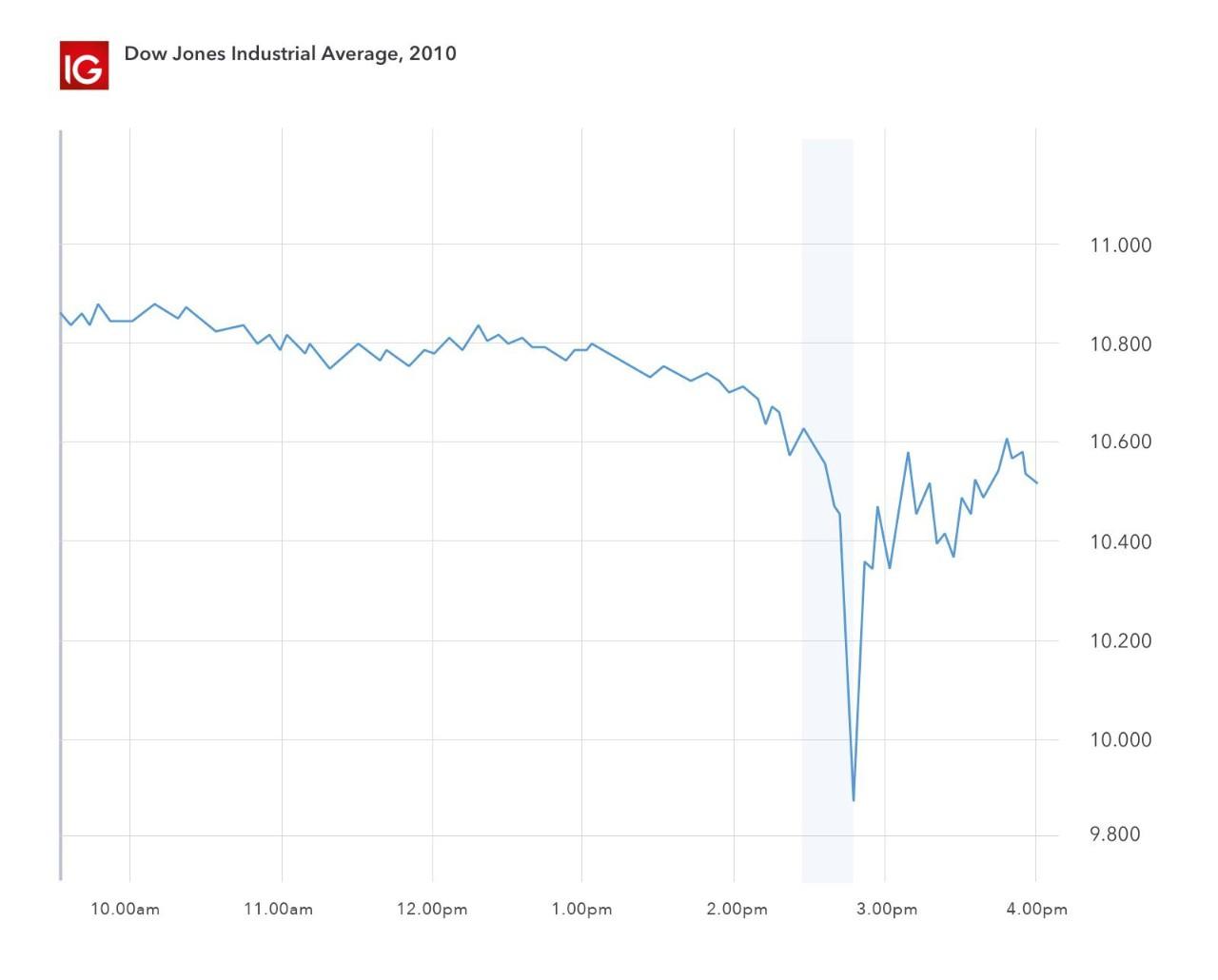
The danger today is not movement itself.
It is speed of reversal
With digital systems, global connectivity, and algorithm-driven trading, capital can shift across borders in seconds.
This creates a new pattern:
Rapid inflow → Rapid outflow → System instability
Why It Matters for Humanity
Financial instability is not just a market issue.
It becomes a human issue.
When liquidity disappears:
- Businesses lose funding
- Jobs are affected
- Currencies weaken
- Living costs increase
This is how financial systems translate into real-world impact.
Not gradually
But suddenly
KI Analysis
From Konsmik Intelligence analysis:
Opportunities
Efficient capital movement can increase market responsiveness, improve allocation of resources, and accelerate innovation.
Risks
High-speed capital flows increase volatility, amplify market reactions, and expose weaker economies to sudden shocks. Emerging markets are particularly vulnerable to rapid capital flight.
Fast money creates fast opportunity
But also fast collapse
Konsmik Reality
From the lens of Konsmik Reality, this is a volatility amplification phase.
Short-Term (1–2 Years)
Increased market fluctuations as capital moves more freely across regions and asset classes.
Medium-Term (3–5 Years)
Episodes of sudden financial stress in weaker economies due to rapid capital exits.
Long-Term (5–10 Years)
A global system that is more efficient but inherently more volatile, requiring new mechanisms for stability.
This is not instability by accident.
It is a byproduct of speed
Historical & Global Context
Financial history shows similar patterns:

- Capital inflows into emerging markets
- Sudden reversals during crises
- Systemic shocks triggered by confidence shifts
But today’s difference is scale and speed.
What once took months
can now happen in days
Waides Insight
The greatest risk in modern finance is not lack of money.
It is unstable movement of money
Because in a system driven by speed,
stability becomes harder to maintain
And when stability breaks,
the impact spreads quickly
Reflection
- If money can leave as fast as it enters, how stable are financial systems really?
- Are we building stronger markets or faster cycles of boom and collapse?










Leave a Reply