


Is migration still about qualification—or is it quietly becoming about who can afford it?
Waides Feed
Canada’s decision to increase residence and citizenship fees may appear administrative on the surface—but beneath it lies a deeper shift in how global mobility is being restructured.
For years, migration has been framed as a pathway defined by eligibility: education, skills, and compliance with legal requirements. But this new adjustment introduces a quieter filter—cost. The pathway remains open, but the price of entry is rising, especially for applicants from countries like Nigeria where currency differences amplify the burden.
This is not an isolated policy move. It reflects a broader recalibration happening across developed nations. Immigration systems are under pressure—from housing constraints to job market balancing and infrastructure limitations. Instead of closing borders outright, countries are introducing financial thresholds that naturally reduce application volumes while maintaining selectivity. As we will explore in our deeper breakdown of global migration systems, this is not restriction—it is refinement.
The future of migration is no longer defined only by who qualifies, but increasingly by who can sustain the cost of moving.
Why It Matters (Silver Platter)
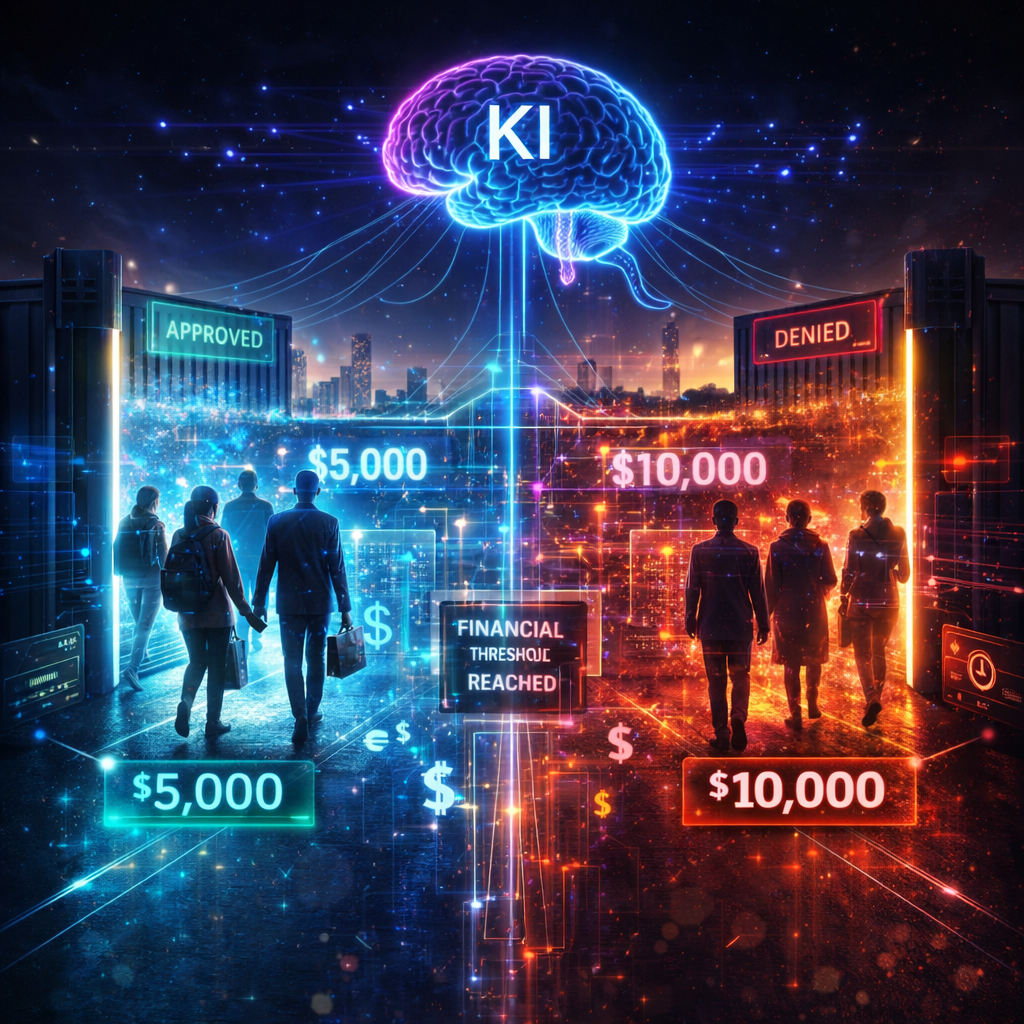
Migration is becoming financially filtered, not just eligibility-based.
Higher costs are quietly deciding who gets access to global opportunities.
For everyday people, this means:
- Increased financial pressure to migrate
- Reduced access for lower-income applicants
- Greater inequality in global mobility
What Is Happening?
Canada has increased fees related to:
- Permanent residence applications
- Citizenship processing
While the system itself remains open, the cost of accessing it has risen.
This introduces a new reality:
👉 Migration is not just a legal process—it is an economic decision.
Real Examples / Current Use
Across global migration systems:
- Countries are raising visa and processing fees
- Application costs are increasing across multiple pathways
- Financial proof requirements are becoming stricter
This reflects what we will explore in our analysis of global economic migration trends, where affordability is becoming a central factor in movement.
How It Works / Why It Matters
The system operates through a subtle mechanism:
- Fee Increase – raises entry cost
- Applicant Filtering – reduces lower-income participation
- System Relief – lowers processing pressure
To understand this fully, consider how economic systems function. When demand is high, price becomes a tool to regulate access.
This is not a visible restriction—but it is an effective one.
Historically…
Migration has always been influenced by economics:
- Travel costs historically limited movement
- Visa policies shaped access
What is changing now is structure:
👉 Costs are becoming a deliberate policy tool, not just a byproduct.
🧬 KI Insight
According to KI analysis, this development signals a transition from open-access migration systems to financially moderated systems.
Opportunities:
- More sustainable immigration processing
- Better allocation of national resources
- Attraction of prepared and financially stable applicants
Risks:
- Increased inequality in access to global mobility
- Exclusion of capable but lower-income individuals
- Acceleration of brain drain for those who can afford to leave

In Konsmik Civilization, mobility would not be limited by financial barriers. Systems would be designed to match individuals with opportunities based on capability, not economic status, ensuring balanced global development.
🌍 For Konsmik Civilization
In a Konsmik-aligned system:
- Movement is based on skill and purpose, not cost
- Opportunities are distributed more evenly
- Barriers are reduced through system design
This creates:
- Equal access to growth
- Reduced global inequality
- Balanced human development
🛠️ Solution Layer
Micro (Individual):
- Plan financially for migration early
- Explore multiple pathways and countries
- Build high-value skills to increase opportunity
Meso (Institutional):
- Provide support systems for applicants
- Offer transparent cost structures
Macro (Global):
- Develop fair migration frameworks
- Reduce excessive financial barriers
- Encourage balanced global opportunity distribution
🌌 Konsmik Reality
This moment reflects a deeper shift in how the world operates.
Access is no longer only about rules—it is about resources. The systems that shape movement are becoming economic filters, determining who can step forward and who remains behind.
The question is not whether migration is open—it is how accessible it truly is.
🔮 Forecast
Short-Term (1–2 years):
Increase in financially capable applicants and reduced application volume.
Medium-Term (3–5 years):
Expansion of cost-based filtering across more countries.
Long-Term (5–10 years):
A global mobility system defined by economic access rather than universal opportunity.
❓ FAQ
Why is Canada increasing immigration fees?
To manage demand and support system sustainability.
Who is most affected?
Applicants from lower-income regions, including many Nigerians.
Does this mean migration is closed?
No, but it is becoming more expensive and selective.
Will other countries follow?
Yes, this trend is already emerging globally.
🧠 Closing Impact
The door to migration is still open—but it is no longer equally reachable.
🌍 Reflection Question
If opportunity is still available—but only at a higher cost—does that mean the system is fair, or simply selective in a different way?









Leave a Reply