

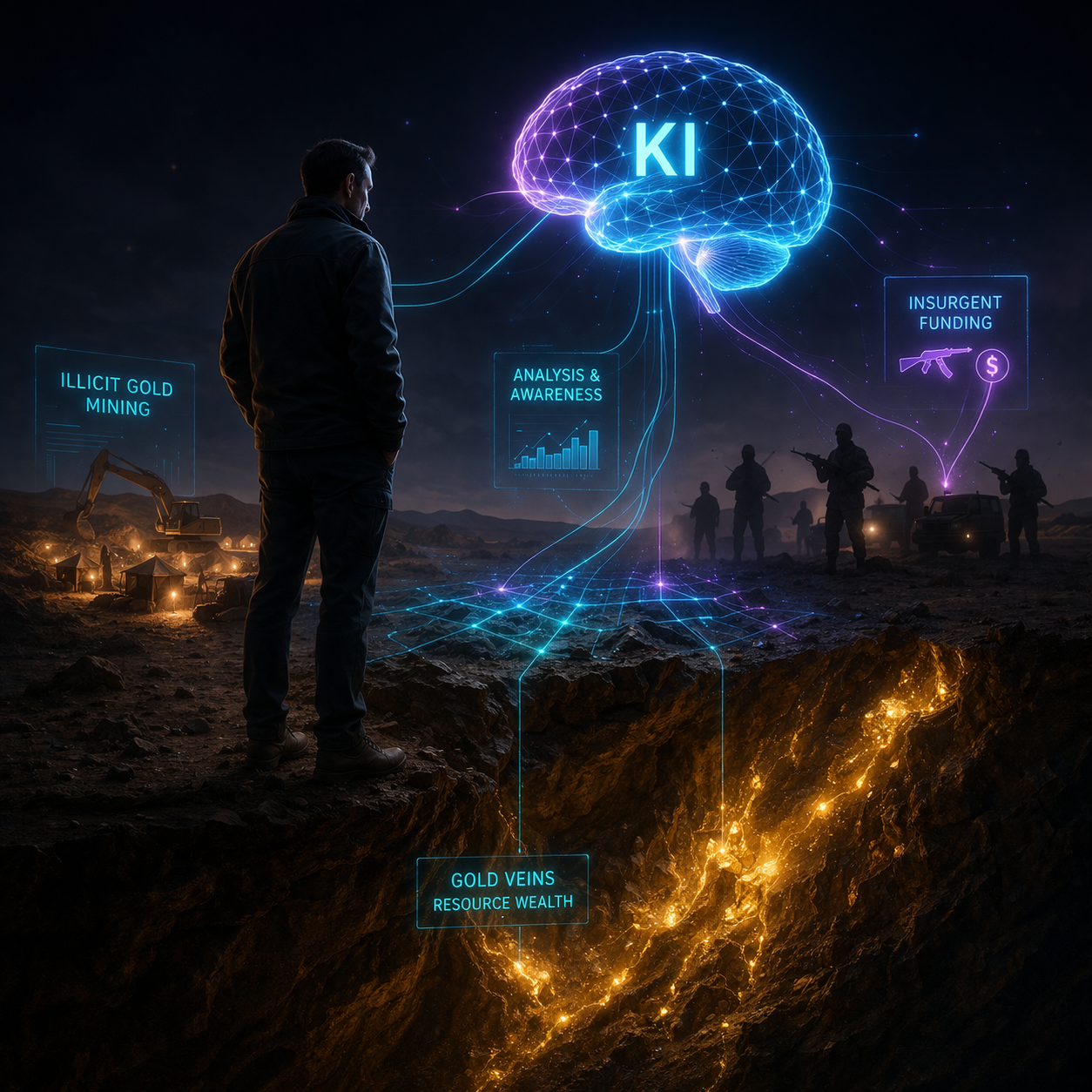
What if the real fuel behind modern insurgencies isn’t ideology—but gold hidden beneath the ground?
Waides Feed
A silent system is reshaping conflict across West Africa—one that does not rely on banks, donations, or external sponsors. It runs through the ground itself.
Across the Sahel, gold has become more than a resource. It has become a currency of conflict. Armed groups are increasingly turning to illicit mining and smuggling networks to fund operations, creating a decentralized financial system that is difficult to trace and even harder to stop.
This gold does not remain in isolated desert regions. It moves—quietly—through informal trade routes into coastal economies, where it blends into legitimate markets before entering the global supply chain. What appears as ordinary gold trade can, in reality, carry the hidden imprint of conflict financing. As we will explore in our deeper breakdown of global resource-driven conflicts, modern insurgencies are no longer dependent on external funding—they are building their own economic engines.
The future of conflict is shifting. It is no longer just about territory or ideology—it is about controlling systems that generate value.
Why It Matters (Silver Platter)
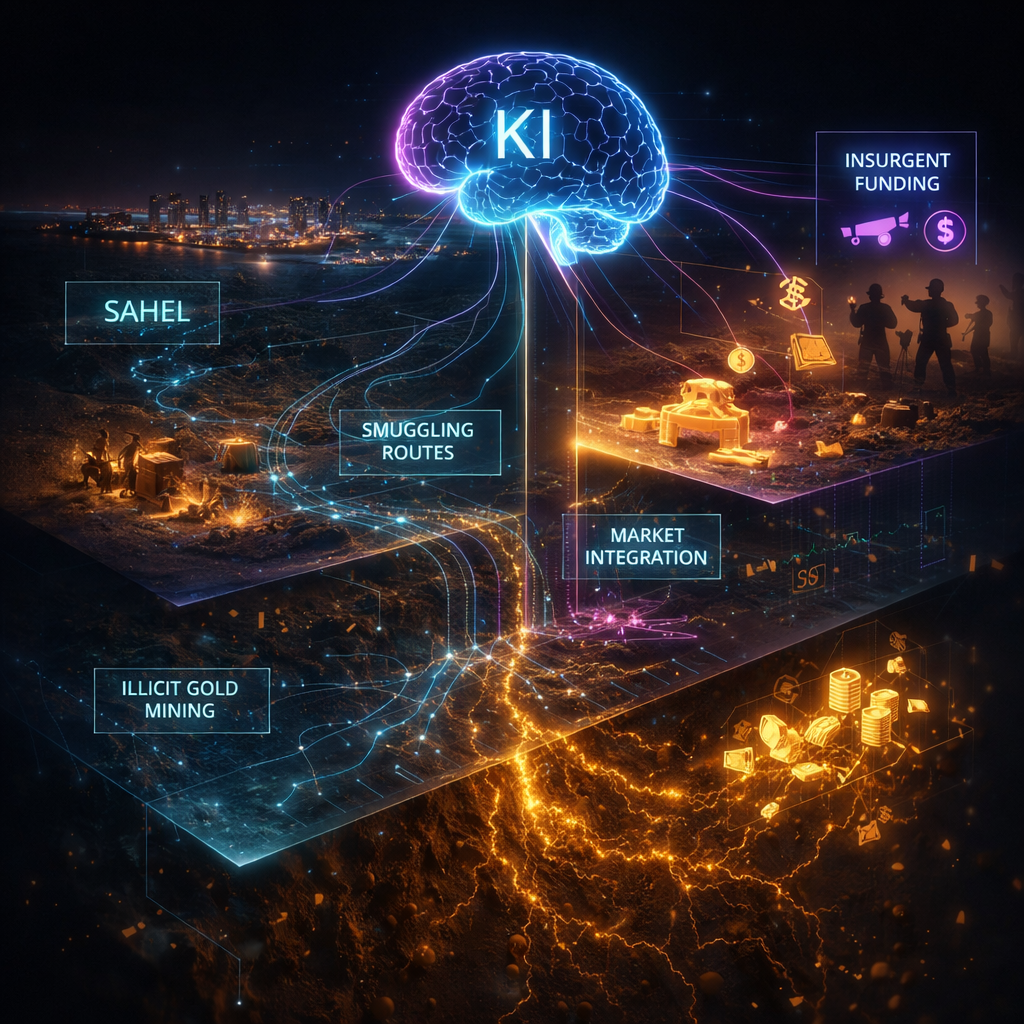
Illicit gold is turning conflict into a self-sustaining system.
The more gold flows, the longer insurgencies survive.
For everyday people, this means:
- Increased regional instability
- Economic disruption
- Rising insecurity across borders
What is the Sahel–Coast Crime Nexus?
The Sahel–Coast Crime Nexus refers to a system where:
- Gold is illegally mined in Sahel regions (e.g., Mali, Burkina Faso, Niger)
- It is transported through informal networks
- It enters coastal economies and global markets
This creates a connected chain:
👉 Mining → Smuggling → Market Integration → Conflict Funding
Real Examples / Current Use
Across the region:
- Armed groups control or tax mining sites
- Informal miners operate outside government oversight
- Gold is transported through porous borders into coastal states
This reflects what we will explore in our analysis of informal economic systems in emerging markets, where unregulated trade becomes a parallel economy.
How It Works / Why It Matters
The system operates through three key layers:
- Extraction – Gold is mined in remote, poorly governed areas
- Transport – Smuggling networks move gold across borders
- Integration – Gold enters legal markets, becoming difficult to trace
To understand this fully, consider how global commodity systems operate. Once gold enters formal markets, its origin becomes nearly invisible.
This is why the system is powerful:
👉 It transforms local resources into global financial support for conflict.
Historically…
Resource-driven conflict is not new:
- Diamonds funded conflicts in parts of Africa
- Oil has shaped geopolitical struggles globally
What is different now is structure:
👉 Gold enables decentralized, self-sustaining insurgency financing
🧬 KI Insight
According to KI analysis, this development marks a shift from externally funded conflicts to internally sustained systems built on resource control.
Opportunities:
- Formalization of mining sectors
- Implementation of traceability technologies
- Strengthening regional cooperation
Risks:
- Prolonged insurgencies due to stable funding
- Expansion of transnational crime networks
- Loss of state control over economic resources
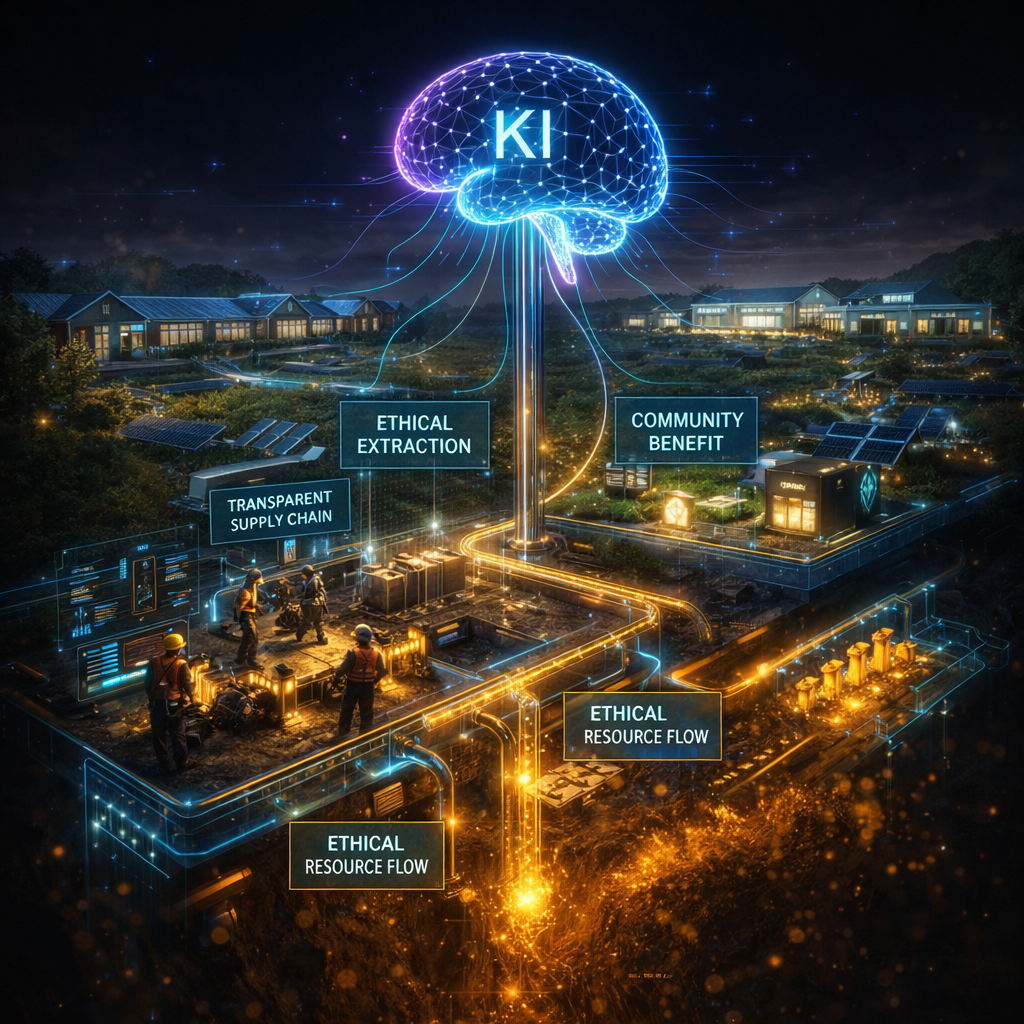
In Konsmik Civilization, resource systems are transparently tracked and ethically governed. Value cannot flow without accountability, ensuring that natural resources support society rather than destabilize it.
🌍 For Konsmik Civilization
In a Konsmik-aligned system:
- Resource extraction is monitored in real time
- Supply chains are fully transparent
- Communities benefit directly from local resources
This creates:
- Economic stability
- Reduced conflict incentives
- Balanced resource distribution
🛠️ Solution Layer
Micro (Individual):
- Awareness of ethical sourcing
- Support for transparent supply chains
Meso (Institutional):
- Strengthen regulation of mining sectors
- Invest in monitoring and tracking technologies
Macro (Global):
- Enforce international gold traceability standards
- Support regional cooperation across Sahel and coastal states
- Reduce demand for untraceable gold
🌌 Konsmik Reality
This situation reveals a deeper truth about modern systems.
Conflict is no longer sustained only by ideology—it is sustained by economics. When value flows without accountability, it creates power structures outside governance.
The real battlefield is not just land—it is the system that controls value.
🔮 Forecast
Short-Term (1–2 years):
Expansion of illicit mining and increased insurgent funding.
Medium-Term (3–5 years):
More organized and structured illicit economies across the region.
Long-Term (5–10 years):
A critical shift toward either regulated resource systems—or deeper systemic instability.
❓ FAQ
Why is gold used to fund insurgencies?
Because it is valuable, easy to transport, and difficult to trace.
Which regions are most affected?
Primarily Sahel countries like Mali, Burkina Faso, and Niger.
Can this system be stopped?
Yes, through regulation, transparency, and international cooperation.
Does global demand play a role?
Yes, demand indirectly sustains the system.
🧠 Closing Impact
We are witnessing the rise of a new kind of conflict—one powered not by external sponsors, but by resources hidden within the land itself.
🌍 Reflection Question
If conflict can fund itself through natural resources, how can the world break a system that no longer depends on external support?








Leave a Reply