

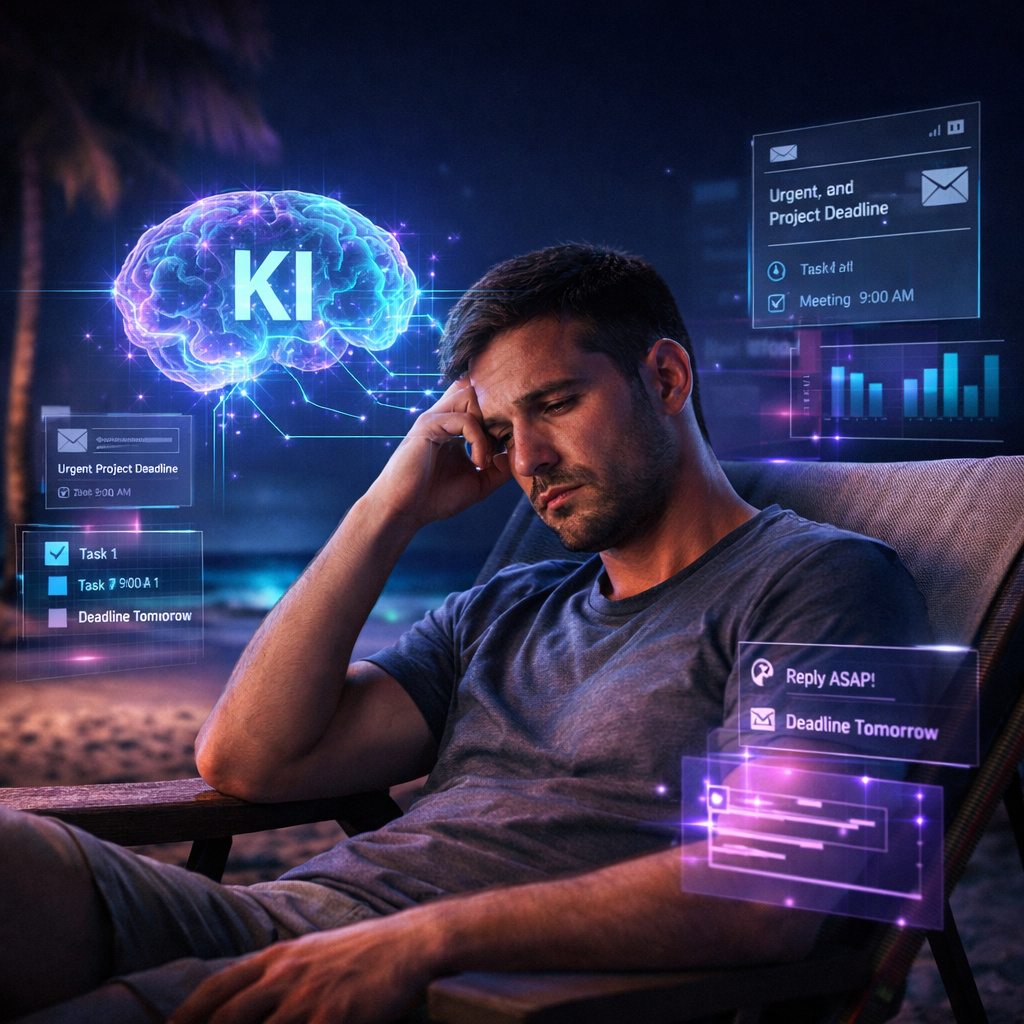
Why do people return from vacation more exhausted than before?
Waides Feed
The modern vacation was designed as a reward. A pause. A reset. But across the world, something is quietly shifting. People are returning from vacations not refreshed, but drained, anxious, and already overwhelmed by what awaits them. The promise of rest is breaking.
This is not because people are resting incorrectly. It is because the system they are resting from has changed. Work is no longer a place you leave. It is a presence that follows you through devices, expectations, and invisible pressure. Even on a beach, the mind remains tethered.
As we explored in our analysis of global productivity systems, the modern economy does not optimize for human recovery. It optimizes for continuity. Vacations, therefore, are not designed to heal exhaustion. They are designed to sustain performance.
The result is a new paradox. The more intense the work cycle becomes, the less effective short-term escape feels. The future is not built by innovation alone, but by those who control its direction.
Why It Matters (Silver Platter)
Most people are not tired because they need a break.
They are tired because their daily system does not allow recovery.
This affects mental health, productivity, creativity, and long-term human stability.
What Is Modern Vacation Burnout?
Modern vacation burnout is the condition where rest periods fail to restore energy due to ongoing mental, digital, and structural stress.
In simple terms:
👉 You leave work physically, but your mind never leaves.
Real Examples / Current Use
- Remote workers checking emails during holidays
- Employees overworking before vacation to “earn” rest
- Social media turning vacations into performance instead of peace
- Entrepreneurs unable to disconnect due to financial pressure
This reflects what we explained in our breakdown of evolving work culture systems, where rest is no longer protected.
How It Works / Why It Matters
The cycle operates in four stages:
- Overload: Intense work before vacation
- Escape: Temporary physical change of environment
- Mental Carryover: Stress follows into vacation
- Return Shock: Work pressure hits immediately after
The key issue is not the vacation. It is the unresolved system of continuous demand.
To understand this fully, see how we analyzed modern economic pressure systems and human behavior patterns.
Historically…
In earlier industrial eras, work had boundaries. When workers left factories or offices, they truly disconnected.
Today, technology has dissolved those boundaries. Work has become ambient, existing everywhere at once.
This shift marks a deeper transformation:
From time-based work → to always-on existence
🧬 KI Insight
According to KI analysis…
This phenomenon is not accidental. It is a structural outcome of modern economic design.
Systems at Play:
- Continuous productivity expectations
- Digital connectivity loops
- Identity tied to output
Opportunities:
- Redesign of work systems (flexible time, outcome-based work)
- Growth of true wellness ecosystems
- Rise of energy intelligence as a core life skill
Risks:
- Global burnout normalization
- Decline in deep thinking and creativity
- Silent mental health crisis across generations
🌍 For Konsmik Civilization
A better system does not treat rest as an escape.
It integrates rest into life itself.
Step-by-step:
- Energy-Based Living: Align work with human capacity, not endless demand
- Rhythmic Systems: Balance effort and recovery daily, not yearly
- Conscious Productivity: Measure output without sacrificing well-being
Outcome:
👉 Humans become sustainable, not just productive
🛠️ Solution Layer
Micro (Individual):
- Set digital boundaries during rest
- Redefine rest as daily practice, not occasional escape
Meso (Organizations):
- Introduce flexible schedules
- Encourage real disconnection policies
Macro (Global Systems):
- Shift economic models toward sustainable productivity
- Normalize rest as a fundamental human requirement
🌌 Konsmik Reality
Vacations are mirrors.
They reveal not how well you rest, but how deeply your life is imbalanced.
A system that requires escape to survive is a system already misaligned.
True rest is not found in distance.
It is found in design.
🔮 Forecast
Short-Term (1–2 Years):
Rising awareness of burnout. Growth in wellness retreats and digital detox culture.
Medium-Term (3–5 Years):
Work structures begin to shift. Flexible work and shorter work weeks gain adoption.
Long-Term (5–10 Years):
A new paradigm emerges where energy management replaces time management as the foundation of productivity.
❓ FAQ
What is modern vacation burnout?
It is when vacations fail to restore energy due to ongoing mental and digital stress.
Why do people feel tired after vacation?
Because stress continues mentally even when physical work stops.
Is technology causing burnout?
Partly. Constant connectivity removes true disconnection.
Will work culture change?
Yes. Early signals show a shift toward more flexible and human-centered systems.
🧠 Closing Impact
The problem is not that people don’t rest.
The problem is that the world they live in does not allow rest to work.
🌍 Reflection Question
Are you truly resting… or just temporarily escaping a system that never stops?










Leave a Reply