

Waides Feed
The world is moving.
Not across countries.
But into cities.
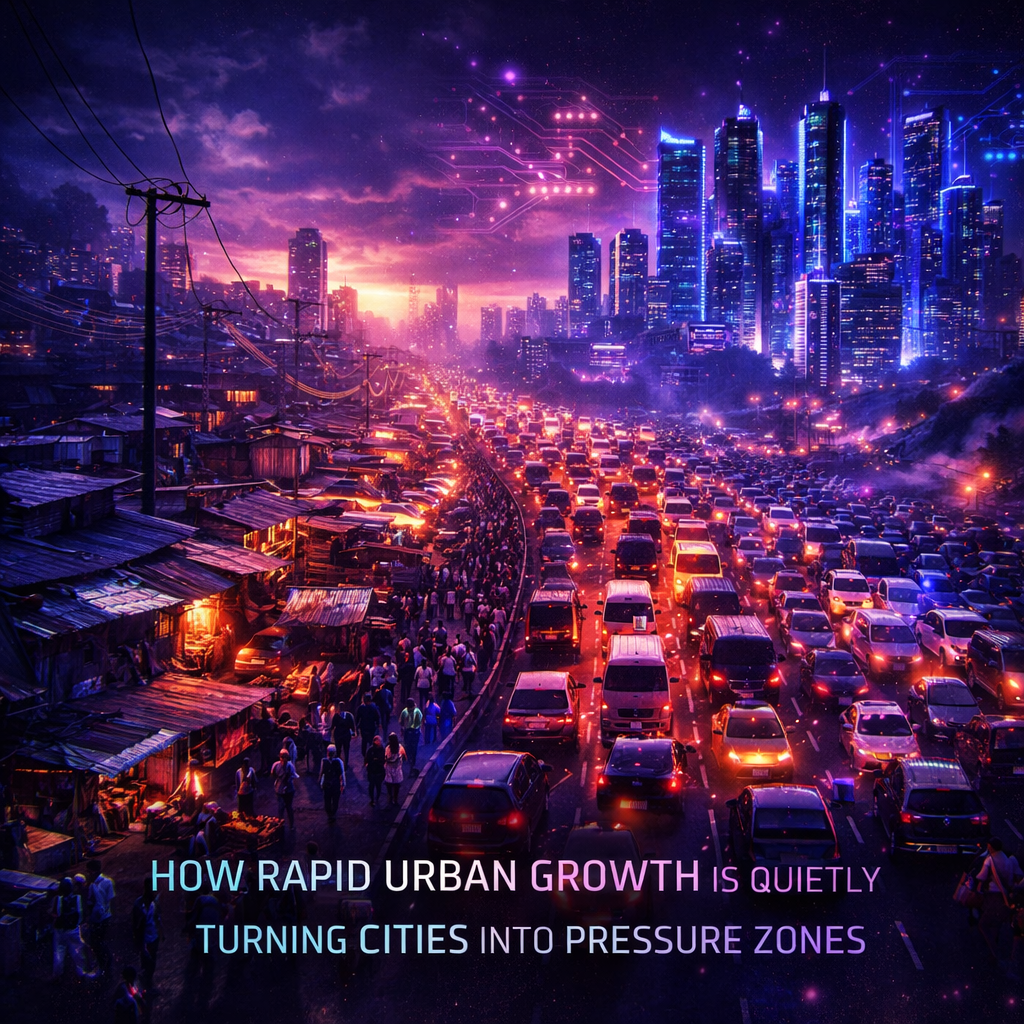
Every year, millions of people leave rural areas in search of opportunity, security, and better living conditions. Cities like Lagos, Nairobi, and Mumbai are expanding at speeds that infrastructure cannot keep up with.
What was once seen as growth is now becoming something else:
Pressure
Housing pressure.
Traffic pressure.
Economic pressure.
Social pressure.
Cities are no longer just centers of opportunity.

They are becoming zones of compression
WHY IT MATTERS / PUBLIC CONTEXT
The Silver Platter:
Rapid urban growth is creating intense pressure on housing, infrastructure, and economic systems, turning cities into high-risk zones of instability.
If urban expansion continues without structural planning, cities may struggle to sustain the populations they attract.
Think about what happens when a city grows too fast:
- More people than housing
- More demand than supply
- More movement than infrastructure can handle
This leads to:
Rising rent
Overcrowding
Informal settlements
Unstable living conditions
For Africa, this is already visible.

Cities like Lagos and Nairobi are expanding faster than systems can adapt, creating a gap between opportunity and reality.
Globally, the same pattern exists:
Urban growth is accelerating
But systems are lagging
HISTORICALLY…
Cities have always been centers of growth.
Industrial revolutions pulled people into cities.
Economic expansion concentrated opportunity in urban areas.
But there was always a balance:
Growth followed infrastructure.
Today, that order is reversing.
People are arriving before systems are ready.
This creates a new kind of challenge:
Not growth alone
But unmanaged expansion
KI ANALYSIS (The Intelligence Core)
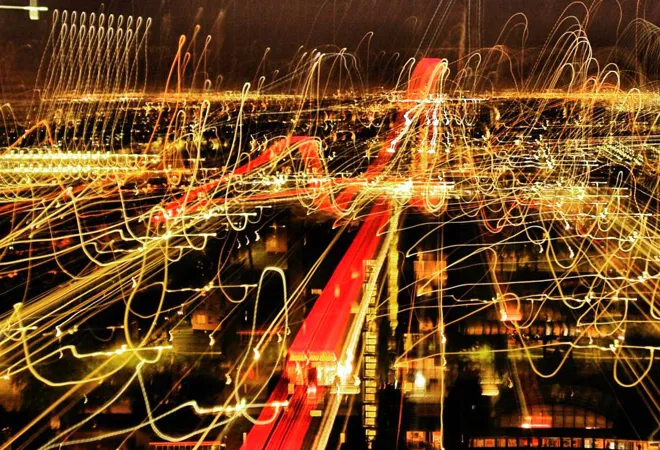
According to KI analysis, the world is entering an urban pressure phase, driven by:
1. Population Migration
People are moving toward cities faster than systems can expand.
2. Infrastructure Lag
Housing, transport, and services are not scaling at the same speed.
3. Economic Concentration
Opportunities are clustered in cities, increasing demand beyond capacity.
In Konsmik Civilization, cities are not allowed to grow beyond what systems can sustain.
Expansion is matched with infrastructure.
Housing is designed as part of the system, not an afterthought.
Movement, energy, and living spaces are integrated into a balanced structure.
Because when growth is not aligned with systems,
pressure replaces progress.
🔧 KI SOLUTION LAYER (What You Should Do — Step by Step)

Now the most important part: Positioning within urban pressure
If You Are an Individual:
- Don’t Just Move—Position Strategically
Cities offer opportunity, but not equally everywhere.
Choose locations based on:
- Access
- Cost
- Growth potential
- Develop Skills That Work Within Urban Systems
Focus on:
- Digital work
- Trade skills
- Service-based income
- Manage Cost vs Opportunity
High-income areas are not always high-opportunity areas.
Balance where you live with how you earn.
If You Are a Builder / Entrepreneur:
- Build Solutions Around Urban Problems
Opportunities exist in:
- Housing solutions
- Transportation
- Logistics
- Urban services
- Focus on Scale, Not Just Profit
Urban problems are large.
Solutions must be scalable. - Target Underserved Segments
The biggest opportunities are not in luxury markets
but in solving real urban pressure points.
If You Are in Africa (Strategic Move):
- Invest in Urban Infrastructure Early
Housing, transport, and utilities must scale with population. - Design Cities, Don’t Just Expand Them
Unplanned growth leads to long-term instability. - Turn Urban Pressure Into Economic Opportunity
Cities can become engines of growth
if structured properly.
KONSMIK REALITY (The Visionary Narrative)
From a broader perspective, cities are becoming mirrors of human systems.
In the short term, they attract.
In the medium term, they compress.
In the long term, they either stabilize or strain.
The future city will not just be defined by size.
It will be defined by structure
Because a city without balance
does not grow
It tightens
REFLECTION QUESTION
- If cities are becoming pressure zones, how should individuals position themselves within them?
- Are we building cities for growth or expanding into systems that cannot sustain us?










Leave a Reply