

Waides Feed
Crises rarely stay contained—and now, the ripple is spreading.

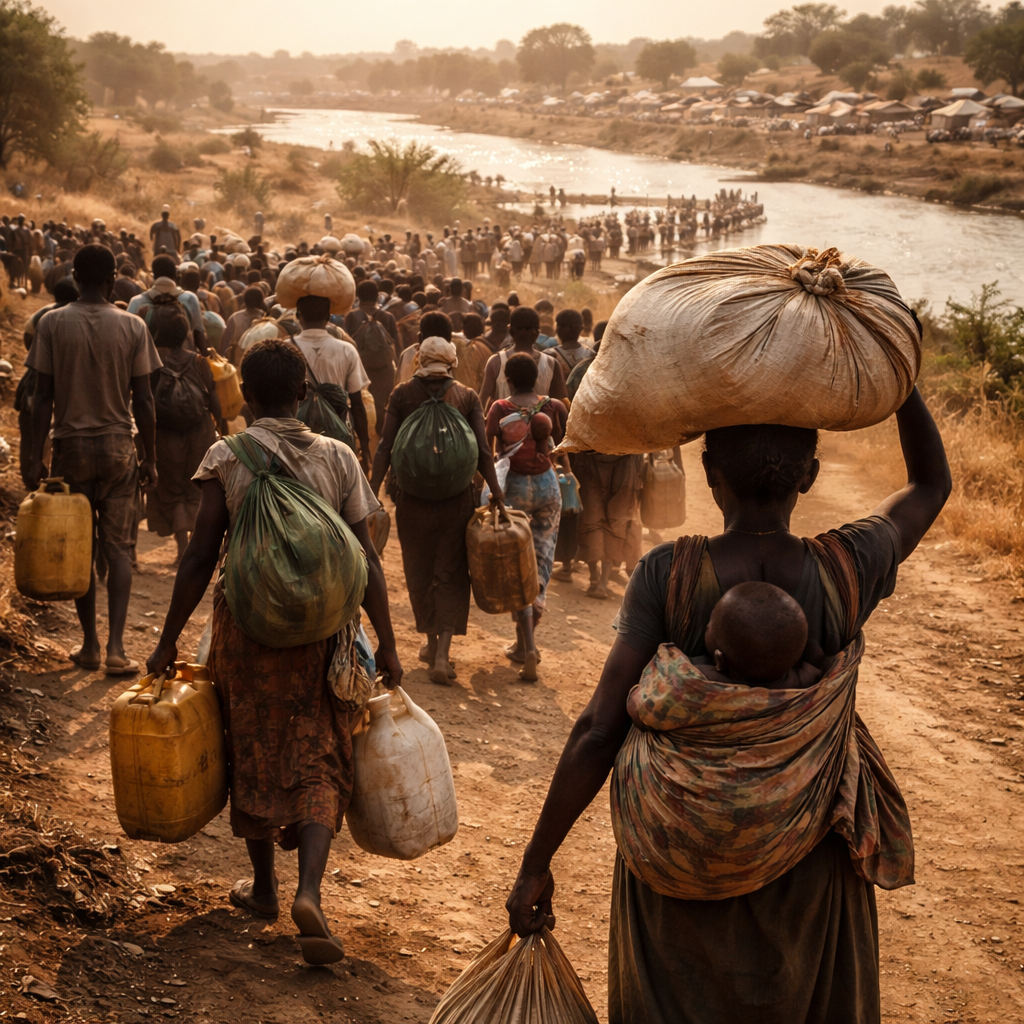
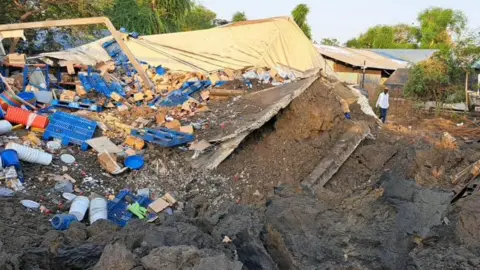
In South Sudan, violence in Jonglei State has intensified, with government troops reportedly entering Akobo town, triggering widespread looting and forcing civilians to flee toward the Ethiopian border.
Entire communities are now on the move.
What we are witnessing is not just a localized conflict, but the early stages of regional spillover—where instability begins to cross borders and reshape neighboring environments.
Why It Matters / Public Context
When people are forced to flee:
- Borders become pressure points
- Humanitarian needs increase rapidly
- Neighboring regions absorb the impact
This creates a chain reaction:
One conflict → multiple consequences across regions
For Africa and Global Systems
For Africa, this is a direct signal of how fragile stability can be:
- Border regions become zones of uncertainty
- Resource pressure increases in host communities
- Security concerns expand beyond original conflict zones
Globally, this reflects a recurring pattern:
Instability is rarely isolated—it moves through proximity
🧬 KI (Konsmik Intelligence) Insight
Opportunities:
- Strengthening of regional conflict response systems
- Increased cooperation between neighboring countries
- Focus on early intervention strategies

Risks:
- Escalation into broader regional instability
- Humanitarian strain on already vulnerable systems
- Long-term displacement and social disruption
From the Lens of Konsmik Reality
Conflict behaves like a wave.
It starts at one point—but its energy travels outward:
- Across borders
- Across systems
- Across lives
What begins as a single disruption can evolve into a regional condition.
Forecast
Short Term (1–2 weeks):
- Continued civilian displacement
- Increased pressure on border regions
Medium Term (1–3 months):
- Rising humanitarian demand
- Potential for cross-border tensions
Long Term (3–12 months):
- Risk of entrenched regional instability
- Long-term socio-economic impact on affected regions
Waides Insight
Borders may define countries—but they do not contain consequences.
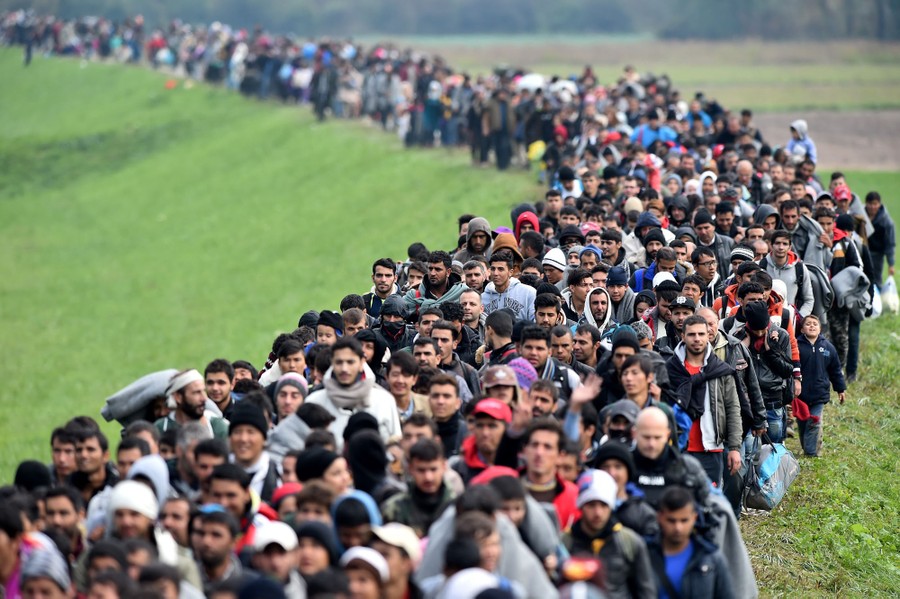
When instability begins to move, it reshapes everything around it.
Reflection
Can regional systems respond fast enough to contain this spillover or will instability continue to spread across borders?












Leave a Reply