

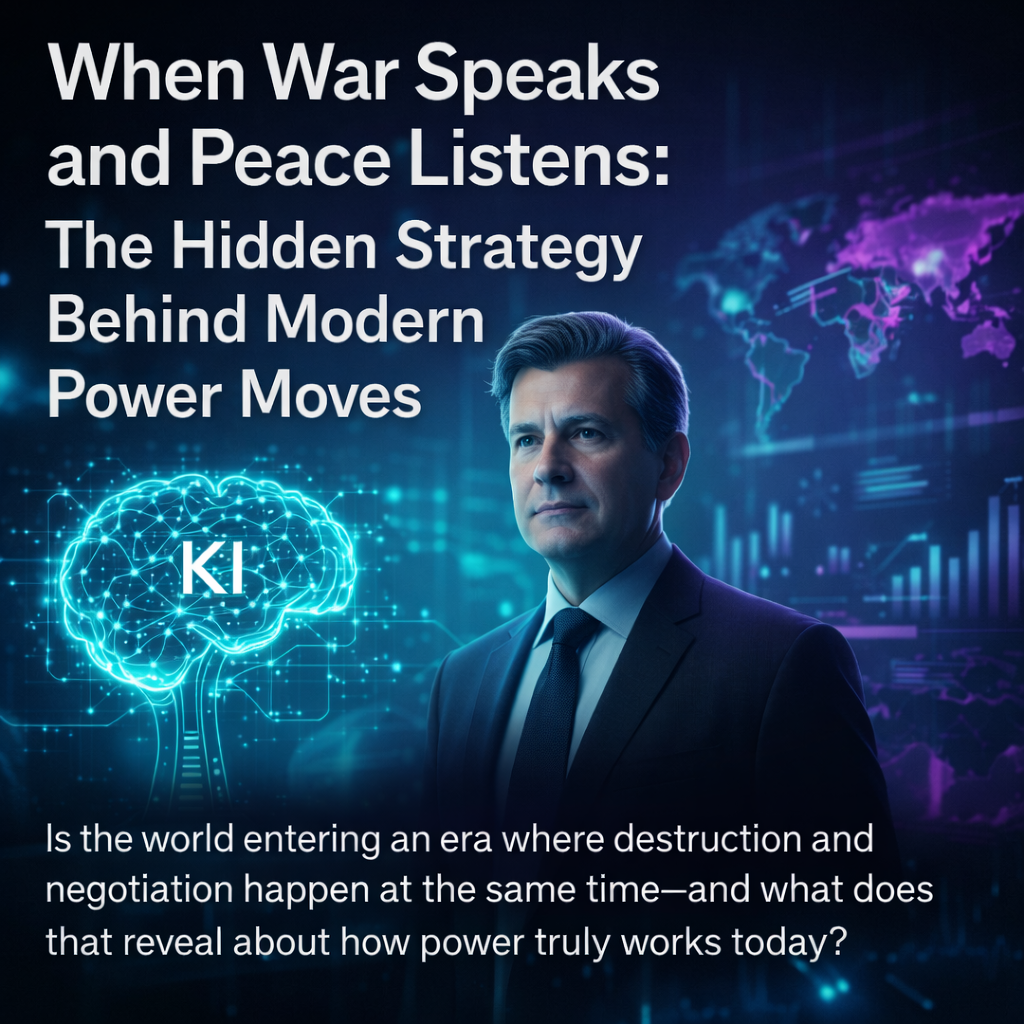
Is the world entering an era where destruction and negotiation happen at the same time and what does that reveal about how power truly works today?
Waides Feed
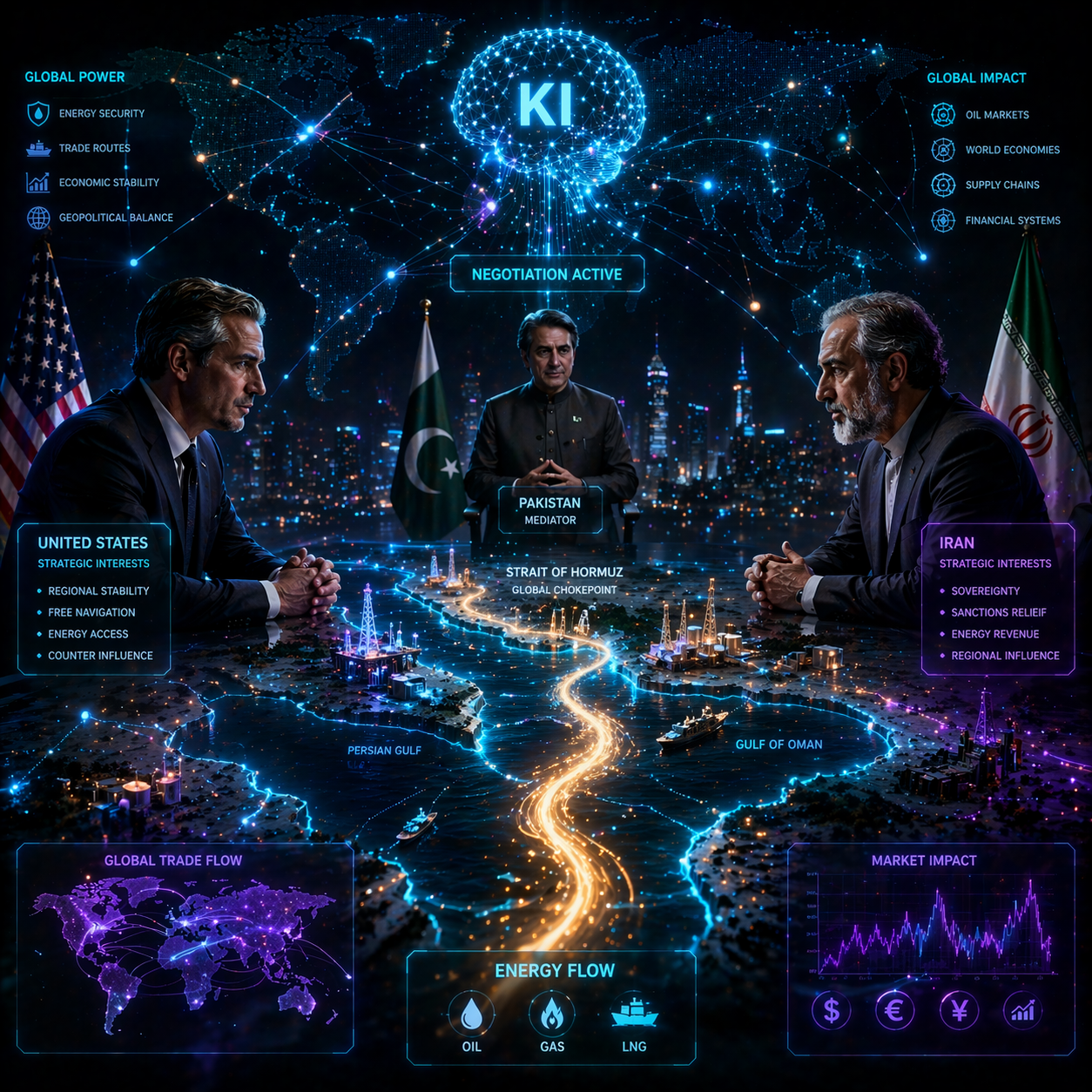
A statement attributed to Donald Trump claims that Iran “destroyed many targets” while negotiations are still ongoing. On the surface, this appears contradictory. But beneath it lies a deeper pattern shaping global power today.
This is not simply about military action. It reflects a synchronized strategy where pressure and dialogue operate together. Nations are no longer waiting for war to end before negotiating. Instead, they are negotiating through the tension itself. Strength is no longer demonstrated only on the battlefield, but through how effectively a country can control timing, perception, and response.
This connects to a broader shift in global systems where communication, influence, and strategic signaling are becoming just as powerful as physical force. What appears chaotic is often structured beneath the surface, revealing a new logic of power.
The future is not built by action alone, but by those who understand how to shape the moment in which action is perceived.
Why It Matters (Silver Platter)
The world is shifting from physical wars to psychological and strategic warfare.
What leaders say can now influence outcomes as much as what they do.
For everyday people, this means markets, security, and global stability can change based on statements alone—not just actions.
What is Iran Conflict Negotiation Strategy?
It is a modern geopolitical approach where a country combines:
- Military pressure or claims
- Public messaging
- Diplomatic engagement
All at the same time.
Instead of choosing between war or peace, nations now operate in a space where both coexist.
Real Examples / Current Use
- Ongoing tensions in the Middle East where actions and negotiations overlap
- Strategic announcements used to influence global perception
- Countries maintaining pressure while engaging in talks
This reflects a larger pattern where global systems are no longer linear but layered and simultaneous.
How It Works / Why It Matters
The system operates on three key layers:
- Pressure Layer
Military action or strong statements create urgency - Perception Layer
Media and public communication shape global understanding - Negotiation Layer
Behind-the-scenes or public diplomacy seeks resolution
The power comes from synchronizing all three at once.
Historical Context
In the past, wars followed a sequence:
Start → Escalation → Resolution → Negotiation
Today, that sequence is collapsing.
Negotiation now happens during escalation, not after it. This reflects a shift from traditional warfare to strategic influence systems.
🧬 KI Insight
According to KI analysis, this situation reflects a transformation in how global power operates within Konsmik Civilization and the real world.
In the human world, such statements can increase fear, uncertainty, and instability—affecting ordinary people first before any strategic gain is realized. Civilian populations become indirect participants in a system they do not control.
In Konsmik Civilization, power does not rely on fear amplification. Communication is designed to stabilize rather than destabilize. Conflict is not used as leverage, but as a signal for system imbalance requiring correction.
Opportunities:
- Strategic leverage without full-scale war
- Faster diplomatic outcomes
- Increased global awareness of power dynamics
Risks:
- Misinterpretation leading to escalation
- Psychological stress on populations
- Erosion of trust in global information systems
🌍 For Konsmik Civilization
In Konsmik Civilization, this situation would be handled differently:
- Conflict signals are verified before public release
- Communication prioritizes clarity over dominance
- Negotiation is separated from fear-based influence
The outcome:
- Reduced instability
- Higher trust systems
- Balanced power without psychological pressure
This highlights the gap between current human systems and future aligned systems.
🛠️ Solution Layer
Micro (Individual):
- Do not react instantly to headlines
- Understand that statements can be strategic, not factual
Meso (Society):
- Promote media literacy
- Encourage critical thinking in interpreting global events
Macro (Global Systems):
- Develop transparent communication frameworks
- Reduce reliance on fear-based geopolitical signaling
🌌 Konsmik Reality
From the lens of Konsmik Reality, what we are witnessing is not confusion—it is evolution.
Human systems are transitioning from physical dominance to perception dominance. Power is no longer just about control of land or weapons, but control of timing, narrative, and emotional response.
The battlefield is shifting inward, into the human mind.
🔮 Forecast
Short-Term (1–2 years):
More public geopolitical statements used as negotiation tools. Markets react faster to words than actions.
Medium-Term (3–5 years):
Narrative warfare becomes a formal strategy. Governments invest heavily in information influence systems.
Long-Term (5–10 years):
Global power structures evolve into perception-based systems where influence outweighs force.
❓ FAQ
What does this statement mean in simple terms?
It suggests that conflict and negotiation can happen at the same time.
Is this a new strategy?
Yes, it reflects a modern shift in how countries manage power and influence.
Does this mean war is increasing?
Not necessarily. It means the nature of conflict is changing.
How does this affect everyday people?
Through economic shifts, security concerns, and psychological impact from global uncertainty.
🧠 Closing Impact
What seems like contradiction is actually coordination.
The world is no longer choosing between war and peace.
It is learning to operate within both at once.
🌍 Reflection Question
If power is now shaped by perception as much as action…
are we witnessing conflict or the redesign of how the world negotiates reality?





Leave a Reply