

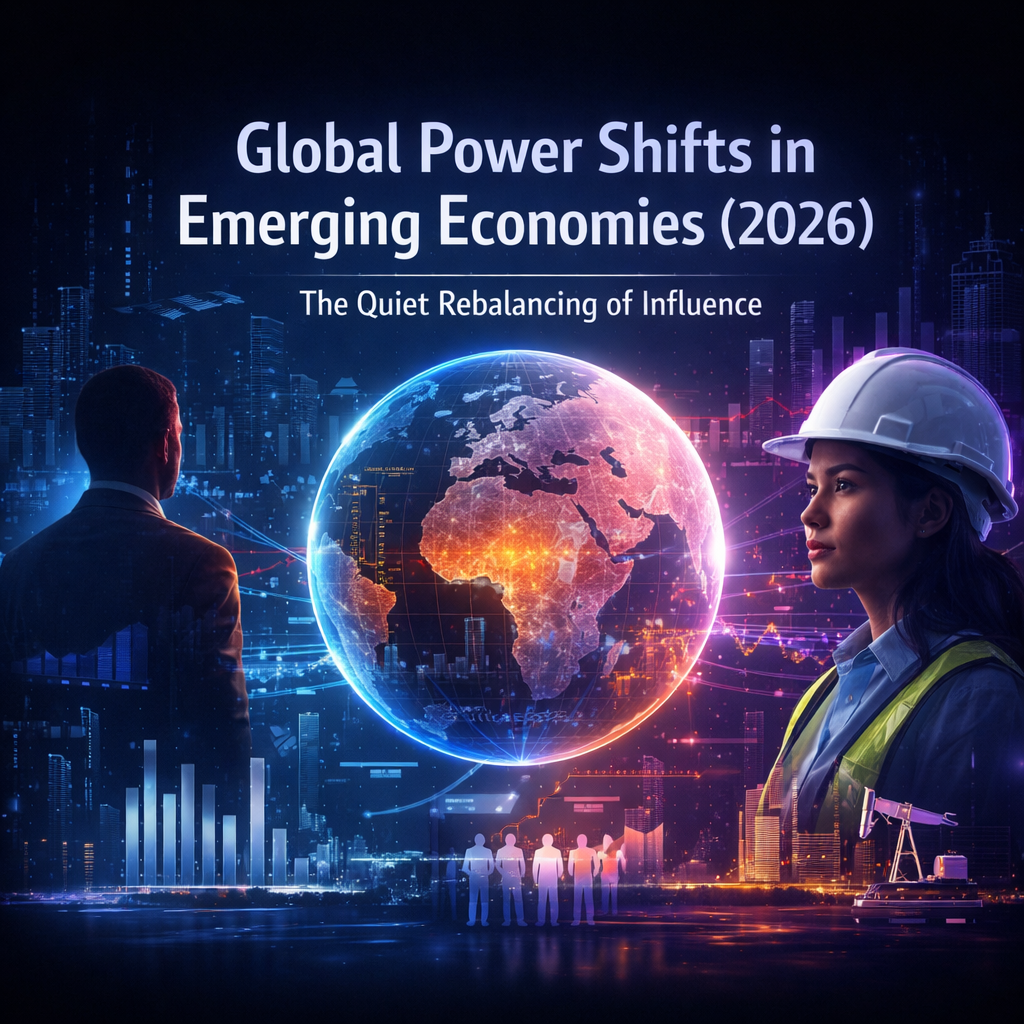
Are emerging economies rising… or is global power quietly being redistributed?
Waides Feed
Across the world, a quiet transformation is unfolding. Power is no longer concentrated in a few traditional centers. Instead, it is gradually redistributing toward emerging economies that are redefining their role in global systems.
Countries across Africa, Asia, and parts of Latin America are no longer just participants in global markets. They are becoming strategic players, forming new trade alliances, strengthening regional influence, and reshaping how value flows across borders. This is not a sudden change. It is a slow, deliberate shift driven by necessity, opportunity, and adaptation.
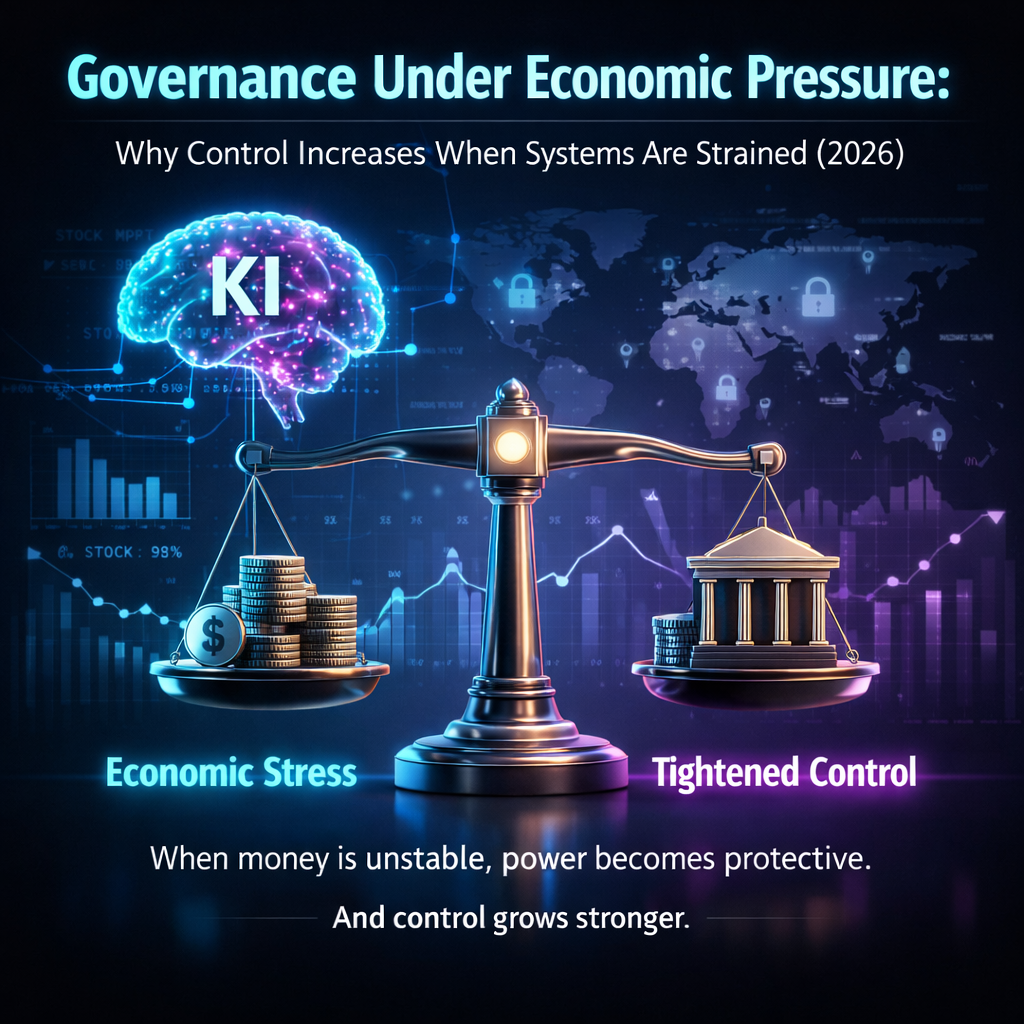
Economic pressure, global uncertainty, and technological access are accelerating this transformation. Nations that were once dependent on external systems are now building internal capacity while forming new external partnerships. As we will explore in our full breakdown of governance under economic pressure, systems under strain often evolve by redistributing control rather than losing it.
This shift is not about replacing one global power with another. It is about creating a more distributed system where influence is shared, negotiated, and continuously rebalanced. As we will explore in our analysis of how power and economic systems respond to stress, this redistribution follows patterns that have appeared throughout history.
The future is not defined by who holds power today, but by how power adapts to pressure.
Why It Matters (Silver Platter)
Power is no longer fixed.
It is moving.
For people, this affects jobs, trade, opportunities, and the balance of global influence.
What Are Global Power Shifts?
Global power shifts refer to changes in how influence, control, and economic strength are distributed across countries.
In simple terms:
👉 Some countries are gaining more influence, while others are slowly losing dominance.
Real Examples / Current Use
- Emerging economies forming new trade partnerships
- Increased investment flows into developing regions
- Countries reducing reliance on traditional global powers
- Regional alliances strengthening economic independence
- Governments building internal systems to reduce external dependency
This reflects what we explained in our breakdown of global economic transitions, where power evolves rather than disappears.
How It Works / Why It Matters
The shift follows a consistent pattern:
- Global pressure increases (economic, political, technological)
- Emerging economies adapt and reposition
- New alliances and trade routes form
- Power becomes more distributed
This is not a collapse of existing power.
It is a rebalancing.
To understand this fully, see how we analyzed global systems of power and economic response under stress.
Historically…
Power has never been permanent.
From past empires to modern economies, influence has always shifted based on:
- Resources
- Innovation
- Strategic positioning
What makes today different is the speed and scale of change, driven by globalization and technology.
🧬 KI Insight
according to KI analysis, while global narratives often focus on competition between major powers, the deeper reality is that emerging economies are quietly reshaping the system, often without recognition, while their populations navigate the pressures and uncertainties of rapid transformation.
Opportunities:
- Increased global participation from emerging regions
- New markets and economic growth
- Greater balance in global influence
Risks:
- Uneven development and inequality
- Geopolitical tension during transition
- Structural instability if systems do not adapt
🌍 For Konsmik Civilization
A balanced system does not concentrate power.
It distributes it.
Step-by-step:
- Shared influence across regions
- Collaborative economic systems
- Human-centered development, not just growth
Outcome:
👉 A world where opportunity is not limited by geography
🛠️ Solution Layer
Micro (Individuals):
- Understand global trends and adapt skills
- Explore opportunities in emerging markets
Meso (Organizations):
- Invest in developing regions
- Build flexible global strategies
Macro (Global Systems):
- Promote fair trade systems
- Support balanced economic development
🌌 Konsmik Reality
Power does not disappear.
It moves.
What we are witnessing is not a sudden change, but a slow shift beneath the surface.
A rebalancing that most people will only notice when it is already complete.
🔮 Forecast
Short-Term (1–2 Years):
Increased visibility of emerging economies in global trade and politics.
Medium-Term (3–5 Years):
Stronger regional alliances and reduced dependence on traditional powers.
Long-Term (5–10 Years):
A more distributed global system where power is shared rather than concentrated.
❓ FAQ
What are global power shifts?
They are changes in how influence and economic strength are distributed globally.
Why are emerging economies gaining power?
Because of growth, strategic positioning, and adaptation to global changes.
Is global power shifting away from major countries?
Not entirely. It is being redistributed rather than replaced.
What does this mean for the future?
A more balanced but complex global system.
🧠 Closing Impact
The world is not becoming less powerful.
It is becoming differently powerful.
🌍 Reflection Question
Are we witnessing competition for power… or the creation of an entirely new global system?







Leave a Reply