

🧠 WAIDES FEED
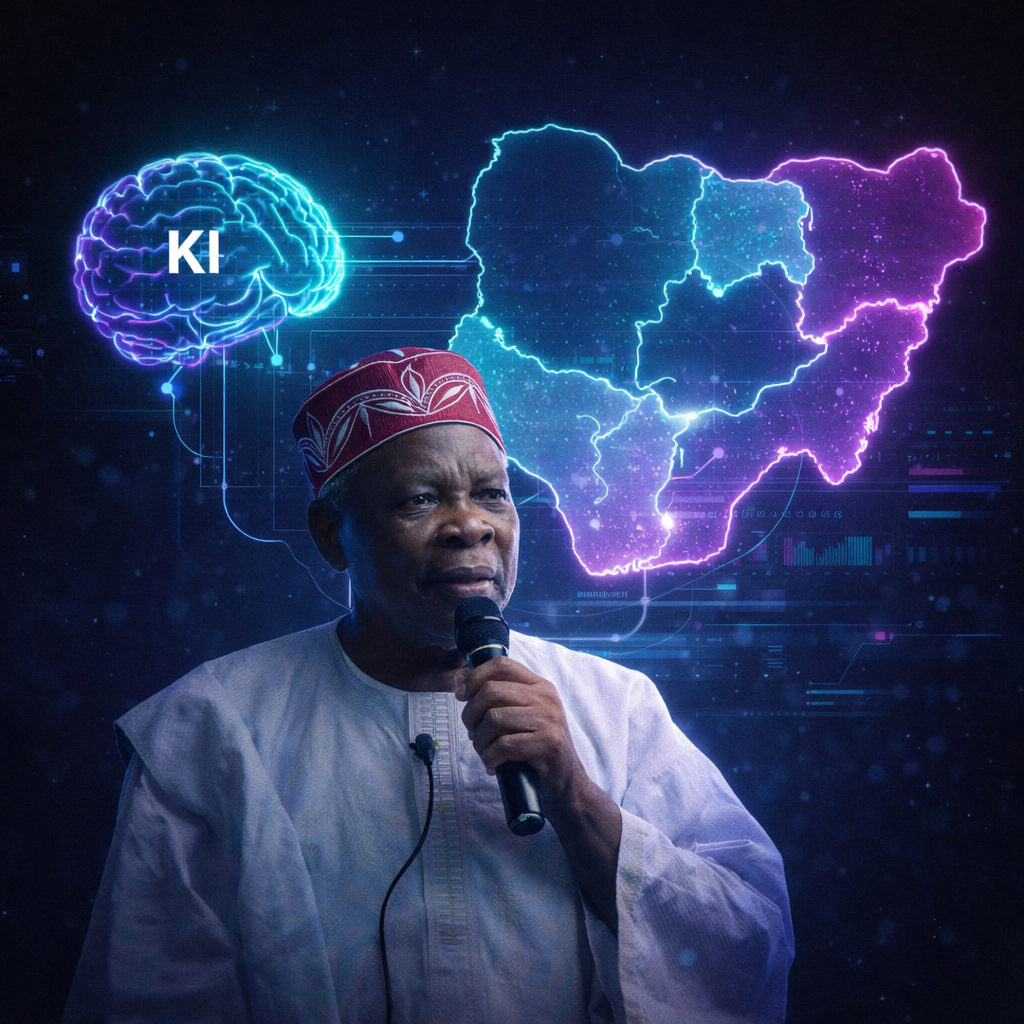
Across Nigeria’s evolving political landscape, a familiar but increasingly louder signal is returning: the idea that some regions may be better off apart than together. Reports suggesting that Yoruba and Igbo leaders are discussing a peaceful separation are not just political statements — they are reflections of deeper systemic pressure.
This is not new. But what is different now is timing and intensity. Economic strain, rising insecurity, youth frustration, and institutional distrust are converging into a single question: Is the current structure still working?
At its core, this conversation is less about division and more about control, fairness, and identity. When systems fail to deliver security, opportunity, and trust, people begin to look inward — toward tribe, region, and cultural identity — as alternative systems of stability.
As we explored in our deeper breakdown of emerging global power shifts, nations today are not only competing externally — they are also being questioned internally. The future is not built by innovation alone, but by those who control its direction.
⚖️ WHY IT MATTERS (SILVER PLATTER)
This is not just about separation — it is about a system under pressure.
When people start questioning unity, it means trust in the system is weakening.
For everyday Nigerians, this affects:
- Stability
- Economic confidence
- Social relationships
- Future opportunities
The risk is not just political — it is psychological.
📘 WHAT IS “PEACEFUL SEPARATION” IN THIS CONTEXT?
Peaceful separation refers to the idea that different regions within a country could mutually agree to become independent entities without conflict or war.
In reality, it involves:
- Political negotiation
- Economic restructuring
- Border agreements
- Resource division
- International recognition
It is far more complex than it sounds.
🌍 REAL EXAMPLES / CURRENT USE
Globally, similar patterns have appeared:
- Brexit — the UK separating from the European Union
- South Sudan — independence after long internal conflict
- Catalonia — ongoing independence push in Spain
These examples show that separation movements often begin as expressions of dissatisfaction, not immediate action.
As explored in our analysis of global identity-driven movements, such trends are rising worldwide — not just in Africa.
⚙️ HOW IT WORKS / WHY IT MATTERS
Separation conversations typically follow a pattern:
- System dissatisfaction rises
- Identity awareness strengthens
- Political narratives amplify division
- Public sentiment becomes polarized
What matters most is not the separation itself, but:
👉 What triggered the conversation in the first place
To understand this fully, see how we analyzed global governance pressure systems and why centralized models are increasingly challenged.
🕰️ HISTORICAL CONTEXT
Nigeria’s structure was shaped during colonial rule, merging diverse ethnic and cultural groups into one nation.
Since independence:
- Civil war (1967–1970) showed the dangers of fragmentation
- Repeated calls for restructuring have surfaced across decades
- Regional imbalance has remained a consistent concern
This is not a new issue — it is a recurring cycle under different conditions.
🧬 KI ANALYSIS
According to KI analysis, this situation reflects a deeper systemic imbalance rather than an immediate push for division.
🔍 System Insight:
- The central structure is being questioned
- Regional identity is rising as a fallback system
- Trust in institutions is weakening
✅ Opportunities:
- Governance Reform:
Push toward restructuring and decentralization - Economic Rebalancing:
Regions gaining control over local resources - Identity Strength:
Cultural systems becoming more organized and productive
⚠️ Risks:
- Ethnic Division:
Increased mistrust between groups - Economic Instability:
Investor uncertainty and capital withdrawal - Political Manipulation:
Elites using division narratives for power - Unrealistic Expectations:
Separation is complex and may not solve root problems
🌍 FOR KONSMIK CIVILIZATION
In Konsmik Civilization, identity does not divide — it aligns.
Regions like Yoruba and Igbo would not need separation to feel empowered because:
- Economic participation is decentralized
- Value is shared through systems like Waides Grup
- Identity is preserved without political fragmentation
In Konsmik design:
👉 Unity is not forced
👉 It is functional and beneficial
This removes the need for separation as a solution.
🛠️ SOLUTION LAYER
Micro (Individual)
- Focus on skills, value creation, and economic independence
- Avoid emotional manipulation from divisive narratives
Meso (Community)
- Strengthen regional economies without hostility
- Promote collaboration across ethnic lines
Macro (System)
- True federal restructuring
- Transparent resource management
- Decentralized governance systems
🌌 KONSMIK REALITY
Nations are not just political structures — they are agreements of trust.
When trust weakens, identity rises.
When identity rises, unity is questioned.
Separation is not the beginning of change.
It is the signal that change has already been delayed.
🔮 FORECAST
Short-Term (1–2 years)
- Increased public discourse around restructuring
- More media amplification of separation narratives
Medium-Term (3–5 years)
- Pressure for constitutional reforms
- Possible shift toward stronger regional autonomy
Long-Term (5–10 years)
- Either:
- A more decentralized Nigeria
- Or continued cycles of fragmentation pressure
❓ FAQ
What is peaceful separation?
A mutual agreement for regions to become independent without conflict.
Is Nigeria actually separating?
No confirmed official process — current discussions are largely narrative and political signals.
Why are these conversations increasing?
Due to economic hardship, insecurity, and governance dissatisfaction.
Can separation solve Nigeria’s problems?
Not necessarily — many challenges are systemic and could persist.
🧠 CLOSING IMPACT
This moment is not about whether Nigeria will divide.
It is about whether Nigeria will adapt.
Because when people begin to imagine life outside a system…
it means the system is no longer fully trusted.
🌍 REFLECTION QUESTION
- Are we witnessing the desire for separation… or the failure of structure?
- What truly holds a nation together — borders, or shared trust?







Leave a Reply