

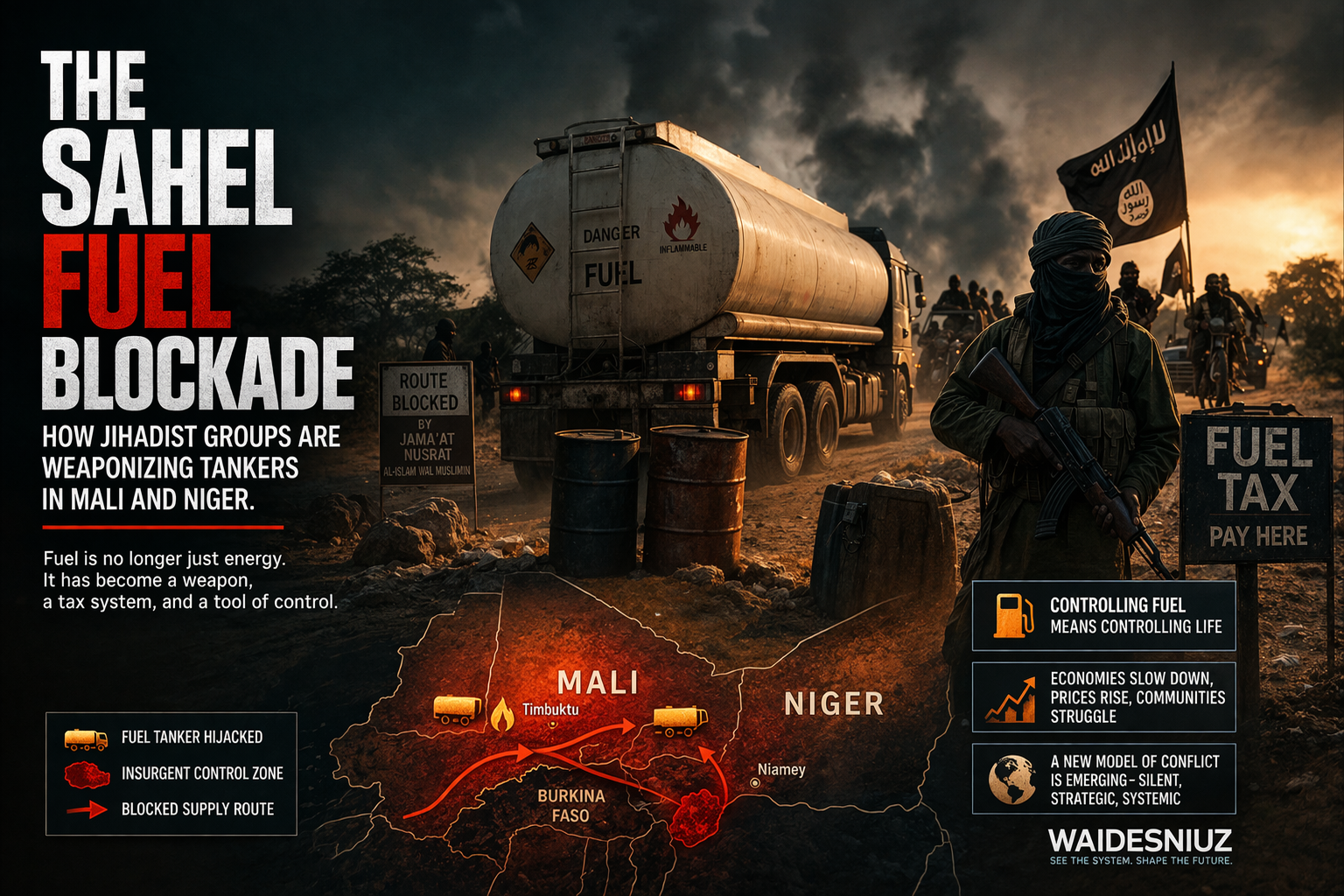
In parts of Mali and Niger, people are no longer just afraid of attacks, they are afraid of losing movement.
Fuel is quietly disappearing from key routes. Tankers are being stopped, hijacked, or taxed. What used to be a normal supply system is slowly turning into a controlled pathway.
This is not loud breaking news, but it is already changing daily life.
A trader cannot move goods. A farmer cannot transport harvest. A driver cannot work. A hospital cannot operate normally.
When fuel stops, life slows down.
This is no longer just conflict.
This is control.
Waides Feed
What is happening in the Sahel is not just insecurity, it is a shift in how power works.
Jihadist groups are no longer focused only on occupying land. They are focusing on something more powerful, controlling the systems that people depend on.
Fuel has become their entry point.
By stopping tankers, taxing routes, or redirecting supply, they are deciding who can move and who cannot. They are shaping daily life without needing official authority.
Fuel powers transport, agriculture, trade, and even communication.
Control fuel, and you control access to survival.
This reflects a deeper pattern already emerging across fragile regions. Authority is moving away from formal governments toward those who control essential systems.
👉 “Power is no longer about who owns land, it is about who controls movement.”
The future is not built by innovation alone, but by those who control its direction.
Why It Matters (Silver Platter)
This is not just about fuel, it is about control over everyday life.
When fuel becomes unstable, prices rise, businesses slow down, food supply weakens, and people begin to struggle silently.
👉 “When movement becomes restricted, opportunity disappears quietly.”
👉 “The real risk is not the attack you see, but the system that stops working.”
The question is no longer if this matters, but whether you are ready for what it leads to.
What is the Sahel Fuel Blockade
The Sahel fuel blockade is a situation where armed groups interfere with fuel transportation.
They do this by:
- Stopping fuel tankers
- Hijacking deliveries
- Charging illegal fees on transport routes
- Blocking access to certain regions
Instead of controlling cities, they control the movement between cities.
It is a simple idea, but a powerful one.
Why You Can’t Ignore This
This is a signal of how modern conflict is changing.
You may think this is far away, but the pattern is what matters.
Anywhere systems are weak, this can happen:
- Food supply chains
- Transport systems
- Energy distribution
This becomes a gateway to power.
Those who understand systems early do not chase opportunities, they position themselves inside them.
Real World Signals
Verified Signals
- The Sahel region has become one of the most unstable zones globally, with increasing attacks on infrastructure and transport systems
- Reports show rising disruptions in fuel delivery across Mali and Niger, affecting rural and urban economies
Human Experience
- Drivers avoid certain routes due to fear of attacks
- Fuel prices increase in affected areas
- Small businesses struggle to operate consistently
Emerging Truth
This is not random.
This is a shift toward controlling systems instead of territories.
How It Works
The system is simple, but effective.
Fuel is transported mainly by road in the Sahel.
There are limited alternatives like pipelines or secure rail systems.
This creates a vulnerability.
Armed groups take advantage by:
- Identifying key transport routes
- Intercepting fuel tankers
- Imposing control over movement
Once they control the route, they control:
- Price
- Access
- Flow of goods
This is where power moves.
Historical Context
This pattern is not new, it is evolving.
In the past:
- Power was about land control
- Armies fought to capture territory
Today:
- Power is about system control
- Groups target supply chains and infrastructure
From trade routes in ancient times to oil pipelines in modern conflicts, control has always followed resources.
Now, it is becoming more precise and more strategic.
🧬 KI Analysis
According to KI analysis…
Causes
- Weak government control in remote regions
- High dependence on road based fuel transport
- Economic fragility and lack of alternatives
- Strategic evolution of insurgent groups
- Loss of trust in institutions
Human Impact
- Communities face fuel shortages
- Cost of living increases
- Movement becomes limited
- People depend on whoever controls access
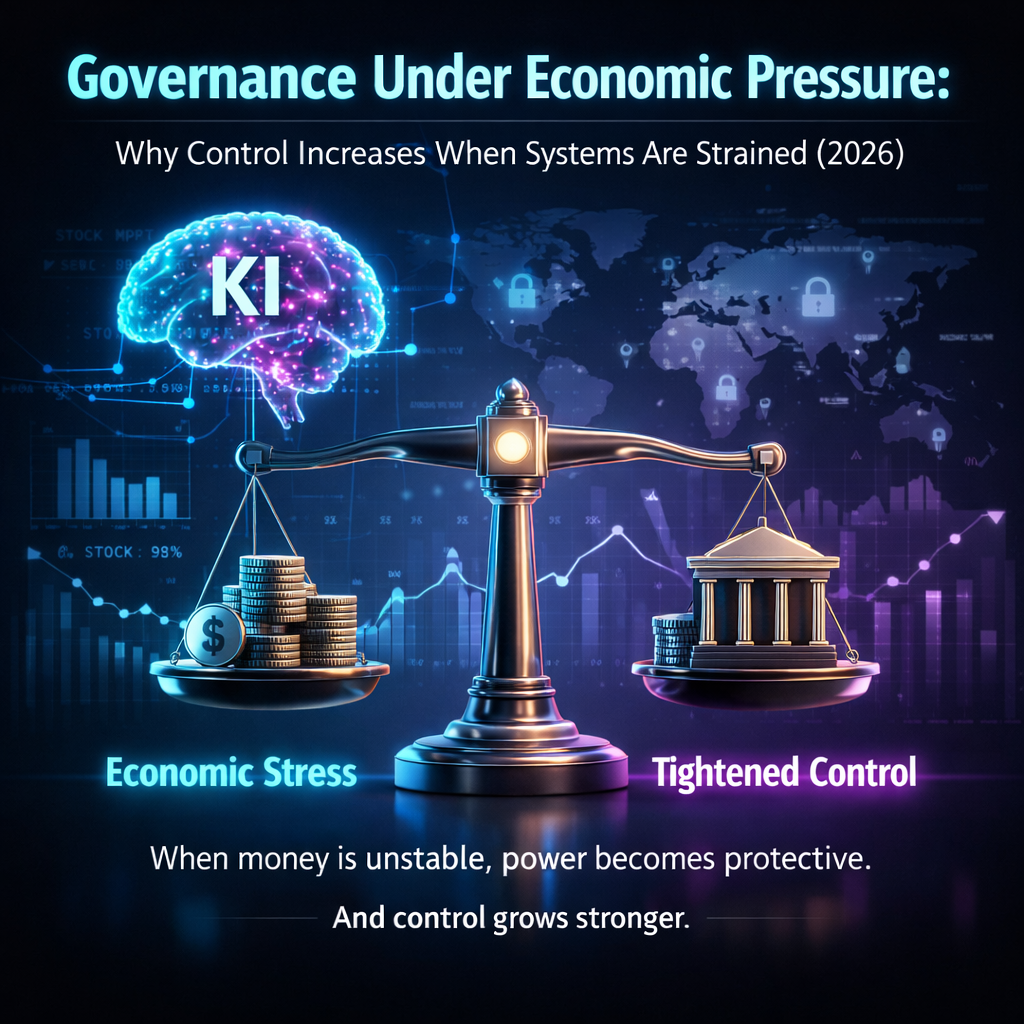
In Konsmik Civilization terms, power is shifting from visible authority to functional control.
Opportunities
- Development of decentralized energy systems
- Investment in local energy production
- Stronger logistics and infrastructure systems
Risks
- Economic slowdown in affected regions
- Growth of informal and shadow systems
- Long term weakening of government authority
- Increased civilian vulnerability
For Konsmik Civilization
A better system is possible.
Instead of centralized dependence, systems can be:
- Decentralized
- Locally controlled
- Community supported
Energy should not be a tool of control, it should be a foundation of stability.
This requires redesigning systems to reduce vulnerability and increase resilience.
Step by Step Action Path
Step 1, Awareness
Understand that power is shifting from land to systems
Step 2, Positioning
Pay attention to sectors like energy, logistics, and infrastructure
Step 3, Action
Learn how these systems work, and where value is created
Step 4, Leverage
Position yourself where systems are being built, not where they are collapsing
Konsmik Reality
Past
Power was controlled through land and visible authority
Present
Power is controlled through systems and movement
Future
Power will belong to those who control access to essential resources
👉 “Those who understand this early will not just adapt, they will shape the future.”
Short Term
Disruptions increase, fuel becomes less stable
Medium Term
Parallel systems begin to form
Long Term
Control of systems replaces traditional authority
FAQ
What is the Sahel fuel blockade
It is the disruption and control of fuel supply routes by armed groups
Why is fuel important in this situation
Fuel powers transport, trade, and daily life, so controlling it affects everything
Who is affected the most
Local communities, small businesses, and transport workers
Can this spread to other regions
Yes, especially where systems are weak and centralized
Closing Impact
This is not just a regional issue.
It is a signal.
The world is slowly moving from visible control to invisible systems of power.
Once you see it, you cannot ignore it.
Reflection
- What happens when survival depends on access controlled by unseen systems
- Are we still living in a world of governments, or entering a world of system controllers







Leave a Reply