

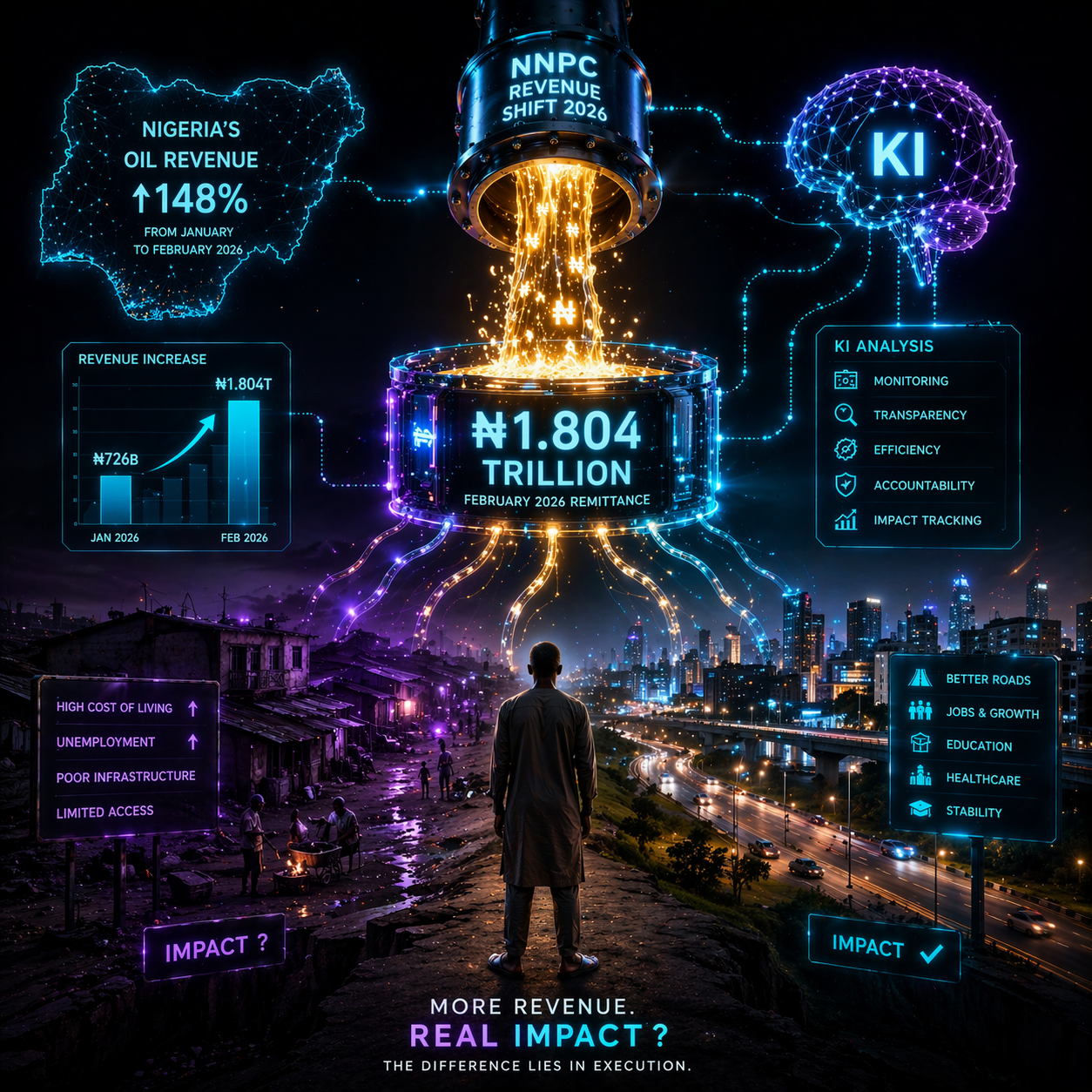
Nigeria just earned more.
But will Nigerians feel more?
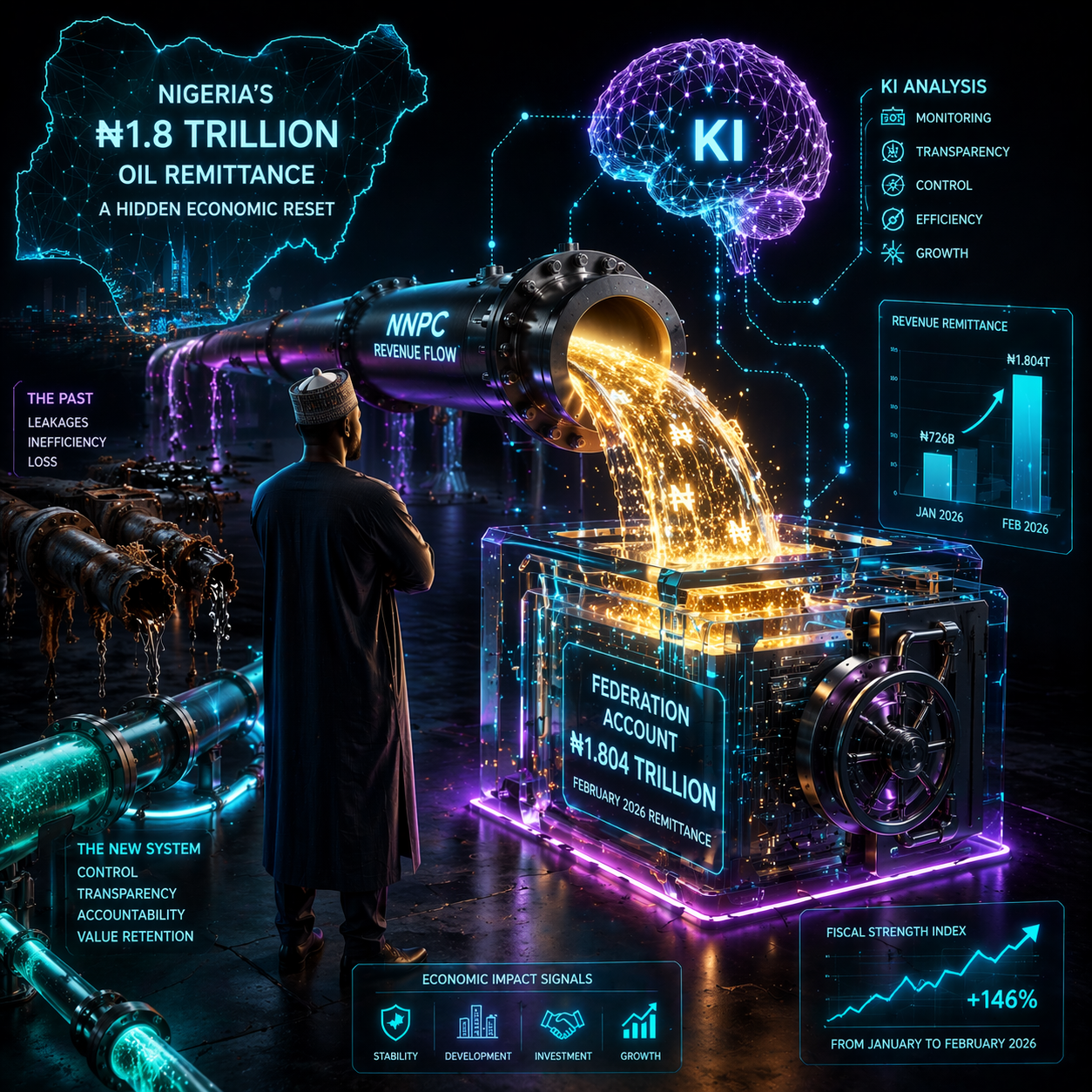
A jump from ₦726 billion to ₦1.804 trillion in oil revenue sounds like progress. It sounds like growth. It sounds like relief.
But this is where the real question begins.
Because in many systems, money increases before life improves.
And sometimes, it never reaches the people at all.
Waides Feed
The surge in remittance from NNPC Limited is not just a financial headline. It is a structural signal.
Under President , new directives are tightening how oil revenue is captured and reported. This suggests that Nigeria may be recovering value that was previously lost through inefficiencies and leakages.
This connects to a broader shift in global economic systems, where governments are beginning to reassert control over strategic sectors, especially energy.
But here is the deeper system:
👉 Revenue collection is only the first layer
👉 Real impact depends on distribution and execution
The system does not reward earnings alone. It rewards how earnings are used.
The future is not defined by how much a country makes, but by how much its citizens actually feel.
Why It Matters / Public Context
This is not about government income. It is about whether that income reaches your daily life.
If this shift is real and sustained, it could influence prices, jobs, infrastructure, and stability. If not, it becomes another number disconnected from reality.
What Is This Revenue Shift?
This revenue shift refers to the significant increase in oil income remitted by NNPC into Nigeria’s central account.
In simple terms:
👉 The government is now receiving more of the money generated from oil
This should, in theory, improve:
- Public spending
- National development
- Economic stability
But theory and reality are not always aligned.
Why You Can’t Ignore This
This shift is not just about oil.
It is about where the next wave of:
- Government spending
- Infrastructure projects
- Economic opportunities
will go.
If you understand where money is flowing, you understand where growth will happen.
If you wait until results become obvious, the advantage is already gone.
“The future does not reward awareness, it rewards early positioning.”
🌍 Real-World Signals
- Nigerians are currently facing rising living costs and inflation
- Institutions like have emphasized the need for better public spending efficiency
- Countries such as have shown how oil wealth can translate into citizen welfare through structured systems
- Nigeria’s increase in revenue signals potential, but not guaranteed outcomes
This reflects a deeper global pattern:
👉 Wealth generation is increasing faster than wealth distribution
How It Works
The system that connects revenue to everyday life follows this path:
- Revenue Collection
Oil income is captured by the government - Budget Allocation
Funds are assigned to sectors like infrastructure, health, and education - Implementation
Projects are executed - Public Impact
Citizens experience the results
👉 The breakdown often happens between allocation and implementation
That is where value is lost.
Historical Context
Nigeria has experienced similar moments before:
- High oil earnings did not always translate into improved living standards
- Weak systems reduced the effectiveness of public spending
- Citizens became disconnected from government financial growth
Now, the pattern is being tested again:
👉 Can increased revenue finally lead to visible improvement?
🧠 KI Analysis
According to KI analysis, this situation is defined by one central tension:
Revenue vs Impact
Causes:
- Improved revenue tracking and enforcement
- Economic pressure forcing better internal resource management
- Political push for fiscal restructuring
Systems Involved:
- Oil and energy sector
- Government budgeting systems
- Public service delivery systems
Power Dynamics: Control is shifting toward centralized revenue management, but impact depends on decentralized execution.
Opportunities:
- Economic:
Increased funding for infrastructure and public services - Strategic:
Reduced reliance on external borrowing - Societal:
Potential improvement in quality of life
Risks:
- Structural:
Weak institutions may limit impact - Systemic:
Funds may not reach intended sectors - Ethical:
Mismanagement or diversion of resources
🌍 For Konsmik Civilization
In Konsmik Civilization, revenue-to-impact systems are structured differently:
Step 1: Transparent Flow Tracking
Every unit of revenue is visible and traceable
Step 2: Intelligent Allocation
Funds are directed based on real-time societal needs
Step 3: Verified Execution
Projects are continuously monitored and validated
Step 4: Direct Impact Measurement
Citizens’ lives are used as the final metric of success
Outcome:
- No gap between revenue and reality
- Systems are trusted
- Growth is visible and measurable
🛠️ Solution Layer
Personal Level:
Pay attention to sectors receiving government funding and align your skills or business with them
Organizational Level:
Position businesses to benefit from infrastructure and public sector investments
National Level:
Strengthen accountability and transparency systems
Global Level:
Encourage governance models that connect revenue directly to citizen outcomes
Step-by-Step Action Path
1. Awareness
Understand that revenue is increasing
2. Positioning
Identify where the money will likely be spent
3. Action
Move into sectors tied to government investment
4. Leverage
Use early positioning to benefit before the impact becomes widespread
🌌 Konsmik Reality
This is already unfolding.
Short-Term (1–2 years):
- Increased government spending announcements
- Limited immediate change in daily life
Medium-Term (3–5 years):
- Visible improvements if systems function properly
- Rising public expectations
Long-Term (5–10 years):
- Either structural transformation
- Or deeper frustration if impact does not match revenue
Signals suggest:
👉 The true measure of this shift will not be in trillions
👉 It will be in whether people’s lives actually improve
🔮 Forecast
- Governments will face increasing pressure to prove impact
- Citizens will demand transparency and visible results
- Economic success will be measured by lived experience, not reported numbers
❓ FAQ
Does higher oil revenue mean lower prices?
Not directly. It depends on how the money is used.
Will this create more jobs?
It can, if funds are invested in productive sectors.
Why haven’t past revenues improved lives significantly?
Due to inefficiencies, mismanagement, and weak systems.
Is this change sustainable?
Only if transparency and accountability are maintained.
🧠 Closing Insight
Nigeria is not just earning more.
It is being tested.
Not on its ability to generate wealth, but on its ability to translate that wealth into reality.
Because in the end:
👉 Numbers convince the system
👉 But results convince the people
🌍 Reflection Question
If a nation earns more but its people do not feel it, has anything really changed?
And if this moment is different, what will prove that it truly is?







Leave a Reply