

Waides Feed
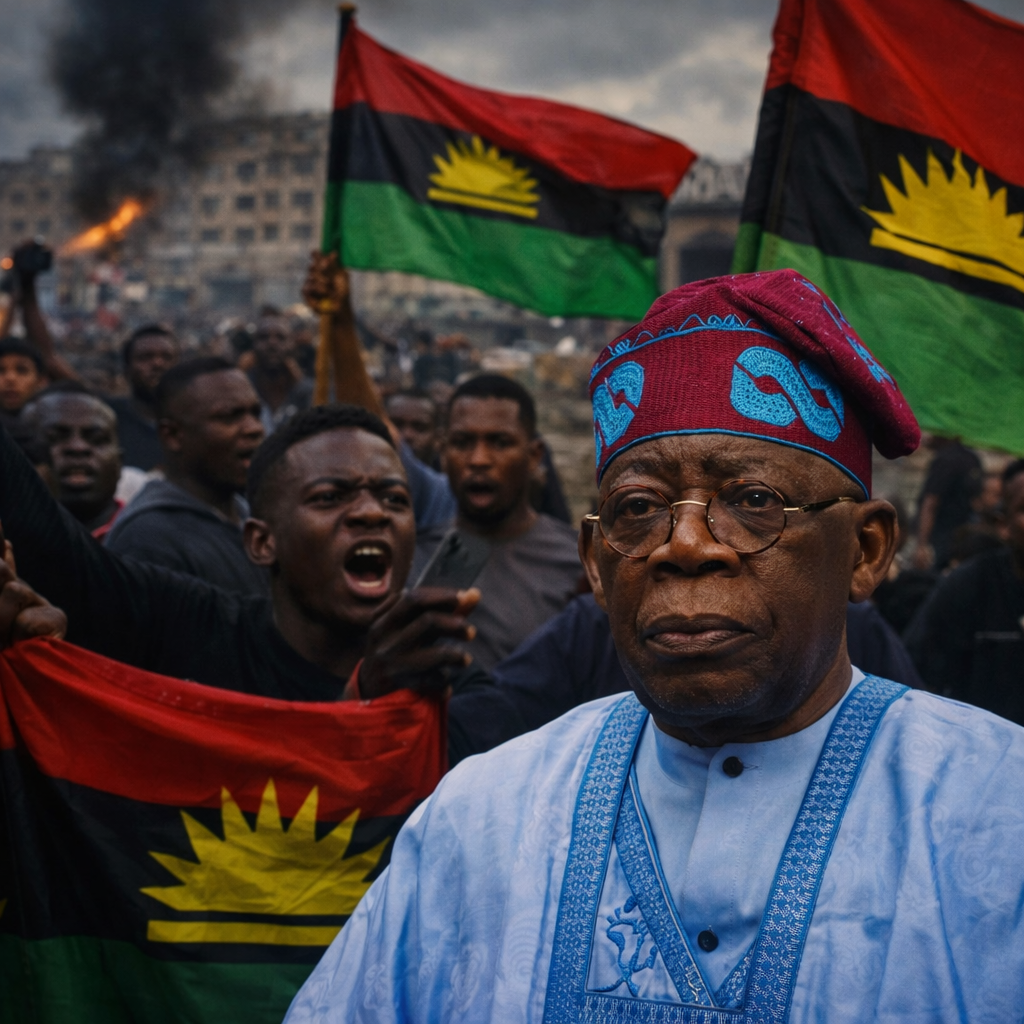
A viral warning has shaken Nigeria’s digital and political space—claiming that a former U.S. envoy cautioned the government of Bola Ahmed Tinubu to “stop ongoing killings or risk violent breakup.”
The words spread fast. Faster than verification. Faster than context.
But beneath the viral statement lies something deeper—something more dangerous than the message itself.
It is the state of a nation where fear, history, and unresolved identity are quietly converging.
Because in Nigeria, conversations about violence are never just about security—they are also about memory, trust, and the unfinished story of unity.
Why It Matters / Public Context
Nigeria is not just facing insecurity—it is facing layered instability:
- Physical violence in parts of the country
- Economic pressure on citizens
- And a growing crisis of confidence in truth and governance
When people begin to feel unsafe and unheard, they search for explanations. And in that search, narratives—true or not—gain power.
This is why statements like this go viral:
Not because they are confirmed, but because they resonate with existing fear.
And this is where history returns.
The idea of a “violent breakup” is not new in Nigeria’s story. It echoes one of the most defining chapters in the nation’s past—the attempt by Biafra to separate, leading to the Nigerian Civil War.
That memory has never fully disappeared.
It lives quietly beneath conversations about:
- Marginalization
- Regional identity
- Security imbalance
- Political representation
So when such a warning surfaces, it does not land as mere speculation—it touches a nerve that already exists.
For Africa and Global Systems
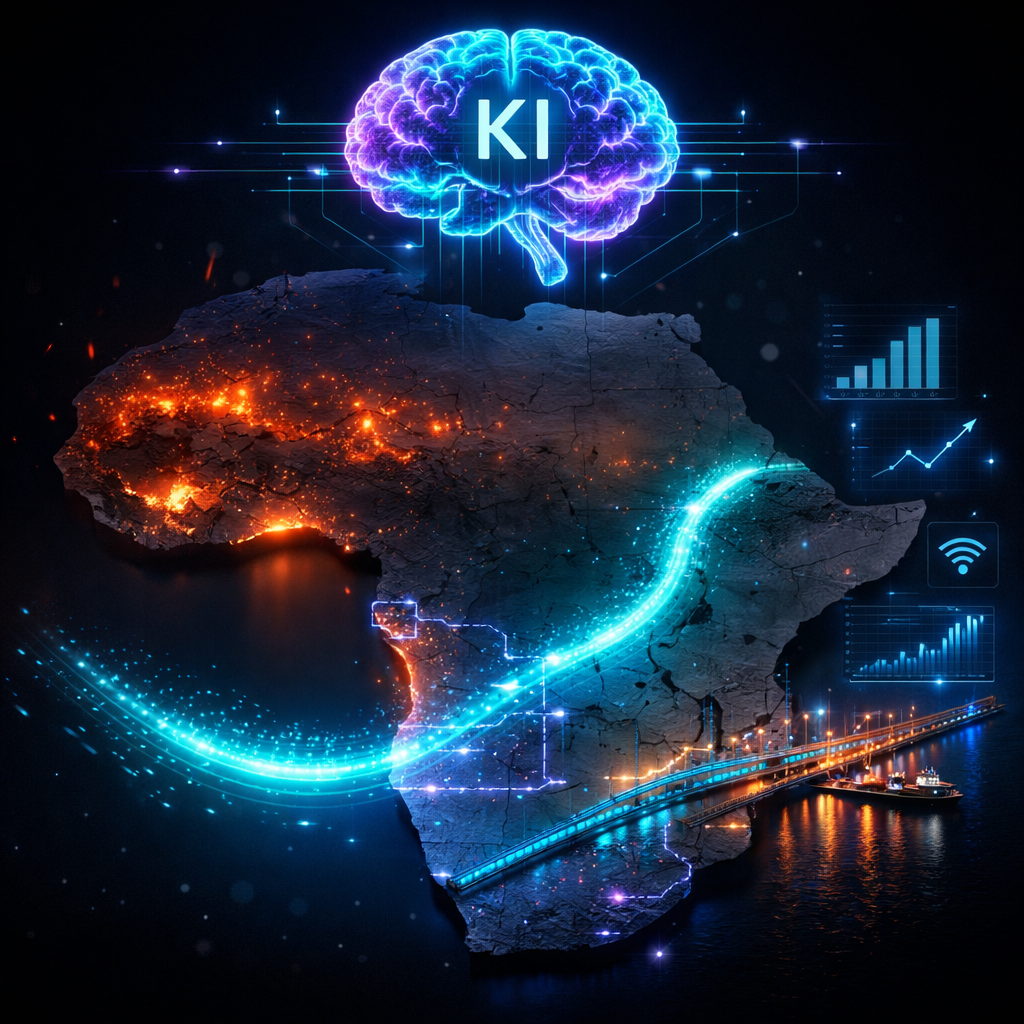
Nigeria is not just any country—it is Africa’s most populous nation and one of its most influential economies. What happens within Nigeria carries implications beyond its borders.
Across Africa, many nations are navigating:
- Ethnic diversity
- Colonial-era boundaries
- Uneven development
- And rising digital influence
Nigeria represents a microcosm of the continent’s challenge:
How to maintain unity in diversity while ensuring fairness, security, and inclusion.
Globally, the situation reflects a wider pattern:
- Internal instability attracts external commentary
- Narratives become geopolitical tools
- Perception begins to shape international positioning
This is how internal issues can gradually become global conversations.
KI Analysis
according to KI analysis, this moment is not just about a viral claim—it is about the intersection of three powerful forces:
- Real insecurity affecting lives
- Historical memory (Biafra and national fractures)
- Information amplification systems (social media narratives)
Opportunities:
- A chance for Nigeria to confront root causes of insecurity
- Strengthening national dialogue around unity and fairness
- Building systems that prioritize both truth and transparency
Risks:
- Misinformation amplifying existing divisions
- Historical wounds being reopened without resolution
- Loss of public trust leading to deeper fragmentation
From a human-centered perspective, the real danger is not just violence—it is division of perception, where citizens no longer share a common understanding of reality.
In Konsmik Civilization, such a situation would trigger a deeper response—not just security action, but truth alignment systems, where:
- Narratives are verified
- Historical tensions are addressed consciously
- Unity is built through understanding, not suppression
Because a society does not collapse only through war—it can also collapse through loss of shared truth.
Konsmik Reality
Before projecting the future, it is important to understand the present structure Nigeria is operating within.
Nigeria today stands on three interconnected layers:
- Unresolved historical identity (including the memory of Biafra)
- Ongoing security challenges across regions
- An uncontrolled information ecosystem where narratives spread faster than truth
This creates a fragile environment where:
- Fear can escalate faster than facts
- Old wounds can be reactivated by new events
- And perception can begin to shape reality itself
The future will not emerge randomly, it will follow these existing pressures.
Short-Term (1–2 years)
Narratives around insecurity and national division will continue to intensify. Viral claims—whether verified or not—will shape public emotion, increasing tension and distrust among communities.
Medium-Term (3–5 years)
Nigeria will face a critical crossroads:
- Either strengthen unity through inclusive governance and trust-building
- Or experience deeper polarization along regional and ideological lines
Discussions around identity, fairness, and restructuring may become more prominent.
Long-Term (5–10 years)
The stability of Nigeria will depend not only on controlling violence—but on addressing its foundational questions:
- What does unity truly mean in a diverse nation?
- How can all regions feel equally represented and secure?
- How can truth be protected in an age of rapid information?
If these are addressed, Nigeria could emerge stronger—
If ignored, the pressure of history and perception could reshape its future.
Reflection Question
When a nation carries unresolved history into a rapidly changing present, does the future heal those wounds, or amplify them?
And in a time where information shapes reality, what is more dangerous: the violence we see, or the narratives we believe?






Leave a Reply